PART 2 I knew that handwriting. It was my father’s. I ran out into the snow. I followed the wheel tracks around the corner, but the plow had already come through. They were gone.
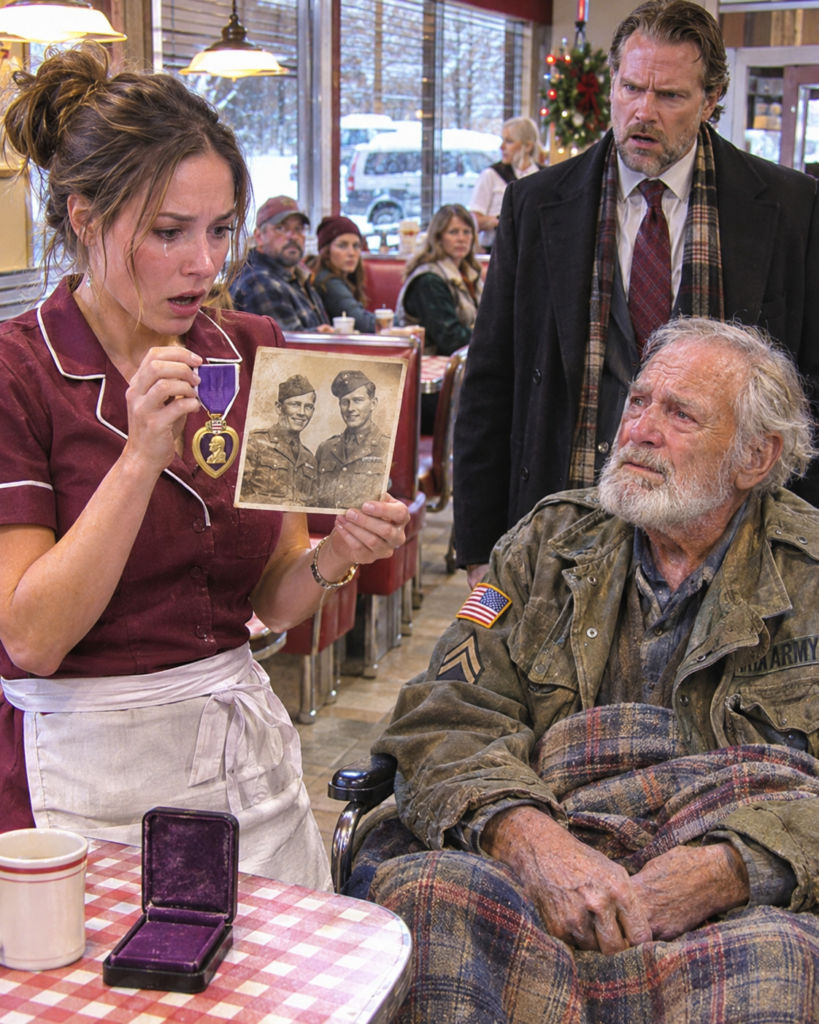
I knew that handwriting.
I ran out into the snow. I followed the wheel tracks around the corner, but the plow had already come through. They were gone.
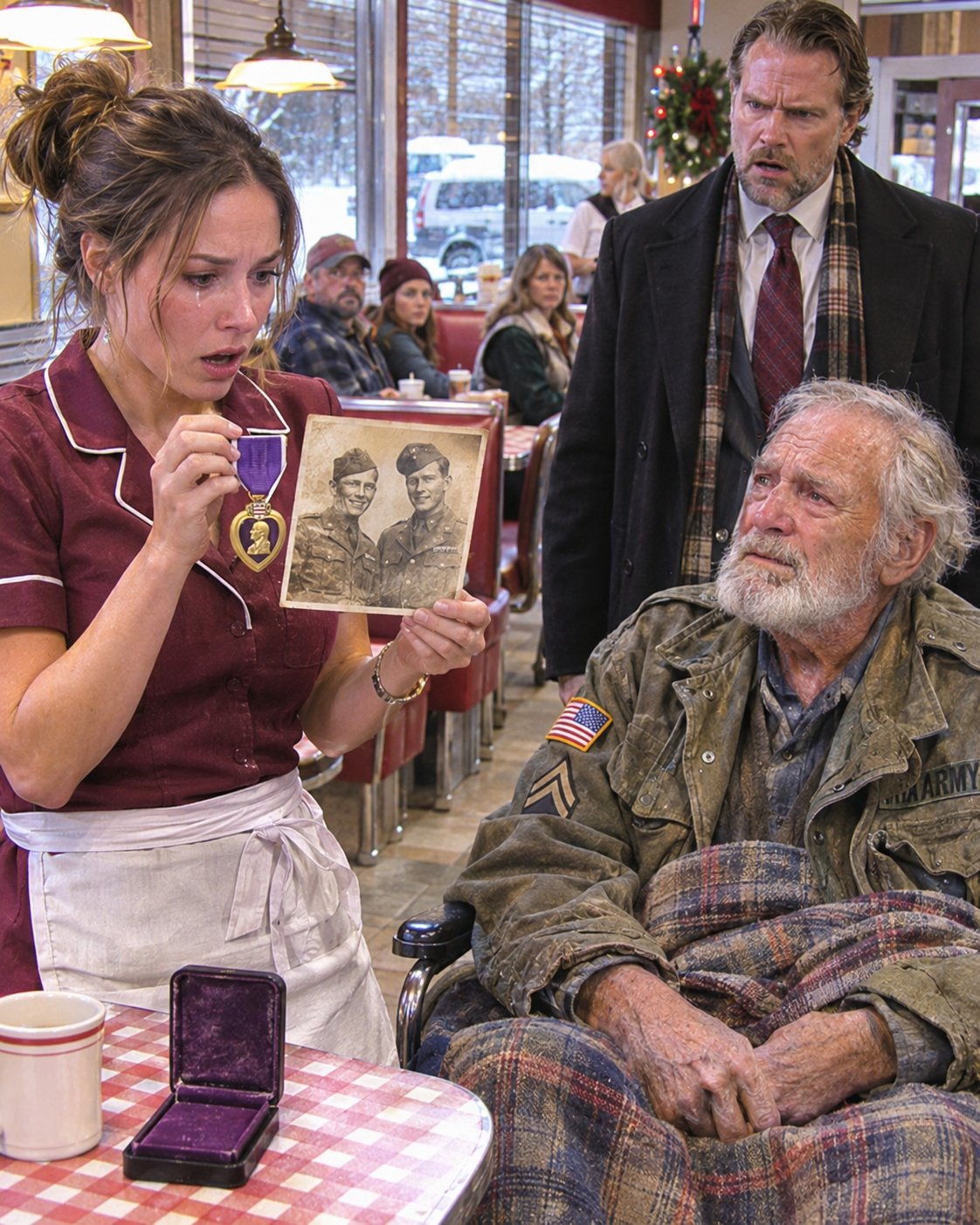
I drove two hours to my parents’ house that afternoon. I didn’t even call first.
My father opened the door. He’s 63 now. A retired mechanic. He walks with a limp from the war.
I held out the photo.
He took it. He looked at it for a long time.
Then my father, who I had never seen cry in my whole life, sat down on the porch steps and covered his face.
“Where did you get this?”
I told him everything. The coffee. The sixty mornings. The man with no legs by the window.
“Zebulon,” my father whispered. “He’s alive.”
That night, he told me the story he’d never told me before.
In 2004, their truck hit a roadside bomb. My father was thrown out with a broken back. He couldn’t move. They were under fire.
Zebulon was hurt too. Badly. But he picked my father up, put him over his shoulders, and carried him three hundred yards to safety.
Then he went back for another soldier.
That’s when the second explosion happened. That’s when Zebulon lost his legs.
“I gave him that photo in the hospital,” my father said. “I wrote on the back so he’d never forget. I looked for him for twenty years. He disappeared after he got out. I thought he was dead.”
“He must have known who I was,” I said. “My name tag. He must have recognized my name.”
My father nodded slowly.
“He let you take care of him for sixty days,” he said. “And he never told you. Because he didn’t want to be a burden. That’s Zebulon.”
The next morning, my father and I drove back to Billings.
We searched every shelter in the city. We found him on the third try, at a veterans’ center, sitting by a window.
When he saw my father, he didn’t move.
My father walked across the room with his limp. He knelt down in front of the wheelchair, which isn’t easy for him.
“You carried me, brother,” he said. “Now let me carry you.”
Zebulon put his hand on my father’s head and wept.
We brought him home that day.
My father spent the next three months fighting for Zebulon’s veterans’ benefits. Twenty years of disability payments he had never claimed. A veterans’ group helped build him a small wheelchair-friendly cottage behind my parents’ house.
Someone at the diner had recorded Perrin firing me. The video spread around Billings. The diner’s owner, Perrin’s mother, watched it.
She called me the next week.
“My son doesn’t run the diner anymore,” she said. “I’d like you to come back. As manager.”
I said yes on one condition.
Now there’s a small sign on the corner table by the heater.
RESERVED FOR VETERANS. COFFEE IS ALWAYS FREE.
Every Sunday, my father drives Zebulon to the diner. They sit at that table together.
Zebulon gave the Purple Heart to me. I tried to give it back.
“Keep it, miss,” he said. “You earned it. Sixty mornings is a long deployment.”
────────────── Lesson: You never know who you’re serving. Be kind to the stranger by the window. He may have carried someone you love.
Would you have kept bringing the coffee, even if it cost you your job? Tell us in the replies.