I Fired The Nanny I Found Asleep On The Floor With My Daughter At 2 A.M., Then My Silent Little Girl Spoke For The First Time In Eleven Months

Off The Record
Read every story with nothing in the way. Go ad-free and help us keep publishing.
The rain was coming down sideways when the car dropped me at the end of my driveway in Rye, New York, at 2:11 in the morning.
I let myself in through the front door as softly as a grown man with a wet briefcase can. The chandelier in the front hall was on its lowest setting, the way it always was at night, and the house smelled like lemon polish and wood smoke.
Then I stepped into the living room doorway in my rumpled gray suit and stopped.
Subscribers read every story ad-free, and every subscription helps us publish more of them. First month is $0.99, then $1.99. Cancel anytime.
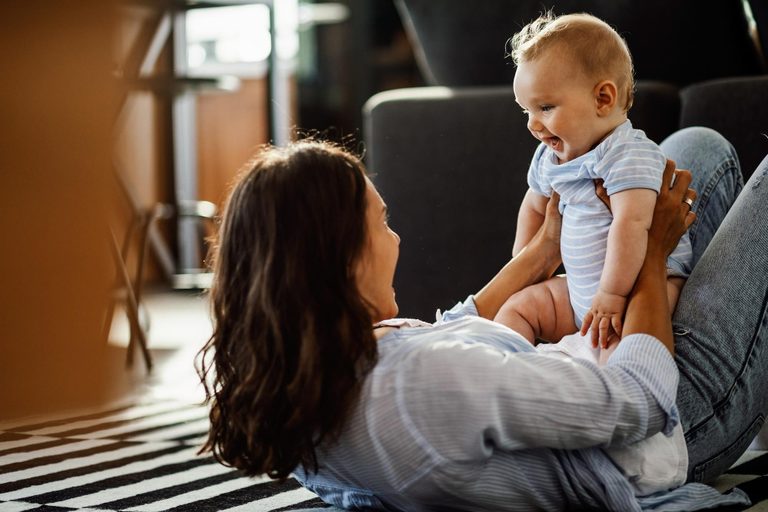
My daughter, Junie, six years old, was asleep on the floor. She was lying on a blanket spread over the cream rug beside the sofa, still in her red dress from the day, a red bow sliding out of her blonde hair.
Her white stuffed bunny was crushed under her chin. A teddy bear lay on its side near her feet.
Next to her, under the chunky knitted throw from the sofa, was the nanny.
Shayla Monroe was twenty-eight and had worked for us for five months. She was still in her navy dress and white apron, the uniform our housekeeper insisted on, with her dark hair half out of its bun and one arm wrapped around my little girl.
Both of them were sound asleep.
I stood there holding my briefcase with water dripping off my coat onto the hardwood, and I felt something hot climb up my neck. Junie had a bedroom upstairs with a canopy bed and a night-light shaped like the moon. She was not supposed to be sleeping on the living room floor like a puppy.
A floorboard creaked behind me.
Edna Sorensen was standing in the hallway in her long brown robe, her ring of house keys in her hand, as if she had been waiting up. Edna was sixty-one. She had run my house for nine years, longer than I had been married to the woman who chose that rug.
“I warned you, sir,” she said.
I didn’t know yet that those four words were the first lie of the night.
Eleven months earlier, two police officers on my porch took my wife, and grief took my daughter’s voice
My wife, Marisa, died on a Tuesday in December, eleven months before that rainy night.
She was driving home from a pottery class in Greenwich when a pickup truck crossed the center line on a wet stretch of road. The officers who came to the door said she didn’t suffer, and I have chosen to believe them.
Junie was five then. She had been a chatterbox, the kind of kid who narrated her own breakfast.
“Now I am putting the blueberries in a line, Daddy. Now I am eating the first one.”
After the funeral, she stopped talking. She didn’t scream and she didn’t cry in front of me. She just went silent, as if someone had turned a dial.
We saw a pediatrician, a grief counselor and a child psychologist in White Plains who charged $350 an hour. She told me children sometimes go silent when they are carrying something too heavy for them, and that the words would come back when Junie felt safe.
Subscribers get every story on Daily Positive with no ads, no pop-ups, no “watch an ad to continue.” $0.99 for your first month, or $9.99 for the whole year.
I nodded in her office. Then I went back to work.
I build things for a living. Apartment buildings, mostly, and a couple of shopping centers in Westchester and Connecticut.
I took every trip. Chicago, Miami, Toronto, London twice. I told myself I was protecting Junie’s future, when I was really running from a house where every room still had her mother in it.
I left the running of that house to Edna, the way I always had.
Marisa hired her the year we moved in, and Edna had become as fixed as the staircase. She knew where every receipt was filed and which plumber to call.
Our cook, Marta, had been with us six years. She was warm and loud and fed Junie grilled cheese cut into stars.
The nannies were the problem. The first one quit after six weeks. The second lasted three months and left a note saying the house felt unhappy.
Edna told me they couldn’t handle a child who didn’t talk.
Then the agency sent Shayla.
She was studying at night for a degree in early childhood education, she drove a dented Honda Civic, and in the interview she asked more questions about Junie than about the salary. I hired her in ten minutes and flew to Miami the next morning.
In five months, I had probably spent fewer than thirty days at home.
The anonymous text that brought me home had twelve words, and I read it until the screen went dark
I was in a hotel lobby in London on a Thursday afternoon, waiting for a car to take me to a meeting about an office tower, when my phone buzzed.
The number had a 914 area code. I didn’t recognize it.
“Come home tonight and see what your nanny does with your daughter.”
That was the whole message.
I called the number. It rang and rang. I texted back, “Who is this?” and got nothing.
I want to tell you I was calm. I was not. I stood next to a potted palm and imagined every terrible thing a father can imagine.
Then I called the house.
Edna picked up on the second ring, the way she always did.
“Everything is fine, sir,” she said when I asked. Then she paused. “Well. I don’t like to carry tales.”
“Carry them,” I said.
“Miss Monroe has her own ways with the child. Unusual ways. I’ve tried to tell you before, but you’re always on a plane.”
That last part stung, because it was true.
I canceled my meeting, and my assistant got me on the last flight out of Heathrow. For seven hours over the Atlantic, I sat in seat 2A with a glass of water I never touched and went over every phone call I’d had with Shayla.
She called me twice a week with updates. I usually cut her off after two minutes. “Thank you, Shayla, that’s great, I have to jump.”
A few times she had started to say something. “Mr. Lowe, there’s something about the house I wanted to ask you…” And I had said we’d talk when I was back.
I didn’t call ahead. I wanted to walk in and see the truth with my own eyes.
What I saw was my daughter on the floor.
I woke the nanny up and fired her before she even had both feet under her
I said her name louder than I meant to.
Shayla’s eyes opened. For half a second she looked confused, then she saw me and sat straight up, careful not to jostle Junie.
She pulled the blanket back over my daughter’s shoulder before she did anything else.
“Mr. Lowe,” she whispered. “You’re home.”
“Kitchen,” I said. “Now.”
She followed me down the hall. Edna came too and stood by the pantry with her hands folded over her keys.
“Why is my daughter sleeping on the floor?” I asked.
Shayla kept her voice low. “She has nightmares upstairs. Bad ones. She wakes up shaking and won’t go back in that room. The only place she’ll sleep is down here, in that corner by the sofa.”
She swallowed. “She showed me it’s where her mom used to read to her.”
I knew that corner. Marisa kept a basket of picture books there. On Sunday mornings the two of them would lie on that rug with their feet up on the sofa cushions and read until I came looking for them.
I hadn’t known about the nightmares. I was ashamed, and the shame came out as anger.
“You don’t decide where my daughter sleeps,” I said. “You call me.”
“I tried,” she said. “Twice I tried to tell you on the phone…”
Edna cut in, smooth as glass. “Sir, I’ve told her many times this isn’t proper. The child needs her own bed and a routine. Miss Monroe lets her run the house.”
I looked at Edna, who had been with us nine years, and then at a young woman I barely knew, standing in my kitchen with sleep creases on her cheek.
I made my choice in about three seconds.
“You’re done,” I told Shayla. “Pack your things. I want you out of this house tonight.”
She stared at me. Outside, the rain was hammering the kitchen windows.
Marta came in then, in a pink bathrobe and slippers, her gray hair in curlers. She had heard us from her room off the back hall.
“Mr. Lowe, please,” she said. “It’s two o’clock in the morning. It’s pouring. Let the girl sleep, and talk in the morning. Please, just wait until the morning.”
“Stay out of it, Marta,” I said.
I have said many things in my life that I regret. That one is high on the list.
Shayla packed one duffel bag in ten minutes and left me with a sentence I couldn’t shake
Shayla didn’t argue. She went up the back stairs to her room above the garage, and I stood in the front hall listening to drawers open and close.
Edna stood beside me. “It’s for the best, sir,” she said. “You’ll see. I’ll handle the agency in the morning.”
Shayla came back down with a black duffel bag over her shoulder and her coat over her arm. Her phone was in her hand. She didn’t look at Edna once.
She walked past me into the living room and knelt on the rug. Junie hadn’t moved. Her cheek was pressed into the bunny’s ear.
Shayla smoothed back her hair and kissed her on the forehead, very lightly.
Then she stood up and looked right at me. Her eyes were wet, but her voice was steady.
“She hears everything, Mr. Lowe,” she said. “Even if she doesn’t answer. Please remember that.”
I walked to the front door and opened it.
The rain blew in across the marble floor. The porch light lit up the water running down the steps like a creek. Shayla’s Honda was parked in the turnaround, and she would have to run for it.
She stepped to the threshold and pulled her hood up.
Then I heard small feet on the floor behind me.
Junie was awake. She came across the hall barefoot, her red dress wrinkled, the bunny swinging from one hand. She ran straight past me, wrapped both arms around Shayla’s legs and held on.
Shayla dropped the duffel bag and put her hand on Junie’s head. “Hey, sweet girl,” she whispered. “It’s okay. It’s okay.”
I knelt down. “Junie, honey, come here. Shayla has to go.”
My daughter turned her face toward me. Her chin was trembling, but she wasn’t crying. She was looking at me the way her mother used to look at me when she had made up her mind about something.
Edna took a step forward from the staircase. “Come along, Junie, it’s very late…”
She opened her mouth.
For eleven months, I had waited for my daughter to say one word. Any word. I had prayed for it in hotel rooms on three continents.
I never imagined what that word would be.
My daughter had been silent for eleven months, and then she said eighteen words in one breath
Her voice came out hoarse and small, like a door that hadn’t been opened in a long time.
“Daddy, don’t send her away.”
Junie looked at Shayla, then back at me, and kept going, faster, as if she had to get it all out before the words dried up again.
“Mrs. Sorensen says if I cry about Mommy you’ll send me away too.”
The hall went completely still. Even the rain seemed to stop for a second.
I looked up at Edna. She was standing on the second step with her hand on the banister, and her face had gone the color of the wall.
“The child is confused,” she said. “She’s half asleep, sir. She doesn’t know what she’s saying.”
But Junie did know. I could see it. She pressed her face into Shayla’s coat and held on tighter.
I got down on my knees on the wet marble so I was at her height. “Junie,” I said. “Nobody is sending you anywhere. Ever. Do you hear me?”
She nodded into Shayla’s coat.
“And you can cry about Mommy any time you want. Any time. I cry about her too.”
That was the first time I had said that out loud to anyone.
Junie peeked at me with one eye. Then she let go of Shayla with one hand, reached out and touched my wet sleeve. That was all, and it was enough to break me in half.
Shayla closed the front door behind her. She was shaking, and it wasn’t from the cold.
“Mr. Lowe,” she said softly. “I wasn’t going to do this tonight. I was going to wait until you were home long enough to listen. But I think you need to see something.”
She held up her phone.
Behind me, I heard Edna’s keys jingle as she came down the stairs.
“Sir, I really don’t think this is the time…”
“Sit down, Edna,” I said. I didn’t recognize my own voice. “Right there on the bench. Don’t go anywhere.”
The phone in Shayla’s hand held two months of things I should have seen with my own eyes
We sat on the living room sofa with Junie curled between us, the bunny on her lap. Marta brought towels and a mug of warm milk and stayed in the doorway with her hand over her mouth.
Shayla opened a folder on her phone, labeled with Junie’s name and a date in September.
“I started writing things down about two months ago,” she said. “At first I thought I was imagining it.”
The first thing she showed me was a photo of the upstairs hallway.
I knew that hallway. Marisa had lined it with family pictures in black frames. Our wedding on the beach in Montauk. Junie as a newborn. Marisa covered in flour at Thanksgiving.
In Shayla’s photo the walls were bare. You could see the pale rectangles where the frames used to hang.
“When did that happen?” I asked.
“Before I came,” Shayla said. “Mrs. Sorensen told me she took them all down so Mr. Lowe won’t be sad when he comes home. That’s how she said it. She said you’d asked her to.”
I had never asked. I had walked past those walls a dozen times in eleven months and never noticed they were empty, because I was always walking past with my phone in my hand.
Next there was a short voice memo. Shayla said she had recorded it from the pantry in October because she couldn’t believe what she was hearing.
She turned the volume low and held it close so Junie wouldn’t have to hear it again.
It was Edna’s voice in my kitchen, calm and flat.
“Stop that crying. Your father leaves because of the crying. Nobody wants to come home to that. If you keep it up, he’ll send you away to a school, like the girl in the book.”
I had to put the phone down.
Then Shayla opened her tote bag and pulled out a stack of drawings, folded in half.
They were Junie’s, crayon on printer paper. Most of them were the same picture, over and over: a tall lady in brown with a big circle at her side and little lines hanging off the circle.
“I asked her what it was,” Shayla said. “She pointed at the circle and then pointed at the hall.”
I looked at the bench by the front door. Edna was sitting there with her ring of keys in her lap.
“Why didn’t you go to the police?” I asked Shayla. It came out harder than I meant.
“I’m a nanny with student loans, and she’s been here nine years,” she said. “Who was going to believe me over her? I needed you to be home. I needed you to hear it from Junie.”
Junie tugged at my sleeve.

Junie took my hand and led me to the corner of the rug where her mother used to read to her
She slid off the sofa, holding the bunny by one ear, and pulled on my hand until I stood up.
She led me across the room to the corner by the end of the sofa, the spot where Marisa’s basket of books used to be. The basket was gone. I hadn’t noticed that either.
Junie knelt down and lifted the edge of the rug with both hands. She looked at me first, as if she was asking permission. I nodded.
Under the rug, lying flat against the floorboards, was a photograph.
It was a four-by-six print, curled at the corners, with a crease down the middle where it had been folded and unfolded too many times. It was Marisa on the beach in Montauk, the summer Junie turned three, laughing with her head thrown back while Junie sat on her shoulders in a yellow sun hat.
I had taken that picture. I had forgotten it existed.
“Mommy,” Junie said, softly, like she was introducing us.
She held it out to me. “I saved this one. I hid it so she couldn’t take it.”
I sat down right there on the rug, and I cried in front of my daughter for the first time.
She crawled into my lap and put the bunny against my chest, the way you’d hand someone a tissue.
“It’s okay to cry, Daddy,” she said. “You said.”
“I did say,” I told her. “And I meant it.”
Shayla sat on the edge of the sofa a few feet away and wiped her eyes with the back of her hand. Marta was crying in the doorway, not even trying to hide it.
That was why Junie slept in that corner. It had nothing to do with being spoiled or stubborn. She was lying on top of the last picture of her mother in the whole house, guarding it.
I looked over at Edna. She was standing now, edging toward the hallway that led to the back stairs and her room.
“Where are you going, Edna?”
“To get my coat, sir. Clearly I’m not wanted here.”
Shayla spoke up then, low and clear. “Mr. Lowe. Before she goes anywhere, you should check the safe.”
The safe in my study told me the rest, and so did two pawn tickets from Port Chester
My study is at the end of the downstairs hall. The safe is behind a cabinet door under the bookshelves.
Only three people had the combination: me, Marisa, and, because someone needed to get the passports and insurance papers when I traveled, Edna.
Marta stayed with Junie on the sofa. Shayla came with me, and so did Edna, because I told her to walk in front of me.
Marisa’s jewelry was kept in three velvet boxes on the top shelf. Her grandmother’s sapphire ring. The diamond studs I gave her when Junie was born. A gold tennis bracelet, her pearl necklace, the emerald earrings she wore to every Christmas party.
Two of the boxes were empty. The third had a single pair of silver hoops in it.
“I found these in October,” Shayla said.
She showed me two more photos: two pawn tickets, side by side on the pantry counter, both from shops in Port Chester, ten minutes away. One listed a sapphire ring and a pearl necklace. The other listed a bracelet and a pair of diamond earrings.
The name on both tickets was E. Sorensen.
“They fell out of her coat pocket when I was hanging up Junie’s things,” Shayla said. “I asked her about them. She said it was her own mother’s jewelry and I should mind my business. She took them back from me, but I took the pictures first.”
I turned around. Edna had her back against the bookcase.
“That was two weeks ago,” Shayla said. “Since then she’s been telling me I wouldn’t last much longer here.”
And then I understood the text.
Edna had sent it. She knew Shayla had seen the tickets and had been trying to reach me. She needed me to walk in at two in the morning, angry and tired and guilty, and throw Shayla out before Shayla could say a word.
It had almost worked. It would have worked, if my daughter hadn’t woken up.
“Give me your phone, Edna,” I said.
She hesitated just long enough. Then she reached into the pocket of her robe and set a cheap black flip phone on my desk, the kind you buy at a drugstore with cash.
I opened the messages. There was only one sent message on it, and I already knew it by heart.
“You were always on a plane, sir,” Edna said, and for the first time in nine years her voice had an edge. “Mrs. Lowe was gone. Those things were sitting in a box doing nothing. You didn’t even notice the pictures were gone. You weren’t going to notice anything.”
She was right. That was the worst part.
I called the police at 3:40 in the morning while Marta held my daughter in the kitchen
I called the Rye police from my desk phone. I gave the dispatcher my name, my address and the words “theft of jewelry by a household employee.” I said my daughter was in the house and asked them to come without sirens.
While we waited, Marta took Junie into the kitchen. She sat her on the counter, wrapped her in a dish towel like a cape and made her hot cocoa with tiny marshmallows.
Two officers arrived at 4:05, then a detective named Paula Ferraro twenty minutes later. Shayla showed them the photos of the tickets, the voice memo and her notes. Detective Ferraro looked at the flip phone and the sent message and nodded slowly.
“This happens more than you’d think,” she told me. “A grieving house. Somebody’s distracted, and somebody else has the keys.”
Edna didn’t make a scene. She asked if she could get dressed, and an officer went with her. When she came back down in her brown coat, they put her in handcuffs in my front hall, under the chandelier my wife had picked out.
I made sure Junie stayed in the kitchen with the door closed and Marta singing to her. My daughter didn’t need to see that. She had already carried enough.
As they walked her past me, Edna stopped.
“I kept this house running for nine years,” she said.
“You did,” I said. “And you were paid for it. You weren’t paid to break my little girl’s heart.”
She didn’t answer. They took her down the wet steps to the car.
Over the next three weeks, the detective tracked down everything. Edna had pawned $61,000 worth of Marisa’s jewelry at two shops in Port Chester over seven months, a few pieces at a time.
One shop had already sold the emerald earrings. The rest was still there, and the police recovered it. The sapphire ring came home in an evidence bag, and I put it back in the safe and changed the combination.
Edna Sorensen was charged with grand larceny. I told my lawyer to let the district attorney decide the rest, and to make sure that whatever happened, she never worked in a home with a child again.
And the photographs? The police found every one of them in two cardboard boxes in the storage room behind the furnace, wrapped in trash bags. Marisa’s book basket was down there too, with all the picture books still in it.
She had put my wife in the basement and told my daughter it was for my sake.
I canceled every trip on my calendar and hung my wife’s pictures back up with my own hands
Shayla didn’t spend that night in her car. She slept in her room over the garage, and in the morning I knocked on her door with two cups of coffee and the worst apology of my life.
“I fired you for loving my daughter,” I said. “I don’t know how to make that right.”
“You could start by staying home,” she said. Then she smiled a little. “And maybe new windshield wipers for the Honda. Mine are shot.”
I hired her back that morning with a forty percent raise, and I opened a college fund in her name to finish her degree. She tried to refuse it. I told her it wasn’t a gift, it was a debt, and she finally agreed when Junie asked her, out loud, to say yes.
Then I called my office and canceled every trip on my calendar for six months. My partners could fly to Toronto. I promoted my project manager and gave her the London tower.
The next Saturday, Junie and I brought the boxes up from the basement.
I hung every frame back in the upstairs hall myself, with a hammer, a level and a coffee can of nails, and Junie told me which picture went where.
“That one goes by my door,” she said, pointing at Marisa covered in flour. “Mommy was making the pie with the leaves on top.”
She was right. It had always hung by her door.
I put the Montauk picture, the creased one she had saved, in a new frame on the little table in the living room corner. Junie put the basket of books back next to it.
Her words came back slowly. Some days she talked like a little radio, and some days she only nodded. Her psychologist in White Plains said that was normal, and that Junie seemed safer than she had since we started.
The nightmares got fewer. One night in January, Junie walked upstairs by herself, climbed into her canopy bed and fell asleep under the moon night-light.
Shayla and I stood in the doorway like two people watching a rocket launch. Marta cried, of course. Marta cries at commercials.

These days I read to Junie in her mother’s corner, and she never lets me skip a page
It has been almost a year now.
But I’m home for breakfast and home for bedtime, and I know the name of every kid in Junie’s first-grade class and which ones she thinks are silly.
Most nights we still end up on the floor.
Junie sleeps in her own bed now. But before bed, she drags the chunky blanket off the sofa, spreads it on the cream rug in the corner and pats the spot next to her until I lie down. The basket of books is right there, and Marisa is laughing on the beach in her frame on the table above us.
Last night it was a book about a bear who loses his hat. I was tired, and I tried to skip from page twelve to page fifteen, the way every parent in America has done at least once.
Junie put her small hand flat on the page.
“Daddy,” she said. “You skipped the part where the rabbit fibs. Mommy never skipped that part.”
So I turned back and read it. Every word.
She was asleep before the end, the bunny under her chin and her hand still on the book. I stayed on the floor a long time after, listening to her breathe, in the corner where her mother used to read to her.
A year ago, I came home in the rain to fire someone for letting my daughter sleep there.
Now it’s my favorite place in the whole house.
Now Trending:
Please let us know your thoughts and SHARE this story with your Friends and Family
Jason is a writer and storyteller who focuses on the human side of the stories — moments of kindness, resilience, family, and the turning points that quietly change a life. He writes to inform, engage, and inspire, and believes the best stories are the ones that make readers feel less alone.

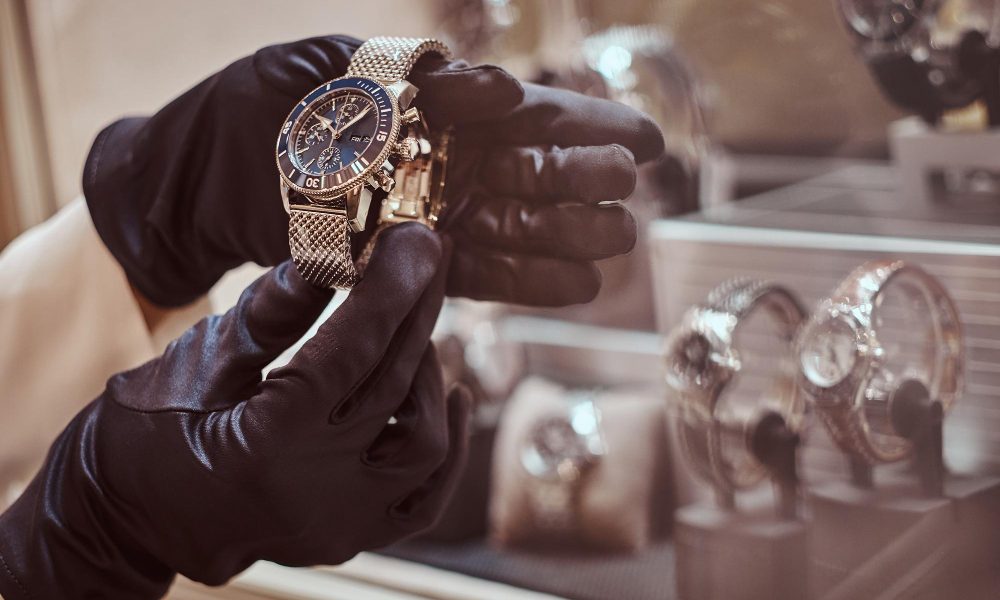
The watch was in a navy leather box at the bottom of my purse, wrapped in tissue paper, and I checked on it about forty times between Paris and Portland.
It was a Swiss watch with a moon phase on the dial. It cost $38,000, more than I had ever spent on myself, and I bought it for my husband, Pierce, for our tenth wedding anniversary.
I wasn’t supposed to be home until Saturday. The conference wrapped up early, and I changed my flight on a whim because I missed our daughter, Margot, who was five, and because I wanted to surprise Pierce on a Friday night for once.
The house was dark downstairs when my car dropped me off at 9:20. Pierce’s black Audi was in the garage. Next to it was a little white Kia I didn’t recognize at first.
I left my roller bag by the mudroom door and went up the back stairs in my socks. I was smiling. I remember that clearly, because it was the last time I smiled for a while.
The bedroom door at the end of the hall was open about six inches. A lamp was on.
I heard a zipper. Slow. The sound of someone being careful with somebody else’s dress.
Then I heard my husband’s voice, low and pleased with himself.
“The divorce papers are ready,” he said. “She just doesn’t know it yet.”
I built Langley Health Systems at my kitchen table three years before I ever met Pierce
I need to tell you where this started, so you understand what I had to lose.
My father, Walt Langley, ran the front office of a family medical clinic in Gresham for thirty years. As a teenager I helped him on Saturdays and watched him lose his mind over the appointment book. Double bookings. No-shows. Nurses put on the same shift twice.
After college I taught myself to code from library books. At twenty-four, I built a little scheduling program for his clinic on a used laptop at my kitchen table in a rented duplex in Southeast Portland. Two years later, eleven clinics were paying me forty dollars a month for it.
That was the beginning of Langley Health Systems.
By twenty-seven, I had thirty employees and real investors. I owned sixty-one percent of the company, and every share was mine before I ever said “I do.”
I met Pierce Wainwright at a healthcare conference in Seattle that year. He was thirty-one, tall and funny, and worked in operations for a hospital supply company. He remembered my coffee order after one meeting and asked about my father.
We got married fourteen months later on a farm in the Willamette Valley.
Two weeks before the wedding, my father’s oldest friend, a corporate attorney named Miles Hargrove, sat me down in his office downtown with a folder.
“You need a prenup, kiddo,” he said. “I’m not saying he’s a bad man. I’m saying you built something, and you protect what you build.”
Pierce signed it without a fuss. He laughed and said, “I’m marrying you, not your software.” He read the first page, flipped to the last one and signed it with my pen.
My father died three years later. Miles spoke at his funeral.
Six years ago, when our chief operating officer retired, Pierce asked for the job. He had the experience, the board liked him, and I wanted my husband beside me. I thought it would make us closer.
Margot was born the next year.
Two years ago, I hired a young woman named Kaylee Ross as Pierce’s executive assistant. She was twenty-five, sharp, from a small town near Medford, with a community college degree and a lot of hustle. She reminded me of myself at that age. I fought for her salary. I bought her a birthday cake.
That’s who was standing in my bedroom with her back to my husband.
I stood in my own hallway and listened to every word of their plan
I could see a slice of the room through the gap. Kaylee was standing by my dresser in an emerald-green dress, the kind you wear to a nice dinner. Pierce was behind her in a white shirt with his sleeves rolled up, sliding the zipper to the top.
He kissed the back of her neck. I watched him do it.
“Once I freeze her out of operations,” he went on, “she’ll beg me to take the company. She can’t run it without me. Give it six months. She’ll sign anything to make it stop.”
Kaylee turned around and fixed his collar. “Did you move the money from the consulting account?”
“It’s buried in vendor payments,” Pierce said. “Nobody looks at vendor payments. Simone hasn’t looked at a vendor payment in five years.”
He was right about that, too.
I don’t know exactly what happened with my hands. The navy box slid out of my purse and hit the hardwood with a hollow thunk.
“Did you hear that?” Kaylee whispered.
I bent down, grabbed the box and backed away down the hall without breathing.
“It’s this old house,” Pierce said. “It does that. Relax.”
I went down the back stairs the way I came up, holding my shoes in one hand and a $38,000 watch in the other. I picked up my roller bag and went out through the side gate.
I walked four blocks in the October drizzle before I called a car. I didn’t cry. I was too busy hearing the same sentences on a loop.
The divorce papers are ready. She’ll beg me to take the company. It’s buried in vendor payments.
Margot was spending the night at my mother’s house in Lake Oswego. Pierce had set it up himself, two days earlier. “Give your mom some time with Margot,” he’d said. “She misses her.”
Now I knew why he wanted the house empty.
At 11:47 p.m. in a diner on Sandy Boulevard, I made the one phone call that changed everything
The car dropped me at an all-night diner on Sandy Boulevard because it was the first place with its lights on.
I sat in a booth by the window and ordered coffee and a slice of marionberry pie I never touched. The waitress called me hon, and I almost cried at that, of all things.
First, I did the thing that kept me safe. I texted Pierce.
“Paris ran long. Landing tomorrow night as planned. Kiss Margot for me if you call Mom.”
He wrote back in under a minute. “Can’t wait to see you, babe. Big weekend. Love you.” With a heart.
I put the phone face down and stared at it for a long time.
I thought about fighting him in the office for six months, the way he expected. Board meetings. Lawyers. Whispers in the break room. Margot hearing us argue through the walls.
He was counting on me to hold on to the company with both hands. That was the whole plan. He thought the company was the one thing I couldn’t let go of.
At 11:47 p.m., I called Miles Hargrove.
He was seventy-one and had been asleep. He answered anyway, on the fourth ring, the way he always had for my family.
“Simone? What’s wrong? Is it Margot?”
“Margot’s fine,” I said. “Miles, I want to sell all of my shares.”
There was a long silence. I could hear him sitting up in bed.
“All of them,” he said. “Your sixty-one percent.”
“All of them. This weekend, if it’s possible.”
“Honey, that’s your life’s work.”
“My life’s work is asleep at my mother’s house,” I said. “I’ll tell you everything. But first I need to know one thing. Is the Northfield offer still on the table?”
Then I heard him laugh, very softly, the way my father used to laugh when I beat him at chess.
“Raymond Achebe has called me every quarter for two years,” Miles said. “I’ll have him in my office at nine tomorrow morning.”
Dr. Raymond Achebe walked into a lawyer’s office on a Saturday morning and asked me one question
Northfield Medical was based in Sacramento and made software for big hospitals. It had wanted our clinic business for a long time. Its chief executive, Dr. Raymond Achebe, was a former emergency room doctor who had built his company the way I built mine, one frustrated hospital at a time.
He had made a standing offer for my controlling stake eighteen months earlier. I’d turned it down without reading the second page.
He flew up on the first flight Saturday and was sitting in Miles’s conference room at 9:15 with a cup of black coffee, in a gray quarter-zip sweater and running shoes.
I told him the truth. All of it. I told him what I heard in my hallway, what I suspected about the vendor payments, and that he might be buying a company with a hole in it.
He listened without interrupting. Then he asked one question.
“Is the product still good?”
“The product is excellent,” I said. “Three hundred and forty clinics. Ninety-six percent renew every year. The people who build it are the best I’ve ever worked with.”
“Then I’m not buying your husband,” he said. “I’m buying your people. And I’ll bring someone to find the hole.”
By noon, his forensic accountant, Denise Kowalczyk, a woman with reading glasses on a beaded chain, was sitting next to me with a laptop. I logged her into our finance system with my own administrator password. As chief executive I had access to everything. I just hadn’t used it the way I should have.
Denise drank Diet Coke and typed. At 4:30 she turned her laptop toward me.
“Cascade Advisory LLC,” she said. “Ever heard of it?”
“Your company has paid them $2.7 million over nineteen months. Approved by your chief operating officer. Coded as vendor payments for operations consulting. No contract on file. No phone number that works.”
She pulled up the Washington state business registry. Cascade Advisory was registered to an address in Vancouver, Washington, and its only listed member was a woman named Brianna Ross.
“Does Kaylee have a sister?” Denise asked.
I remembered Kaylee in the break room, showing everyone pictures of her big sister’s new baby. Brianna.
“Yes,” I said. “She does.”
By Saturday night Denise had found the rest. Fourteen months earlier, Cascade Advisory had paid $1.1 million in cash for a two-bedroom condo in the Pearl District. The homeowners’ association listed two parking permits for unit 6C. One was for a white Kia. The other was for a black Audi.
I went to the ladies’ room and sat on the floor for ten minutes. Then I washed my face and went back to work.
I spent Sunday at my mother’s house pretending to be a woman who didn’t know anything
I spent Saturday night in my old childhood bedroom at my mother’s house, with Margot asleep beside me and her little feet in my ribs. I told Pierce my flight had been rerouted through Seattle and I was too tired to drive home.
“Stay put, babe,” he texted. “Rest. I’ve got everything handled.”
On Sunday morning my mother made Dutch babies and watched me over her coffee cup. She is a retired nurse. She can tell when someone is hiding a fever.
“Something’s wrong,” she said, when Margot went to find her shoes.
“Something was wrong,” I said. “I’m fixing it.”
She put her hand on mine. “Your father always said you saw three moves ahead,” she said.
Pierce called at noon. He was charming. He asked about Paris and about my mother’s hip. Then, very casually, he said, “Hey, I scheduled a board meeting for Monday at nine. Just housekeeping. A few slides about next year’s structure. You don’t need to prepare anything.”
“I’ll be there,” I said.
“Great. And I’ve got a surprise for our anniversary. You’re going to love it.”
I said I couldn’t wait. I meant it, in a way he would never have understood.
I spent Sunday afternoon at Miles’s office reading documents while Margot colored under the conference table. Northfield offered $46 million for my sixty-one percent, a little above its value on paper, because control of a company is worth more than a piece of it.
I insisted on one thing above all. Every employee would keep their job, their salary and their stock options for at least two years. Dr. Achebe agreed in one sentence.
At 9:40 Sunday night, I signed the purchase agreement with my father’s old fountain pen. The wire was scheduled for seven on Monday morning.
Before I left, Miles walked me to the elevator and handed me a thin folder.
“Keep this in your purse,” he said.
Pierce stood at the head of the boardroom table with a slide about a leadership transition
At 7:02 Monday morning, my phone buzzed with a one-line email from Miles. “Wire received. Congratulations.”
I put on a cream tweed dress with a little sparkling brooch at the waist, the one Margot calls my queen dress, pinned my hair up and drove to our offices on the eleventh floor of a tower on Southwest Fifth Avenue.
The boardroom was a glass box at the corner of the floor. Five directors were already seated. Two were investors who had been with us since the beginning. Two were independent directors Pierce had personally recruited in the past year, and now I understood why he had been so eager to help.
Pierce had taken the chair at the head of the table, the one I usually sat in.
Kaylee sat in the corner behind him with a laptop, taking notes, in a gray blazer over that same emerald-green dress. She smiled at me when I came in. I smiled back.
“Thanks for coming in, everybody,” Pierce said. He clicked a remote, and a blue slide lit up the screen on the wall. Leadership Transition: A Path Forward.
He was good. I’ll give him that. He talked for fifteen minutes about growth and focus and the stress of the past year. He said I had been stretched thin since my father’s death, which was seven years ago. He used the word burnout four times.
Then he clicked to the next slide.
“So I’m proposing that Simone step back from day-to-day operations for a while,” he said gently, as if he was doing me a kindness. “Take some time for her health and her family. I’ll serve as acting chief executive during the transition. This is about protecting the company she built.”
One of the new directors nodded along. Gordon Pike, one of our original investors, frowned at me across the table, waiting for me to fight.
I didn’t say a word. I looked at my plain old steel watch. It was 9:17.
Pierce smiled at me with what looked like real tenderness. “Simone? Anything you want to add?”
Someone knocked on the glass.
Then the door opened.

The man who walked through the door now owned sixty-one percent of the company Pierce was trying to take
Dr. Raymond Achebe came in wearing a navy suit, with Denise one step behind him carrying a gray accordion folder. Two men from building security waited in the hall.
Pierce frowned. “I’m sorry, this is a closed board meeting.”
“I know,” Dr. Achebe said. “That’s why I’m here.”
He walked to the side of the table and stood next to my chair.
“Good morning. My name is Raymond Achebe. I’m the chief executive of Northfield Medical. As of 7:02 this morning, Northfield owns sixty-one percent of Langley Health Systems. Ms. Langley sold us her entire stake over the weekend.”
Nobody moved. I watched the color leave Pierce’s face in stages, like a tide going out.
“That’s not possible,” he said. “She would never sell. She would never…”
“You said I’d beg you to take the company,” I said. “I didn’t feel like begging.”
Kaylee’s laptop slid an inch on her knees. She caught it.
“Simone, what are you talking about?”
“Friday night,” I said. “Nine twenty-five. Our bedroom. You were zipping up her dress. I was in the hallway.”
I took the navy leather box out of my purse and set it on the table where he could see it.
“I dropped this. You told her the house does that.”
Gordon Pike put his pen down very slowly. One of the new directors suddenly found something fascinating on his phone.
“As the majority owner,” Dr. Achebe went on, calm as a man reading a weather report, “Northfield is reconstituting this board, effective immediately. But first, I’d like Ms. Kowalczyk to walk everyone through something we found.”
The forensic accountant needed only four pages to explain Cascade Advisory
Denise passed four stapled pages to every director. She put the last copy in front of Pierce.
“Over the past nineteen months,” she said, “this company paid $2.7 million to Cascade Advisory LLC for operations consulting. Every payment was approved by the chief operating officer. Cascade Advisory has no employees, no website and no contract. It is registered to a Brianna Ross of Vancouver, Washington.”
She turned toward the corner.
“Ms. Ross is your sister, isn’t she, Kaylee?”
Kaylee didn’t answer. Her face went blotchy red, and her hands shook so hard she closed the laptop.
“Fourteen months ago,” Denise went on, “Cascade Advisory paid $1.1 million in cash for condominium 6C in the Pearl District. The parking records list two cars for that unit. One belongs to Kaylee Ross. The other is registered to Pierce Wainwright.”
Pierce stood up. “This is ridiculous. Those were legitimate consulting fees. Cascade did real work on our workflow.”
“What work?” Denise asked, very pleasantly. “Name one report. One meeting. One email. I’ve been through all of them.”
He opened his mouth. Nothing came out.
The room was so still I could hear the air vents.
“Mr. Wainwright,” Dr. Achebe said, “you are removed as chief operating officer, effective now. Leave your laptop, your phone and your badge on the table. Security will walk you to the lobby. Ms. Kaylee Ross, the same.”
“You can’t do this,” Pierce said. “I have a contract.”
“Your contract has a for-cause termination clause,” Dr. Achebe said. “Theft is cause. You’ll find it on page nine.”
The security officers came in. Kaylee was walked out first, holding her blazer closed with both hands, crying. She didn’t look at me as she passed.
Pierce stood at the head of the table with the blue slide still glowing behind him. Then he put his badge down, set his phone next to it and looked at me.
“You sold your own company,” he said. “Out of spite.”
“I sold it so you couldn’t steal it,” I said. “There’s a difference.”
The door swung shut behind him.
Before lunch, Dr. Achebe had the company refer the whole matter to the Multnomah County district attorney. By two o’clock, an investigator had called Denise to request the file. By Wednesday, the condo in the Pearl District was frozen.
Pierce’s divorce papers were ready, but he had never reread the prenup he signed with my pen
Pierce’s divorce papers arrived on Thursday by courier, at my mother’s house. He had kept that promise, at least. They really had been ready.
His lawyer asked for half of everything. Half the house. Half of what he called marital business assets. And half of the $46 million, which the papers described as proceeds of a company grown with the husband’s direct labor.
I handed the envelope to Miles without opening it.
Miles read it, made a little noise in his throat and opened the thin folder from my purse.
The prenup Pierce signed two weeks before our wedding was eleven pages long. Page four said that any shares of Langley Health Systems I owned before the marriage, any growth in their value and any proceeds from their sale remained my separate property. Page six said the house on Northeast Thompson Street, which I bought two years before I met him, stayed mine.
Pierce had flipped from page one to page eleven and signed.
Miles sent a copy to Pierce’s lawyer with a short letter. Three days later the lawyer called back and asked, in a very different tone, whether we would consider a simple settlement.
We did. Pierce kept his own retirement account and his Audi. I kept the house. We agreed that Margot would live with me during the week and spend every other weekend with her father.
Northfield is suing Cascade Advisory to recover the $2.7 million, and the district attorney’s investigation is still open as I write this.
I found out later what Pierce’s anniversary surprise had been. A framed photo from our wedding day. His lawyer had told him to give it to me the night before he served the papers, so he would look like a loving husband in court.
I never got it. I’m fine with that.
Telling Margot was the hardest part, and she asked one question I wasn’t ready for
I told Margot on a Saturday morning, sitting on her bedroom floor with her stuffed giraffe between us. I told her Daddy and I were not going to live in the same house anymore, that it wasn’t anything she did, and that we both loved her more than anything in the world.
She listened, twisting the giraffe’s ear. Then she asked, “Is Daddy still my daddy?”
“Always,” I said. “Forever. That part doesn’t change.”
“Okay,” she said. “Can we have pancakes?”
Whatever Pierce did to me, he has been a decent father to her since, and I will never stand between them. That is my gift to her, and it has nothing to do with him.
I stayed at Langley Health Systems for six weeks to help with the transition. Dr. Achebe asked me to stay on as president and offered more money than I had ever paid myself.
“I built this one for my dad,” I told him on my last day. “I want to build the next one for me.”
He shook my hand. “When you do, call me first,” he said. “I’ll be your first customer.”
Every employee kept their job. Ninety-four of them signed a card for me with a rocket ship drawn on the front. I keep it on my desk.

Now Margot and I build sandcastles on the Oregon coast, and I build a new company in my garage
The watch went back to Paris. The jeweler bought it back for $31,000, the most expensive lesson in resale value I will ever get.
I used every penny of it to start over.
There’s a desk in my garage now, between the recycling bins and Margot’s pink bike. Two monitors, a whiteboard and a space heater that clicks. Two of my old engineers left Langley to join me, with Dr. Achebe’s blessing and a handshake.
We’re building an app to help families keep track of an aging parent’s care. Medications, appointments, which sibling is driving Mom to the cardiologist on Thursday. I got the idea during my father’s last year, when my mother kept his whole life on sticky notes on the refrigerator.
It’s small. It’s mine. It’s the most fun I’ve had in ten years.
In August, Margot and I drove to Cannon Beach for a long weekend. We rented a little gray cottage with a porch and ate fish and chips out of paper boats.
On our last morning the fog burned off early, and Haystack Rock stood up out of the water like something from a storybook. Margot ran ahead of me in her yellow rain boots with a bucket and a plastic shovel, yelling at the seagulls.
We built a castle with four towers and a moat. She made me the queen and herself the princess and announced that no boys were allowed except Grandma’s dog.
“Mommy,” she said, patting the last tower flat, “is this one ours forever?”
“Until the tide comes in,” I said.
She thought about that. “Then we’ll build another one tomorrow.”
That’s the plan, sweetheart. That’s exactly the plan.

The bridal room at Hollow Creek Farm smelled like hairspray and old cedar boards. Through the window I could see the white chairs lined up under the maple trees, which had turned gold and orange right on time for October.
My makeup artist had just stepped out to find more bobby pins. My bridesmaids were down at the pavilion fixing a ribbon that kept slipping off the arch.
For the first time all morning, I was alone.
I looked at myself in that long mirror, in the lace dress I had paid for with two years of overtime, and I fell apart.
It came all at once, the way grief does when you have been holding it back for fifteen years.
My name is Kelsey Dunbar. I was 27 years old that day, an ER nurse in Bowling Green, Kentucky, and I was about to marry the kindest man I have ever known.
And my mother was not there.
I know every bride says she wishes her mom could see her. I meant something more specific than that. My mom had made me a promise once, and some silly little-girl part of me was still sitting by that door, waiting for her to keep it.

My mom was an Army medic who raised me by herself and swore she would wear bright red to my wedding
My mother was Sergeant Renee Dunbar. She was a combat medic with the 101st Airborne out of Fort Campbell, about an hour down the road from where I grew up.
She had me when she was 22. My father was never part of the picture, and she never once let me feel like something was missing.
She was my mother, my father, my softball coach, my nurse and the loudest person in the bleachers at every game I ever played.
She also had the worst singing voice in the state of Kentucky, and she sang anyway. In the car, in the shower, over a sink full of dishes. Her favorite song was “Strawberry Wine,” and she ruined it every single time.
In January of 2011, when I was 12, she deployed to Afghanistan. I moved in with her mother, my Grandma Ivy, in the little brick house on Chestnut Street with the screen door that squeaked.
Mom called whenever she could get a line. The connection crackled and dropped, and there was always a delay, so we talked over each other and laughed about it.
I was at that age where everything was a big deal. One night I announced that I was never getting married, because boys were stupid.
She laughed so hard the line cut out. When it came back, she was still laughing.
“Oh, you’ll get married, baby. And I’ll be there in a bright red dress so you can spot me from anywhere.”
“Mom, nobody wears red to a wedding.”
“Your mom does. Long, red, no sleeves. You’ll look out at all those people and boom, there I am.”
After that it was our joke. Every call ended the same way. She would say, “Love you, baby. Red dress.” And I would roll my eyes all the way to Afghanistan and say, “Red dress, Mom.”
Two soldiers came up Grandma Ivy’s front walk in August, and the joke became the last promise she ever made me
It was a Tuesday afternoon at the end of August. I was sitting on the porch steps painting my toenails purple when a dark car pulled up to the curb.
Two men in dress uniforms got out and walked up the path. Grandma Ivy saw them through the kitchen window and dropped a whole pot of green beans into the sink.
I didn’t understand at first. Then I saw her face.
My mother had been killed when her convoy was hit outside Kandahar. She was 34 years old.
I don’t remember much of the weeks after that. I remember the flag folded into a tight triangle and how heavy it felt on my lap. I remember Grandma holding my hand so hard at the cemetery that her rings left marks.
And I remember lying in bed at night thinking about that red dress. Thinking that she would never be at my wedding, and then feeling guilty for crying over something so small when she was gone forever.
Grandma was 63 that year, and she’d had heart surgery the winter before. At church I heard women whispering about whether she could really handle a grieving 12-year-old on her own.
I heard every word. I was terrified that someone would show up and take me somewhere else.
A few weeks after the funeral, a giant man with tattoos and a cane knocked on our screen door
It was a Saturday morning in September. Grandma had gone to the store, and I answered the door in my pajama pants.
The man on the porch was the biggest person I had ever seen up close. He had a shaved head, a goatee and tattoos running from his shoulders down to his wrists. He was leaning on a metal cane, and his left leg was in a black brace.
“You must be Kelsey,” he said. His voice was soft for somebody that size. “I’m Wade. I served with your mom.”
I knew the name. Mom used to talk about “Kowalczyk” on the phone, the big guy from Scranton, Pennsylvania, who ate four MREs a day and could fix anything with duct tape and a bad attitude.
What I didn’t know, until Grandma came home and sat him down at the kitchen table, was the rest of it.
In May, Wade’s vehicle had rolled over a roadside bomb. His leg was torn open and he was bleeding out in the dirt. My mother ran to him under fire, put a tourniquet on him and kept him alive until the helicopter landed.
“She saved my life,” he said, and he cried right there at Grandma’s table with his huge hands wrapped around a coffee cup. “I was at Walter Reed when I heard. I couldn’t even get to the funeral. I’m so sorry, ma’am.”
Grandma reached over and laid her hand on his tattooed arm. I just stared at him from the doorway.
Before he left, he limped around the house and looked at things. The rotten board on the porch step. The kitchen faucet that dripped all night. My bike with the flat tire leaning against the shed.
“I’ll be back next Saturday,” he said at the door. “If that’s all right with y’all.”
Wade Kowalczyk showed up every Saturday for fifteen years, and somewhere along the way he became my family
That first Saturday he fixed my bike. The next one he fixed the porch step.
The one after that, he lay on his back under Grandma’s kitchen sink for three hours with his bad leg sticking out across the linoleum, fixing her pipes and swearing in Polish so I wouldn’t understand.
He drove up from Clarksville every weekend that fall. By spring he had moved to Bowling Green for good and gotten a job on the line at the Corvette plant. He rented a little gray house across town with a garage full of tools.
I asked him once why he moved. He shrugged. “Rent’s cheaper.” Grandma gave him a long look over her glasses, and he studied his shoes.
He made pancakes at our house every Sunday morning. The first few months they were terrible, black on one side and raw in the middle, but he got better.
He started making them in the shapes of letters, then animals. One time he made a horse that Grandma said looked like a sweet potato with legs, and he was offended for a week.
He came to every school play. In seventh grade I was Tree Number Three in a play about the seasons and had no lines at all. He sat in the front row and clapped like I’d won an Oscar.
He taught me to drive in the Kroger parking lot in his old Ford. He taught me how to change a tire, how to check my oil and how to look a man in the eye when I shook his hand.
When my first boyfriend broke up with me by text message at 16, Wade didn’t say one word about it. He just drove me to get a chocolate milkshake and sat with me in the truck while I cried.
He never tried to be my father. He never called himself anything at all. When people asked who he was, he said, “Just a friend of the family.”
But he was there for everything. My first day of high school. My graduation. The night I passed my nursing boards, he stood in Grandma’s kitchen and hugged both of us at the same time, and his eyes were wet.
Grandma used to say, “That man was sent to us.”
I didn’t understand how true that was until the night of my wedding.
When I got into nursing school, a scholarship for children of fallen medics paid for every single semester
I wanted to be a nurse because of my mom. I don’t think that surprised anybody.
But Grandma lived on Social Security and my late grandpa’s little railroad pension, and I knew there was no money for college. I had already looked at student loans, and the numbers made my stomach hurt.
In the spring of my senior year, a letter came in the mail. It was printed on heavy cream paper with a small gold caduceus at the top, from something called the Fallen Medics Scholarship Fund.
It said that as the child of a combat medic killed in the line of duty, I had been selected to receive full tuition for a four-year nursing degree at Western Kentucky University.
I screamed so loud that Grandma came running in from the backyard with the garden hose still in her hand, spraying the kitchen floor.
Wade was there for supper that night. He read the letter twice, very slowly.
“Well, look at that,” he said. Then he went outside to “check something on the truck” and stayed out there for twenty minutes.
Every semester for four years, the payment went straight to the university. More than $41,000 in all.
Every Christmas I wrote a thank-you card to the address on the letter, a post office box in Nashville. I never got an answer, but the payments never stopped.
I graduated, passed my boards on the first try and got a job in the emergency room. Every time I tightened a tourniquet on somebody’s arm, I thought about my mother.
Then I met Nate Harmon, and the only thing I could not figure out was who would walk me down the aisle
I met Nate when he brought his grandfather into the ER with a broken wrist.
He was so polite to everybody, the triage nurse, the X-ray tech, the man mopping the hallway, that I noticed. Two weeks later he asked me out in the hospital parking lot, holding a bag of vending machine cookies as an apology for “being weird about it.”
Nate teaches high school history. His family is from Louisville, and they are a lot. Big, loud, church on Sunday, matching T-shirts at the family reunion.
His mother, Pamela, is a lovely woman, but she has opinions about everything. So do his aunts.
Before Nate proposed, he drove over to Wade’s house and asked for his permission. Wade told me later he had to sit down on the tailgate of his truck.
Planning the wedding was mostly fun. We booked Hollow Creek Farm for the third Saturday in October, with the ceremony by the pavilion and the reception in the big red barn.
But there was one question I couldn’t answer. Who was going to walk me down the aisle?
I asked Wade first. He got very still and said, “Let me think on that, kid.”
After that, every time I brought it up, he’d say, “I’ll have an answer for you. Trust me.”
I figured he was nervous about being up in front of people. Grandma Ivy, who was 78 by then and used a walker, said she would do it if she had to, “real slow.”
On the morning of the wedding, I still didn’t have an answer. Wade texted me at seven that he’d meet me at the farm, and that was all.
There was a knock on the bridal room door, and Wade walked in wearing a long red dress
So that is how I ended up crying in front of the mirror twenty minutes before my own ceremony.
I kept hearing her voice through that crackling phone line. Red dress, baby. I was staring at the door like a little girl, as if she might come through it if I waited long enough.
“Kels? You decent?” It was Wade.
“Come in,” I said, wiping my face and smearing mascara across my cheek.
The door opened, and he had to turn a little sideways to fit through it.
He was wearing a long red satin dress. Floor length. No sleeves.
His tattooed arms were bare, his shaved head was shining, and his goatee was trimmed neat. He had a red rose pinned at his shoulder, and his old Army boots were peeking out from under the hem.
He just stood there with his big hands hanging at his sides, his face turning as red as the satin.
“Your mom said she’d wear red,” he said. His voice broke on the last word. “So you could spot her. She’s here today, Kelsey. I made sure of it.”
I made a sound I didn’t know a person could make. I jumped up so fast I knocked over a can of hairspray, and I threw my arms around his neck.
He smelled like aftershave and the sawdust that never quite washed out of his hands.
“Mrs. Pruitt at the alterations shop made it,” he mumbled into my hair. “Took her three fittings. She said she’d never measured a man for a gown in forty years. She cried every time.”
“You’re walking me,” I said into his shoulder.
My makeup artist came back in, took one look at us and turned right around to go find more tissues.

He walked me down the aisle under the maple trees, and nobody in those white chairs laughed
I’ll admit I was scared. Nate’s family filled most of the left side, and I had no idea how they would react.
When the music started and we stepped out from behind the pavilion, and a hundred and forty guests saw a 52-year-old man built like a refrigerator in a red satin gown, there was a little ripple of murmuring.
Maybe it was the way Wade held my arm, like I was made of glass. Maybe it was the way he stood, shoulders back, chin up, every inch a soldier. Maybe it was the tears running down into his goatee that he didn’t even try to wipe away.
Grandma Ivy sat in the front row in her lavender dress. When she saw him, she put her hand flat over her heart and kept it there.
I held my red roses and looked straight ahead at Nate. My husband-to-be was crying before we were halfway down the aisle.
When we reached the end, Pastor Gaines asked, “Who gives this woman to be married?”
Wade cleared his throat. “Her mother and I do.”
I heard someone in the back row sob out loud.
He kissed my cheek and shook Nate’s hand. Then he pulled Nate close and said something into his ear that I couldn’t hear.
Later Nate told me it was, “Her mom would have liked you. Don’t make me find out she was wrong.”
At cocktail hour I heard Nate’s aunt whispering about the man in the dress, and later Wade pulled out a creased envelope
The reception was in the old red barn. There were string lights on every beam, hay bales covered in quilts and the smell of brisket coming off the smoker out back.
During cocktail hour I slipped away to the restroom. On my way back I passed a high-top table where Nate’s Aunt Trudy and two of his cousins were standing with their wine.
“Is it a joke?” one of the cousins said. “Like a bet or something?”
“I don’t know what it is,” Aunt Trudy said. “The man in the dress. At a church wedding. Poor Pam must be dying.”
I stood behind a post with my face burning. Part of me wanted to march over there in my wedding gown and tell them everything about him.
But I didn’t want a scene at my own wedding, and I didn’t want Wade to hear it. So I went back to my table and smiled.
Wade sat at the head table next to Grandma for dinner, eating brisket in his red gown with a napkin tucked in the neckline, perfectly happy. He kept jumping up to help the caterers carry trays.
Around ten o’clock things were winding down. The DJ was playing slow songs, and Nate was out on the floor dancing with his grandmother.
Wade found me by the dessert table. He had a white envelope in his hand, soft and yellowed and creased down the middle like it had been folded and unfolded a hundred times.
“Can we sit a minute?” he said.
We sat on a hay bale in the corner under the string lights. He turned the envelope over and over in those big hands.
“I promised your mom I’d give you this today,” he said. “On your wedding day, and not one day before.” He swallowed hard. “There’s something she kept from you, Kels. And something I kept from you too.”
On the front, in my mother’s handwriting, it said: Kelsey, for your wedding day.
I knew that handwriting from birthday cards and grocery lists stuck to the fridge. My hands shook so badly I could barely get it open.
My mother wrote the letter the night before she deployed, and the form folded inside it had Wade’s signature
Inside were two handwritten pages and a folded copy of an official form.
I read the letter first. She had written it at Fort Campbell in January of 2011, the night before her flight left. In a few places the ink had run, and I knew she’d been crying.
“Baby, if you’re reading this, I didn’t make it to your wedding,” she wrote. “I am so sorry. I wanted to be the loudest one there.”
She told me she was proud of me already. She told me to marry a man who was kind to waiters. She told me to wear the dress I wanted and not the one anybody else wanted.
Then she wrote, “I need you to know what I did, and why. Wade will explain. Please don’t be mad at him. Be mad at me.”
I unfolded the form. It was an Army Family Care Plan, the papers a single parent has to sign before deploying, saying who will take the child if something happens.
Under long-term guardian, in my mother’s handwriting, was the name Staff Sergeant Wade M. Kowalczyk. Below it was his signature, agreeing to it.
I looked up at him. “You were supposed to raise me?”
He nodded. For a moment he couldn’t speak.
“Your grandma had just had her heart surgery,” he finally said. “Renee was scared she wouldn’t be strong enough. She asked me a month before we shipped out, and I said yes. I’d have said yes to anything she asked me.”
“Then why didn’t you?”
He told me. After Mom died, he was my legal guardian. He came home from Walter Reed, drove to Bowling Green and knocked on our door, meaning to do exactly what he had promised her.
But then he sat at Grandma’s kitchen table, and Grandma begged him. She told him I was all she had left of her daughter.
And that night, through the thin wall of the guest room, he heard me crying to Grandma, begging her not to let anyone take me away from my school and my friends.
“You’d just lost your mom,” Wade said. “I wasn’t going to be the man who took you away from your grandma too. You’d have felt like a suitcase, passed from hand to hand.”
So he went to the family court in Warren County, stood in front of a judge on his bad leg and asked her to give custody to Grandma Ivy. He signed away the guardianship my mother had trusted him with.
Then he moved to Bowling Green anyway, so he could be there every Saturday.
“Grandma knew?” I whispered.
I looked across the barn. Grandma Ivy was watching us from her chair by the dance floor. She nodded at me slowly, her hand pressed against her mouth.
There was one more bundle in the envelope, and it explained the scholarship I had thanked every Christmas
At the bottom of the envelope was a small bundle of folded papers, much newer than the rest, held together with a rubber band.
Wade put his big hand over it before I could pick it up. “This part’s about me,” he said. “Your mom didn’t put this in. I did.”
I moved his hand away gently and opened it.
On top were bank receipts. Eight wire transfers to Western Kentucky University, one for every semester of my nursing degree. Every one of them said the same name at the top: Wade M. Kowalczyk.
Underneath were my Christmas cards. All of my thank-you notes, every one I had ever mailed to that post office box in Nashville, still in their envelopes.
“There’s no Fallen Medics Scholarship,” I whispered.
“There is,” Wade said. “It just only ever had the one donor.”
I couldn’t get air in. “Wade. That was forty-one thousand dollars.”
He looked down at his boots. “I was saving for a boat,” he said. “A little fishing boat. Center console, trolling motor, the whole thing. I had it picked out at the dealer in Glasgow.”
He shrugged those huge shoulders in that red satin dress. “Then you got into nursing school, and I thought, what am I gonna do with a boat? Your mom kept me alive so I could have a life. I figured I’d better spend it on something that mattered.”
He’d had a buddy at the VA design the letterhead. He’d rented the post office box. Every few months he drove to Nashville to pick up my cards, and he kept them in a shoebox on the shelf in his closet.
“I didn’t want you to owe me anything,” he said. “I wanted you to grow up feeling like the world took care of you. Because of her.”
I put my face in my hands and cried so hard my veil came loose and slid down my back.
The last line of Mom’s letter asked me for one thing, and the DJ played her favorite song
When I could see again, I picked up my mother’s letter and read the end of the second page.
“One more thing, baby. If Wade is there, and I know he will be, make him dance with you. He’s going to tell you he can’t dance. He’s lying. He dances like a bear at a picnic, but he’ll do it if you make him. Do it for me.”
I laughed and cried at the same time and held it up so he could read it.
“Bear at a picnic,” he said, shaking his head. “She told the whole platoon that.”
I stood up, still holding the letter, walked over to the DJ booth and asked for one song.
When the first notes of “Strawberry Wine” came through the speakers, Grandma Ivy started crying before anybody else knew what was happening.
I held out my hand to him. “Mom says you have to.”
“Kels, I can’t dance.”
“She said you’d say that.”
He took my hand. And in the middle of that barn, under the string lights, a 52-year-old Army veteran in a red satin gown and combat boots gave me the father-daughter dance I never thought I would have.
He was terrible. He stepped on my train twice. I have never cared about anything less.
Halfway through the song, Nate looked at me from the edge of the floor with a question on his face. I nodded. He took the microphone from the DJ and told the room, in a few shaky sentences, who Wade was.
The man my mother saved. The man who gave up being my guardian so I could stay with my grandma. The man who paid for my nursing degree with his boat money and never said a word.
The barn went completely silent. Then people started standing up.
When the song ended, Nate’s mother, Pamela, walked across the dance floor and shook Wade’s hand. Then his father. Then his grandfather, a 79-year-old Vietnam veteran, who straightened up as tall as he could and saluted.
Then the rest of the Harmon family lined up behind them.
Aunt Trudy was near the front of that line. Her mascara was running. She took Wade’s hand in both of hers and said, “I’m so sorry. I said something ugly about you earlier tonight, and I am ashamed of myself.”
Wade had no idea what she was talking about. “Ma’am, it’s a wedding,” he said. “Everybody’s forgiven.”
By the end of that line, he had shaken about sixty hands and been hugged by just about every Harmon in the state of Kentucky.

Two years later I put my baby girl in Wade’s arms and told him her name
Wade still comes over every Saturday. Now it’s to our place, a little three-bedroom house four streets from Grandma Ivy’s, where he fixes things that aren’t broken and makes pancakes shaped like dinosaurs.
Grandma is 80 now. She still bosses him around, and he still says, “Yes, ma’am.”
This past March, I gave birth to a daughter.
When Wade came to the hospital, he stood in the doorway of my room just like he stood on our porch fifteen years ago, too big for the space and not sure he was allowed in.
I put her in his arms. “Wade, meet Renee.”
He looked down at her for a long time without saying anything.
Then he whispered, “Hi there, Sergeant,” and he cried so hard the nurse brought him a chair.
The red dress hangs in a garment bag in my closet now, right next to my wedding gown. Mrs. Pruitt pressed it for me herself and wouldn’t take a dime.
Someday I’ll take it out and show it to my daughter. I’ll tell her about her grandmother, the medic who promised she would wear red. And I’ll tell her about the man who wore it for her.
Red dress, Mom. I spotted you.

It was 7:40 on a Tuesday morning, and I had just come home from a twelve-hour night shift in the ICU.
I was standing at the kitchen counter in my scrubs, pouring coffee into my grandmother’s old blue mug, the one with the Smoky Mountains painted on the side. My husband, Brody, was in the shower. His phone was lying face up next to the coffee maker.
It buzzed, and the screen lit up.
I wasn’t snooping. I didn’t have to. The whole preview was right there in big white letters.
It was from the title company handling our closing. “Good morning Brody, reminder for Friday’s 10 a.m. closing. Please bring valid photo ID for all three parties on the revised deed: Brody Sullivan, Delaney Sullivan and Vonda Sullivan (co-owner).”
I read it twice. Then a third time.
Vonda Sullivan was my mother-in-law.
The mug slipped out of my hand and hit the tile floor. Coffee went everywhere. The Smoky Mountains broke into five pieces.
From the guest room down the hall, Vonda called out, “What on earth was that?”
Brody came out of the bathroom with a towel around his waist and his hair dripping. “Babe? You okay? What happened?”

I looked at him. Then I looked at the phone, which had gone dark again.
“Nothing,” I said. I knelt down and started picking up the pieces. “Friday will be interesting.”
He laughed a little, like he wasn’t sure what I meant. I didn’t say another word.
I had worked double shifts for five years to save for that two-bedroom on the fourteenth floor
My name is Delaney Sullivan. I’m 34 years old, and I have been an ICU nurse in Nashville, Tennessee, for eleven years.
Brody and I had been married for six years. He’s 36 and works as an assistant manager at a car dealership out on Gallatin Pike. He’s charming, everybody likes him, and for a long time I thought that was enough.
When we got married, we were renting a cramped apartment in Germantown with a window unit that rattled all night. I wanted a home of our own more than anything.
I grew up moving from rental to rental with my mom after my dad left. Five schools in seven years. I used to lie in bed and decorate a room in my head that nobody could ever make me leave.
So I started picking up extra shifts. Three twelves a week became four, then five.
I worked Christmas Eve and Thanksgiving. I worked so many weekends in a row that my friends stopped inviting me places. I ate dinner out of a vending machine at four in the morning more times than I can count.
Brody saved some too, when he could. But most months his paycheck went to his truck payment and whatever else came up.
After five years, we had our eye on a brand-new building going up in The Gulch called the Hartwell. Floor-to-ceiling windows, a rooftop pool, a little plaza out front with potted palm trees. We picked a two-bedroom on the fourteenth floor with a view of the skyline.
The price was $560,000. We needed $112,000 down.
I stood in that sales office with the floor plan in my hands and thought, we’re really going to do this.
The down payment came from my late grandmother, who told me to keep her money in my name alone
Most of that $112,000 came from one person, and it wasn’t me or Brody.
My grandmother, Beatrice Holloway, taught third grade in Jackson, Tennessee, for 38 years. Everybody called her Nana Bea. She drove the same Buick for twenty years and clipped coupons every Sunday.
When she passed away two years ago, she left me $104,000. I had no idea she’d saved that much. I sat in her lawyer’s office and cried until he handed me a whole box of tissues.
Before I left, that old lawyer leaned across his desk and said something I’ve never forgotten.
“Your grandmother asked me to tell you one thing, Delaney. Keep this in an account with only your name on it. Don’t mix it with anything. She was very clear.”
I thought it was old-fashioned. But I did exactly what she said. I opened an account at my credit union in my name only and never touched it except for the condo.
When we signed the contract with the builder, the $28,000 earnest deposit came out of that account. The rest of my share, $68,500, sat there waiting to be wired at closing.
In total, $96,500 of the $112,000 down payment was Nana Bea’s money. The other $15,500 came from our joint savings.
The mortgage was approved mostly on my income. I made about $112,000 a year with all the overtime. Brody made about $46,000. The loan officer, Ramon Estes, told us plainly that without my salary, we wouldn’t qualify for anything in that building.
My mother-in-law came to stay for a few weeks, and eight months later she was still in our guest room
Vonda Sullivan is 62 years old and lived in a three-bedroom house in Murfreesboro that she owned free and clear.
Last winter she had knee surgery, and Brody asked if she could stay with us “for a few weeks” while she recovered. Of course I said yes. I’m a nurse. I know what recovery looks like.
I set up the guest room with fresh sheets, a new lamp and a shower chair. I changed her bandages myself and drove her to physical therapy on my days off.
Her knee healed in about six weeks. She stayed eight months.
She rearranged my kitchen cabinets. She called my scrubs “pajamas.” She told me my pot roast was dry, every single time I made it, while she went back for seconds.
She let Brody’s laundry pile up for me to do, but if I left one coffee cup in the sink, she would wash it loudly and sigh.
She also had a way of talking to Brody when she thought I couldn’t hear. Our apartment had an air vent between the guest room and the kitchen, and voices carried through it like a telephone.
One night after a long shift, I was standing at the stove and heard her clear as day.
“She could leave you, Danny. Then where will you be? Everything’s in her name.”
She always called him Danny, from his middle name, Daniel. Nobody else on earth called him that.
“Mama, stop,” Brody said.
“I’m just saying. Put my name somewhere, Danny. I’m 62 years old. I need security.”
He told her to stop. But he never told her no.
I heard her say it a dozen times, but I never believed my husband would go through with it
Over the next few months, I heard that word over and over. Security.
Vonda wanted to see the floor plan of the condo. Then she wanted to know which bedroom would be “the guest room.” Then she asked Brody if she could have her own key “for emergencies.”
When I mentioned it, Brody rolled his eyes. “She’s lonely, Del. She doesn’t mean anything by it.”
Around the same time, Brody offered to take over talking to the title company. “You’re working nights, babe. Let me handle the boring stuff.”
I was so tired I said thank you. I meant it.
Once, at dinner, Vonda said she might sell her house in Murfreesboro because “the yard’s too much for me now.” I thought she meant she was looking at one of those 55-and-over communities with the golf carts.
I never put any of it together. When you love somebody, you don’t go looking for the worst in them. You assume the best and you go to work.
That’s why I dropped the mug. It wasn’t only the deed. It was every little thing I had explained away for eight months, all landing at once.
After I swept up the broken mug, I locked myself in the bathroom and called a lawyer
I waited until Brody left for the dealership. Vonda was watching her morning shows in the living room with the volume up.
I locked the bathroom door, sat on the edge of the tub and called the only attorney I knew, Marguerite Fong. She had handled a divorce for Tamika, a charge nurse I work with, and Tamika had told me, “That woman doesn’t miss anything.”
Marguerite picked up on the second ring. I told her everything in about four minutes.
She stopped me only once. “Say that part again. The title company sent that message to him, and never to you?”
She was quiet for a moment. Then she said, “Delaney, don’t say a word to him. Don’t argue. Don’t tip him off.”
“Bring me every paper you have this afternoon.”
I brought her everything.
The credit union statements showing Nana Bea’s inheritance going in, and nothing else. The receipt for the $28,000 deposit wired from that account. The loan approval letter with my income at the top. The builder’s purchase contract.
She read for twenty minutes without looking up. Then she tapped a page with her pen.
“First, this money is your separate property. You inherited it and you kept it separate, just like your grandmother told you to. Second, nobody can change how title is held on a purchase you’re part of without your consent. You never agreed to this.”
She tapped another page. “And third, read the financing clause. If the loan doesn’t fund on the terms it was approved on, the buyer can walk away and get the deposit back. Delaney, you don’t have to buy this condo at all.”
I sat there in her office with my hands shaking.
“Then I don’t want to,” I said.
For three days I said nothing at all while my mother-in-law hummed and packed boxes
On Wednesday morning, Marguerite sent letters to the lender, the title company and the builder.
She told them the down payment funds came from my separate inheritance account. She told them the revised deed had been requested without my knowledge or consent. And she told them that I was withdrawing from the purchase and from the loan.
Ramon Estes, the loan officer, called me himself that afternoon. He sounded sick.
“Mrs. Sullivan, I had no idea. Brody told the title company you’d agreed to add his mother. I’m so sorry.”
“Is there any way the closing goes through without me?” I asked him.
“No, ma’am,” he said. “His income alone won’t come close in that building.”
That same Wednesday, on my lunch break, I walked into the leasing office of the building right next door to the Hartwell, an older tower called the Linden. I signed a one-year lease on a small one-bedroom on the ninth floor, east-facing, with a balcony just big enough for one chair.
I put it in my name only. The keys would be ready Saturday morning.
At home, nothing changed. That was the hardest part.
Vonda had started packing. Boxes lined the hallway, labeled in black marker: KITCHEN, VONDA’S BEDROOM, WINTER CLOTHES. She hummed while she wrapped her dishes in newspaper.
“You’ll get used to sharing, Delaney,” she told me on Thursday, not even looking up. “Family is family.”
Brody brought me grocery store roses on Wednesday night. On Thursday he rubbed my shoulders and asked if I was excited.
“Friday’s a big day,” he said. “You good?”
“I’m good,” I said. “Friday will be interesting.”
On Thursday afternoon I bought a navy dress off the rack at Dillard’s and a tube of red lipstick I’d never had the nerve to wear.
On Friday I sat down at the closing table in a navy dress and red lipstick, and I opened my folder
The closing was in a conference room at the title company on West End, with a long glass table and a tray of bottled water nobody touched.
Brody wore his good navy blazer and a white shirt. Vonda came in a pink cardigan with a brand-new handbag on her arm, smiling at everybody like it was her birthday.
The closer, a woman named Janelle Whitaker, didn’t smile back. She kept straightening the stacks of paper in front of her.
Marguerite had called her on Thursday, so she knew exactly what was coming. Brody and Vonda had no idea.
At 10:02 the door opened and Marguerite Fong walked in. She’s about 60, with a sharp silver bob and reading glasses on a chain, and she carried a leather briefcase that looked older than me.
Brody frowned. “Who’s this?”
“My attorney,” I said.
Vonda laughed. “Delaney, honey, we don’t need lawyers. This is family.”
I didn’t answer her. I set my folder on the glass table, opened it and turned it around so they could both see the first page.
My attorney had already told the lender, the title company and the builder everything
Marguerite didn’t sit down. She stood at the end of the table and spoke like she was reading the weather.
“Mr. Sullivan, on Monday night you asked the title company to revise the deed and add your mother as a co-owner. Your wife was never told and never consented.”
Brody’s face went white. “That’s not… she knew. We talked about it.”
“We never talked about it,” I said. “I found out from your phone on Tuesday morning.”
Marguerite went on. “Ninety-six thousand five hundred dollars of the down payment came from Mrs. Sullivan’s separate inheritance account. The loan was approved on her income.”
“As of yesterday, she has withdrawn from the purchase and from the loan. The lender has withdrawn its approval. The builder has accepted her termination under the financing clause and is returning her $28,000 deposit to her account.”
Janelle Whitaker cleared her throat. “I’m sorry, Mr. Sullivan. We can’t close today.”
Brody stared at the papers. “Then I’ll buy it myself. Just me.”
I slid one more page across the table. It was the email from Ramon. On his income alone, Brody didn’t qualify for a loan anywhere near that size. He didn’t come close.
Vonda grabbed Brody’s arm. Her face had gone gray under her makeup.
“Danny,” she whispered. “Tell her about tomorrow.”
That was when I found out my mother-in-law had already sold her house and booked a moving truck
Brody didn’t say anything. He just looked at the floor.
So Vonda said it herself, loud enough that people in the hallway turned around.
“I sold my house! Do you understand me? I sold my house in Murfreesboro! The buyers get the keys today! The truck is coming tomorrow morning!”
She was shaking. She pointed at me across the glass table. “You can’t do this to me! I have nowhere to go!”
I kept my voice very calm. “Vonda, you sold a house you owned free and clear. You have more money in the bank right now than I do. You’ll be fine.”
“That condo was supposed to be my security!”
“It was supposed to be my home,” I said. “Paid for by my grandmother. You just tried to take half of it.”
Brody finally looked up at me. “Del, please. Let’s go home and talk about this.”
“You can’t come home tonight,” I told him. “The lease on the apartment is in my name. I packed two suitcases for you. They’re at the front desk.”
I closed my folder, picked up my purse and stood up. Marguerite held the door for me.
Behind me, I heard Vonda say, “Danny, call the builder. They’ll let us in. They have to.”
They didn’t have to. Nobody had to do anything for them anymore.
On Saturday morning a moving truck pulled up in front of the Hartwell, and nobody had a key
I went back to The Gulch at nine on Saturday morning to pick up my new keys at the Linden. I was wearing a plain white sundress, and for the first time in a week, I had slept.
When I came around the corner, I saw it.
A rented moving truck was parked at the curb in front of the Hartwell, with its back door rolled up. Behind it was Brody’s pickup, with his two suitcases and a dozen of Vonda’s boxes in the bed.
Vonda’s older brother, Royce Pickett, a gray-haired man of 66, had driven the truck up from Murfreesboro. He looked like he wanted to be anywhere else.
Vonda had decided that if they just showed up, someone would let them in. She marched into the lobby and demanded to speak to the manager.
The concierge, a polite older man named Mr. Okafor, came outside and explained it to her three times.
There was no unit assigned to the Sullivans. No sale had closed. He could not give her a key to an apartment she didn’t own.
Meanwhile the two movers had another job at noon. They’d been paid to unload at this address, so that’s exactly what they did.
They stacked everything on the sidewalk under the potted palm trees.
Vonda’s boxes. Her lamps. Her recliner. Brody’s two suitcases. Three big shopping bags full of new throw pillows and towels she’d bought for “her” bedroom.
Then they pulled the door down on the empty truck and drove away.
I stood across the plaza by the doors of the Linden and watched the whole thing. A man walking a golden retriever slowed down to stare. Two women on their way to brunch took a picture of the recliner.
I didn’t feel happy, exactly. I felt like someone who had been holding her breath for eight months and finally let it out.
I walked out of the building next door and held up my new key
I picked up my key at the leasing office of the Linden, signed one last form and walked back out through the glass doors with it in my hand.
Vonda saw me first. She was standing next to her recliner on the sidewalk, and she started pointing and shouting before I’d even reached the curb.
“Is this funny to you? Look at this! Look what you did!”
Brody turned around. He was still wearing the navy blazer from the day before. He looked like he hadn’t slept at all.
“Del,” he said. “What are you doing here?”
I held up the key. One silver key on a plain ring, catching the morning sun.
“I signed a lease on Wednesday,” I said. “Ninth floor, right there. One bedroom. East-facing. My name only.”
Vonda’s mouth opened and closed.
“You told your mother she needed security,” I said to Brody. “So did I. I just didn’t have to steal mine.”
Royce, standing by the pile of boxes, took off his cap and rubbed his forehead. “Vonda, you told me she’d agreed to all this.”
“She would have,” Vonda snapped, “if she wasn’t so selfish.”
Royce looked at his sister for a long moment. Then he looked at me. “I’m sorry, young lady,” he said. “Nobody told me the truth.”
He turned back to Vonda. “Load what fits in Brody’s truck. You can stay in my spare room in Smyrna until you find a place. That’s all I’m offering.”
I walked past all of them, through the doors of the Linden, and rode the elevator up to the ninth floor.
Brody begged me for a week, and then I filed for divorce
The texts started that night. Long ones, short ones, some at three in the morning.
“It was Mama’s idea.” “I was going to tell you.” “I didn’t think it was a big deal.” “Please. I love you.”
On Wednesday he showed up at the hospital with flowers and waited in the lobby for two hours. Security walked him out.
I met him once, at a coffee shop, with Marguerite’s advice ringing in my ears. He cried. He said his mother had worn him down. He said he never meant to hurt me.
“You emailed the title company from your phone at two in the morning,” I told him. “While I was at work keeping strangers alive. You didn’t trip and fall into that, Brody. You chose it.”
He didn’t have an answer.
“Do you know what the worst part is?” I asked him. “If you had asked me, I might have helped her find a place of her own. I might have even helped pay for it. You never gave me the chance to be kind.”
He put his face in his hands right there in the coffee shop.
The following Monday, Marguerite filed for divorce. Because I had kept Nana Bea’s money exactly the way she told me to, it stayed mine. The builder returned my $28,000 deposit, and it went right back into the account with only my name on it.
Our joint savings, the $15,500, was still sitting where it had always been. We split it down the middle. Brody kept his truck. I kept my car and my grandmother’s broken mug.
Vonda stayed in Royce’s spare room in Smyrna for three months, and then she bought herself a little condo out there with the money from her house. From what I hear, she tells everyone at her church that I “stole” her son’s home.
Brody rents a room from a buddy from the dealership. I wish him well. I mean that. I just don’t wish him back.

On my first morning off, I drank my coffee on my own little balcony as the sun came up over the city
The Monday after the divorce papers were filed, I worked my last night shift of the week and came home to the Linden at sunrise.
I made coffee in my tiny galley kitchen and carried it out to the balcony. On the counter behind me was a letter from Marguerite confirming that my deposit had cleared. I had already read it four times. There is room for exactly one chair and one potted basil plant, and that is all I need.
I had glued Nana Bea’s mug back together. It leaks a little at the bottom now, so I don’t drink from it anymore. It sits on the shelf by the window where I can see it every morning.
That day I drank from a plain white mug from the grocery store and watched the sun come up behind the downtown skyline, turning every window gold.
The Hartwell was right next door. From my chair I could see the fourteenth floor where I almost signed away half of everything my grandmother worked her whole life to give me.
It didn’t hurt the way I thought it would.
I sat there in my scrubs with my feet up on the railing and thought about Nana Bea in her lawyer’s office, making him promise to tell me one thing.
Keep it in your name, honey. She was right. She was always right.

The first thing I saw when I opened my eyes was the clock on the wall across from my bed. It said 6:40, and I had no idea if that meant morning or night.
The second thing I saw was the chair by the window. It was empty. So was the one beside it, and the one by the door.
My chest felt like somebody had parked a pickup truck on it. There was a tube in my arm, a clip on my finger, and a machine next to me that beeped in a slow, steady rhythm I would come to know by heart.
I tried to say my daughter’s name. It came out like a croak.
A young nurse with a dark ponytail and blue scrubs came in right away and put a warm hand on my shoulder.
“Hi, Mrs. Booker. I’m Kayla. You’re in the cardiac unit at Sacred Valley. Your surgery went really well. Dr. Price is very happy with you.”
“Where are my kids?” I whispered.
She checked the bag on my IV pole. Then she checked it again, even though nothing about it had changed.
“They were here this morning,” she said. “They went home a little after lunch.”

“Home? All three of them?”
Kayla pulled the chair closer and sat on the edge of it. She couldn’t have been older than twenty-six, and she had the face of a girl who had been handed a message she didn’t want to deliver.
“Your son said the parking garage charges twenty-four dollars a day,” she said softly. “He said it didn’t make sense for all three of them to sit here and pay that while you slept. He said they’d call.”
I looked at the clock again. It was evening. A surgeon had opened my chest, my heart had been stopped and started again, and my children had gone home over twenty-four dollars.
I’m 68 years old. I have buried a husband and both of my parents. I didn’t think anything was left in this world that could make me cry like a little girl.
I was wrong. Kayla held the tissue box while I sobbed, and every sob pulled at the stitches under my gown.
“I’m so sorry,” she kept saying. “I’m so sorry, Mrs. Booker.”
I didn’t know yet that the parking had nothing to do with it.
For thirty-one years I sat behind the register in the Pinecrest Elementary cafeteria
Before I tell you who walked into that room an hour later, you need to know a little about me.
My name is Rosalind Booker. I have lived in Spokane, Washington, my whole life. For thirty-one years I was the cashier in the cafeteria at Pinecrest Elementary, a red brick school on the north side with a playground that floods every April.
I started there in 1976, when I was nineteen and still wore my hair in a big frosted wave. I retired in 2007 with a sheet cake, a card signed by every teacher, and a small pension that pays my property taxes and not much else.
My husband, Leland, drove a delivery truck for a bakery for thirty-eight years. He came home every night smelling like cinnamon rolls. We bought our little two-story house on the South Hill in 1984 for $54,000, and Leland said it was the best money he ever spent.
He died in the spring of 2019. A stroke, in the backyard, with a rake in his hand. I found him by the tomato beds.
This past February I started getting a tight pain in my chest when I walked up the hill from the bus stop. I told myself it was the cold.
The cardiologist found two arteries that were badly blocked. She said the words “double bypass” the way you’d say “pass the salt,” and she scheduled me for a Tuesday at Sacred Valley Medical Center.
I called my three children that same afternoon.
My three children were busy people, and I had learned a long time ago not to ask them for much
Curtis is my oldest. He’s 45, an insurance claims manager in Spokane Valley, with a big house, a bass boat, and a wife who sends me a Christmas card with a printed signature.
Andrea is 42. She lives over the state line in Coeur d’Alene and sells skin care products online. She posts a lot of pictures of her kitchen.
Todd is my baby. He’s 39 and works in computer support in Liberty Lake. Since he was a little boy, Todd has done whatever Curtis told him to do.
But somewhere along the way they got busy. The Sunday calls got shorter. The visits turned into holidays, and then just Christmas, and then a quick drop-in on the way to somewhere else.
After Leland passed, Curtis sat me down at the kitchen table with some papers.
“It’s just in case, Mom,” he said. “A durable power of attorney. If something ever happens to you, I can handle the bills. It’s what responsible families do.”
I signed it. I was grieving and tired, and I trusted my son.
Over the next few years I started hearing the same comments every time they came over.
“This house is too big for you, Mom.”
“Those stairs are going to kill you one day.”
“Have you thought about one of those nice senior places? They do all the cooking.”
I thought they were worried about me. I thought it was love, just said clumsy.
When I told them about the surgery, Andrea said she’d drive over. Todd said he’d take the day off. Curtis said he’d “handle the paperwork with the hospital,” since he had the power of attorney.
On Tuesday morning all three of them were in the pre-op room when they wheeled me in. Andrea kissed my forehead. Todd squeezed my hand. Curtis was on his phone.
That was the last thing I saw before the anesthesia took me under.
The tall grey-haired man in the navy suit said he owed me forty-five cents a day for a whole school year
It was a little after eight that night when there was a soft knock on the door.
A tall man with neat grey hair came in. He wore a navy suit, a light-blue shirt and a green tie, and he moved carefully, the way people do when they’re afraid of waking someone.
Kayla was right behind him. She stopped in the doorway and folded her arms, but she didn’t look worried. She looked like she was waiting for something good to happen.
The man came to the side of my bed and took my hand in both of his. His hands were warm.
“Mrs. Booker,” he said, “you won’t remember me. In 1978, you paid for my lunch every single day.”
I stared at him. I was full of pain medicine, and for a second I thought I might be dreaming.
“I’m sorry,” I said. “I worked at that register for thirty-one years. I saw a lot of children.”
“I know,” he said, and he smiled. “I was the skinny one in the striped shirt with the sleeves too short. Mrs. Lindqvist’s second grade. My name is Dominic Reyes.”
Something in my chest moved that had nothing to do with stitches.
“Dominic,” I said. “Little Dom. The one who always stood at the very end of the line.”
His eyes filled up. He nodded and couldn’t say anything for a moment.
He had a manila folder tucked under his other arm. I noticed it, but I didn’t think about it. All I could think about was a seven-year-old boy I hadn’t seen in almost fifty years.
The thin little boy at the end of the lunch line never once had his 45 cents
It came back to me all at once, the way old songs do.
In the fall of 1978, a hot lunch at Pinecrest cost forty-five cents. Most kids handed me a dollar or a lunch ticket their mothers had bought on Monday.
Dominic never had either. He would wait until the whole line had gone through, and then he’d walk up with his tray empty and say he wasn’t hungry.
He was always hungry. You could see it in his wrists.
I made $2.90 an hour back then. Leland and I didn’t have much. But I couldn’t stand there every day and watch that boy walk past the food.
So one morning I bent down and told him a little lie.
“Guess what, honey. The cafeteria has extra tickets this year for kids who help me wipe the tables after lunch. You want one?”
His whole face lit up. He wiped those tables every day like he was getting paid for it.
There were no extra tickets. Every morning I took forty-five cents out of my own coin purse and dropped it in the drawer before the first bell. I did it every school day that year, a hundred and eighty days. I worked it out once on the back of an envelope. It came to eighty-one dollars.
I never told anyone, not even Leland. It wasn’t charity. It was just a boy who needed lunch.
In the summer of 1979 his family moved away. Nobody knew where. The next fall there was a new kid at the end of the line, and I wondered about Dominic for a while, and then life went on the way it does.
“You told me there were extra tickets,” he said now, holding my hand. “I believed it until I was nineteen. Then one day in college it hit me that there were never any tickets. I sat in my car and cried.”
“Oh, honey,” I said. “You weren’t supposed to figure that out.”
He told me who that little boy had grown up to be, and then he opened the folder on my blanket
I asked him what he’d done with his life. I couldn’t help it. It’s what you ask a former student.
His family had ended up in Tacoma. He got a scholarship to Washington State, started out in hospital billing, and spent thirty years running hospitals.
“These days,” he said, a little embarrassed, “I’m chairman of the board of Inland Northwest Health Partners.”
I didn’t know what that meant, and he could tell.
Kayla spoke up from the doorway. “They own this hospital, Mrs. Booker. And about six others.”
I looked at the man holding my hand, and I saw the boy wiping tables.
“How did you even know I was here?” I asked.
His smile faded. He let go of my hand and set the folder on my blanket, right on top of my knees.
“Because this afternoon our ethics office sent something to the board,” he said. “They only do that when they think a patient might be in danger. When I saw the name on the report, Rosalind Booker, 68, retired Pinecrest Elementary food service, I got in my car and drove straight here.”
“In danger from what?” I said. “My heart?”
He pulled the chair closer and sat down so his face was level with mine. He spoke gently, the way I used to talk to a crying first grader who had dropped a tray.
“Rosalind,” he said, “your children didn’t leave because of the parking.”
The fax my oldest son sent that afternoon asked them to test my mind while I was still sedated
He opened the folder and turned it so I could see the first page.
It was a fax, sent to the hospital at 1:52 that afternoon. At the top was my son’s name, Curtis Booker, and under it the words “Agent under Durable Power of Attorney.”
I put on my reading glasses from the side table. My hands were shaking so badly that Kayla came over and held the page steady for me.
Curtis was formally requesting a mental capacity evaluation of his mother, Rosalind Booker. He wrote that I had been “increasingly confused” for months, that I had “poor judgment about money,” and that I “could no longer safely live alone.”
Then there was one sentence that I read three times.
He asked that the evaluation “be done while she is still sedated, to get the most accurate picture of her condition.”
“What does that mean?” I said. “Why would anybody test somebody who’s drugged?”
“It means he wanted a bad result,” Dominic said. “Any doctor knows a patient coming out of anesthesia after heart surgery will be groggy and mixed up. That’s normal. He wanted it on paper.”
Behind the fax was a letter from a lawyer named Barry Stoltz. It said his office was preparing to file a petition for emergency guardianship and conservatorship of Rosalind Booker in Spokane County Superior Court, and that a medical finding of incapacity would “support the urgency of the filing.”
“Our ethics director refused,” Dominic said. “She called the request improper and possibly abusive. She flagged it to the board as a possible case of elder exploitation. That’s the report I saw.”
I took off my glasses. I looked at the empty chairs by the window.
“Curtis has my power of attorney,” I whispered.
“I know,” Dominic said. “That’s why he thought he could do this.”
Andrea had already walked a realtor through my house, and Todd had picked out my new room
I wanted it to stop there. I wanted it to be Curtis alone, Curtis being Curtis.
Dominic turned the page.
The second sheet was a printout of a real estate listing draft, the kind agents send before a house goes on the market. At the top was a photo of my own front porch, with Leland’s swing and my hummingbird feeder.
“Charming South Hill two-story, original owner, priced to sell,” it said. Suggested price, $640,000.
The agent’s notes at the bottom said the walk-through had been done Monday afternoon, “with the owner’s daughter, Andrea.” Monday afternoon I was in pre-op getting blood drawn. Andrea had my spare key because I gave it to her for emergencies.
“She let a stranger into my bedroom,” I said. “While I was down here getting ready for surgery.”
Dominic didn’t say anything. He just turned the last page.
It was a confirmation letter from Cedar Glen Senior Living on Division Street, addressed to Todd Booker. It thanked him for his $2,500 reservation deposit for “a private room in our Memory Care wing for your mother, Rosalind,” with a move-in date three weeks away.
“Memory care,” I said. “I can tell you the price of a school lunch in every year from 1976 to 2007. I don’t need memory care.”
“No, ma’am,” Kayla said firmly from beside the bed. “You do not.”
Dominic closed the folder.
“After lunch, all three of them left together,” he said. “Curtis told the front desk they had a two-thirty appointment downtown. It was at Mr. Stoltz’s office. The parking was just the story he gave the nurse.”
I cried again, but it was a different kind of crying. The first time I’d been heartbroken. This time I was angry, and being angry made me feel more awake than I had all day.
“What can I do?” I asked him. “I’m stuck in this bed with a hole in my chest.”
Dominic put his hand on mine.
“In 1978 you told a little boy there were extra tickets so he’d never feel ashamed,” he said. “Let me give you one back.”
Before the sun came up, two doctors sat by my bed and asked me who the president was
Dominic explained it simply. A power of attorney can be cancelled by the person who gave it, as long as she has the mental capacity to understand what she’s doing. If doctors examined me properly and found I was competent, I could revoke Curtis’s authority from my hospital bed, and his guardianship petition would have nothing to stand on.
“I’ll have my personal attorney here in the morning,” he said. “Her name is Joan Whitcomb. She’s done elder law for twenty-five years and she does not scare.”
At 6:30 the next morning my surgeon, Dr. Imani Price, came in with a tall, soft-spoken man in a cardigan. He was Dr. Felix Amundsen, the hospital’s geriatric specialist.
“Mrs. Booker, we’d like to do a proper evaluation, now that you’re awake and the anesthesia has worn off,” Dr. Price said. “Is that all right with you?”
“Ask me anything you want,” I said.
They asked me the date, the year and the name of the hospital. They asked me who the president was, and I told them, and I told them what I thought of him too, which made Dr. Price laugh.
I drew a clock showing ten past eleven. I remembered five words they gave me and repeated them twenty minutes later. I counted backward from a hundred by sevens.
Then he asked me a strange one. “Mrs. Booker, what did a hot lunch cost at your school in 1990?”
“A dollar and five cents,” I said. “And chocolate milk was a quarter extra, and don’t let anybody tell you it was twenty cents.”
Dr. Price wrote in her chart for a long time. Then she looked up.
“For the record,” she said, “I find Mrs. Booker fully alert, fully oriented and fully competent to make her own medical, legal and financial decisions.”
“I agree,” said Dr. Amundsen. “I’ll put it in writing in the next hour.”

I revoked my son’s power of attorney from my hospital bed with a cup of apple juice on the tray
Joan Whitcomb arrived at a quarter past eight in a grey suit with a rolling briefcase. She was about sixty, with short silver hair and reading glasses on a beaded chain, and she shook my hand like we were already friends.
She read both doctors’ reports. Then she sat beside the bed and walked me through every paper, one line at a time.
The first was a revocation of the durable power of attorney I had signed for Curtis in 2019. It ended his authority over my bank accounts, my house and my medical care, effective immediately.
“Do you understand what this document does, Mrs. Booker?” she asked.
“It means my son can’t touch my life anymore without asking me,” I said.
“That’s exactly what it means.”
I signed it with the hospital pen on my tray table, right next to a little cup of apple juice and a packet of graham crackers. My signature was shaky, but it was mine.
The hospital notary stamped it. Joan signed as a witness. Kayla signed as a second witness, and she pressed so hard her pen tore the paper a little.
Joan faxed copies to my bank, to Sacred Valley’s records office and to Mr. Stoltz’s office downtown. She also sent one to the clerk of the Superior Court, because she had already checked, and Curtis’s lawyer had filed the emergency guardianship petition at nine that morning.
“He didn’t wait for the evaluation he asked for,” Joan said. “He was counting on it.”
Dominic came back at ten with coffee for Joan and a little potted African violet for me. He set it on the windowsill, right where the empty chairs were.
“They’re on their way up,” Kayla said, poking her head in. “All three. They’ve got flowers.”
Joan moved her chair into the corner. Dominic stood by the window. Nobody said a word.
My children came back the next morning carrying flowers, and the lawyer was already sitting in the corner
Andrea came in first with a huge bouquet of yellow roses wrapped in cellophane. Todd was behind her with a balloon that said something cheerful. Curtis came last, still on his phone.
“Mom! Oh my gosh, look at you sitting up!” Andrea said. “We were so worried.”
“You look great, Mom,” Todd said. “Way better than yesterday.”
Curtis put his phone in his pocket. He saw Dominic first, and then he saw the woman in the corner with the briefcase, and his face changed.
“I’m sorry, who are you?” he said.
Joan stood up. “Joan Whitcomb. I represent your mother.”
She handed him a copy of the signed revocation and both doctors’ reports. Curtis read the first page, and the color left his face so fast I thought he might need a bed of his own.
“This isn’t valid,” he said. “She’s on medication. She doesn’t know what she’s signing.”
“Two physicians found her fully competent at 6:30 this morning,” Joan said. “After the anesthesia wore off. The way it’s supposed to be done.”
Andrea looked from Curtis to me. “Mom, what is going on?”
I took the folder Dominic had left on my tray and opened it to the listing with my porch on it.
“You tell me, Andrea,” I said. “Six hundred and forty thousand dollars. Priced to sell.”
She burst into tears. Todd stared at the floor, holding that silly balloon.
“And Todd,” I said. “Memory care. Really?”
“Curtis said you’d be confused after the surgery,” he mumbled. “He said it was for your own good.”
“We were trying to protect you,” Curtis said. His voice had gone loud. “You can’t keep up that house alone. Somebody had to make a decision.”
“From what?” I said. “From my own home? From my own bed? You asked them to test me while I was drugged, Curtis. You don’t protect somebody by making sure they fail.”
Nobody had anything to say to that.
“Leave the flowers,” I said. “Then please go home. You can stop paying for parking now.”
Andrea set the roses on the windowsill next to Dominic’s violet. They walked out one by one. Curtis didn’t look back.
When the door closed, Kayla came in, sat on the edge of my bed and hugged me very carefully, around my stitches.
The judge dismissed the guardianship petition in eleven minutes, and I went home to my own kitchen
Six days after surgery, Dominic drove me home himself in a silver car that smelled like new leather. He carried my bag up the porch steps and checked that the hummingbird feeder was full.
The hearing on the guardianship petition was the following Thursday. Joan went for me, because Dr. Price said I wasn’t allowed to sit on a hard bench for an hour.
It lasted eleven minutes. The court commissioner read both doctors’ reports and the ethics office’s letter about the sedation request. Then Mr. Stoltz stood up and said his client was withdrawing the petition.
The commissioner dismissed it anyway, with a note in the file that the request to evaluate a sedated patient was “deeply concerning.” Joan read me that line over the phone, and I made her read it twice.
My bank put an alert on my accounts so no one could use the old power of attorney. Andrea’s realtor sent me a letter apologizing and said the listing had been destroyed. Cedar Glen kept Todd’s $2,500 deposit, which seemed fair to me.
Curtis sent one text. It said I had embarrassed him in front of strangers and that I would “regret listening to outsiders.” I didn’t answer.
Andrea wrote me a letter by hand. She was deep in credit card debt, and Curtis had promised the house would “fix everybody.” She said she was ashamed. I believed her, but I couldn’t forget the stranger in my bedroom.
Todd came by on a Saturday in April without calling first. He stood on the porch with his hands in his pockets and asked if I needed help with the gutters.
“Curtis said you were losing it,” he said, staring at his shoes. “I believed him because it was easier than thinking for myself. I’m sorry, Mom.”
I let him clean the gutters. Then I made him a grilled cheese, the way he liked it when he was eight. It wasn’t forgiveness yet, but it was a start.
I rewrote my will at the same kitchen table where I used to count my quarters
In May I asked Joan to come to the house.
We sat at my kitchen table, the same table where I used to count the coins from my coin purse every Sunday night, setting aside forty-five cents for each school day of the week.
“I want to change my will,” I told her.
The old will left the house and everything in it to my three children, split equally. Curtis had kept a copy in his desk. I suppose he had read it many times.
The new will left the house to a foundation that Dominic and I had been talking about since the night in the hospital. When I’m gone, it will be sold and the money will go into a fund that pays off school lunch debt for children in Spokane Public Schools.
“What do you want to call it?” Joan asked.
I didn’t even have to think.
“The Extra Ticket Fund,” I said.
Dominic put in the first $100,000 himself, before I had even signed. He said it was interest on eighty-one dollars, and he would hear no argument.
I left each of my children something. Curtis gets his father’s wristwatch. Andrea gets my mother’s quilts. Todd gets the porch swing, because he asked for it when he was six and I always said someday.
I don’t hate my children. I still pray for them on Sundays. But I raised three people who looked at their mother on an operating table and saw a house. I won’t leave them the house.
When they left, I sat on the porch swing for a long time and listened to the hummingbirds.
On a bright September morning I cut a ribbon at Pinecrest, and the first lunch balance we cleared was $45.00
The Extra Ticket Fund opened on the second Monday of September, in the cafeteria at Pinecrest Elementary.
There was a red ribbon across the cafeteria doors. The principal handed me a pair of scissors as big as hedge clippers. Dominic stood on one side of me, and Kayla stood on the other, straight off a night shift, still in her blue scrubs.
Todd was in the back, near the milk cooler. He had taken the morning off work. He gave me a small wave, and I waved back.
I cut the ribbon, and a room full of second graders cheered like I had scored a touchdown.
Then the school’s lunch manager, a sweet young woman named Paloma, brought over a printout of every unpaid lunch account in the building. We had agreed that I would clear the first one myself.
She pointed to the top line. It was a little boy in the second grade. I won’t say his name. His family was behind, and his balance had been growing since the first week of school.
The amount owed was $45.00.
I had to sit down. Dominic sat down beside me, and neither one of us could talk for a minute.
“Forty-five,” he said finally, wiping his eyes. “Of course it is.”
I signed the slip that cleared the account. Paloma stamped it paid.
At lunch I watched that little boy walk up to the screen and type his number. It turned green. He picked up his tray, piled it with chicken nuggets and an apple, and walked to his table without once looking at the floor.
That’s all I ever wanted for any of them.
I’m 68 years old, with a scar down the middle of my chest and a heart that works better than it has in years. My children went home over the parking. A boy I fed for eighty-one dollars came back and gave me my life.
On the first of every month I still put forty-five cents in a jar on my kitchen windowsill. When it’s full, I send it to the fund.

It was 10:12 on a Friday morning when my phone rang. I was folding towels on the couch with the TV on low.
The caller ID said Maple Ridge Elementary. My stomach dropped before I even answered, the way it does for every mom of a child who needs a little extra.
“Mrs. Hollander, this is Gerald Haskins, the principal at Maple Ridge,” a calm voice said. “You and your husband need to come to the school now. Your son is in my office and there are two police officers with him.”
I couldn’t make my mouth work.
“He’s safe,” Mr. Haskins said right away. “I want you to hear that first. Theo is safe and he isn’t hurt. But you need to come.”
“What happened?” I finally said. “Is he in trouble? Did somebody hurt him?”
“No, ma’am. Nobody hurt him. I’d rather explain in person. Please drive carefully.”
I called Kevin at the job site. He’s an electrician, and he was twenty minutes away on a remodel in Meridian. He was in our driveway in eleven.
I don’t remember putting on my shoes. I remember the towels on the floor, and the dinosaur cereal bowl still in the sink from breakfast, and Kevin’s knuckles white on the steering wheel.

“Police,” he kept saying. “Why would there be police?”
I didn’t have an answer. All I could think about was that it was only the fifth day.
My son had only been in school for five days.
Theo was ten, he loved dinosaurs, and until this fall he had never sat in a real classroom
My name is Marissa Hollander. I’m 39, and I live in Boise, Idaho, with my husband, Kevin, and our son, Theo.
Theo has Down syndrome. He also has sandy-brown hair that sticks up in the back no matter what I do, round glasses he pushes up with one finger, and an opinion about every dinosaur that ever walked the earth.
If you ask him his favorite, he will tell you it changes. On Mondays it’s usually the Stegosaurus. By Friday it can be anything.
I homeschooled him from kindergarten through third grade. I told people it was because I was a bookkeeper and could work from home. The truth is, I was scared.
I was scared of kids who would stare. I was scared of teachers who would sit him in the back with a coloring sheet. I was scared of a world that has never once been as patient with him as I am.
But Theo kept asking. Every time a school bus went by our house, he would press his face to the window.
“Mom, when do I get my bus?”
Last spring, Kevin and I sat at the kitchen table until midnight and finally said yes.
We met with the district for months. Maple Ridge Elementary agreed to put Theo in a regular fourth-grade class with a full-time aide, a warm, sharp woman named Bettina Cruz who had worked with kids like Theo for fifteen years.
His teacher, Mrs. Paulsen, sent him a postcard with a picture of a T. rex on the front before school even started. He slept with it under his pillow for a week.
On the first day, the Monday after Labor Day, he walked into that building in a brand-new white t-shirt, jeans and light-up sneakers, holding Bettina’s hand. He didn’t look back once.
I sat in my car in the parking lot and cried for twenty minutes.
Every afternoon that first week he came home happier, and by Wednesday he had a best friend named Mason
On Monday, Theo came home and told me the cafeteria had chocolate milk, and that this was the most important thing he had learned.
On Tuesday, he told me the class had a fish named Gary and that he was allowed to feed it if he only used one pinch.
On Wednesday, he got off the bus, ran up the driveway and announced it before he even reached the door.
“Mom! I have a friend! His name is Mason and he likes dinosaurs and he’s nine and he knows about the Ankylosaurus!”
I had to sit down on the front step.
In all of Theo’s ten years, he had never once said the words “I have a friend” about a child who wasn’t a cousin.
“Tell me about him,” I said.
Mason was in the other fourth-grade class, but they shared recess and lunch. He was small for his age, Theo said, with a gap in his teeth and a red hoodie he wore every single day. They had spent recess digging for fossils at the edge of the playground by the back fence.
“He’s really nice to me,” Theo said. “He doesn’t talk to me like a baby.”
I texted Bettina that night to thank her. She wrote back: “Mason is a sweet boy. He’s very protective of Theo. I think they need each other.”
I didn’t think anything of that last sentence. I should have.
That night Kevin found me in the laundry room, crying again.
“Good crying or bad crying?” he asked.
“Good,” I said. “Our kid has a best friend.”
On Thursday he started asking for two sandwiches, and a mom from school started a petition
Thursday morning, while I was packing his lunch, Theo came and stood next to me at the counter.
“Mom, can I have two sandwiches? Because I’m SO hungry.”
He said “so” the way he does when he really means it, with his whole body.
I was surprised. Theo usually eats half a sandwich and trades the other half for somebody’s cheese crackers. But growing boys get hungry, and I was so happy he was eating at school that I didn’t ask questions.
“Two sandwiches,” I said. “Turkey and cheese?”
“One turkey and one peanut butter,” he said. “Please.”
I made two. He hugged me so hard my glasses went crooked.
That same night, after he was asleep, I opened the Maple Ridge parents’ group on Facebook to see if anyone had posted pictures from the first week.
There was a new post at the top from a mom named Kimberly Vance. It had sixty-three comments.
She wrote that she was “all for inclusion” but that she had “real concerns” about “a child like that” being placed in a regular fourth-grade classroom. She said it was “taking the teacher’s attention away” from the other kids. At the end there was a link to an online petition asking the school board to “review placement decisions.”
She didn’t use his name. She didn’t have to. There was only one new student in fourth grade with Down syndrome.
Forty-one people had signed it.
I read every comment. Some people pushed back. Some said things I won’t repeat. One woman wrote, “My daughter says he’s always smiling, so what’s the harm?” and someone answered her with an eye-roll emoji.
I showed it to Kevin. He read it twice and set my phone face-down on the bed.
“He’s been there four days,” he said. “Four days.”
I lay awake until three. In the morning I packed two sandwiches again, and Theo went off to school singing, and I told myself I would call the principal on Monday about the petition.
By ten o’clock Friday, the principal was calling me.
Kevin drove to Maple Ridge so fast that I held the door handle the whole way
There was a patrol car in front of the school when we pulled in, parked crooked across two spaces. As we got out, an ambulance was turning out of the church lot behind the playground, no siren, just its lights.
My knees went weak. Kevin took my arm.
The secretary buzzed us in without a word and pointed down the hall. Her eyes were red.
The door to Mr. Haskins’s office was open. It was a small room with a wooden bookshelf full of books, a window with half-open blinds, a desk covered in papers and a coffee mug that said something about Mondays.
And in the middle of that room stood a big police officer with a short dark beard, his back half turned to us.
He was holding my son on his hip.
Theo had both arms around the officer’s neck. His glasses were a little foggy, and he was looking over the man’s shoulder at the bookshelf, calm, the way he gets after a long cry.
When he saw me, he wiggled down and ran straight into my arms.
“Mommy,” he whispered into my shirt. “Please don’t make me leave school. Please. I want to stay.”
“Baby, nobody’s making you leave anything,” I said. I checked him all over, the way moms do. His hands, his face, his arms. There wasn’t a scratch on him.
Kevin knelt down and wrapped both of us up.
A second officer, a young woman, stood by the window writing in a notebook. Mr. Haskins came around his desk. He was a tall, tired-looking man in his late fifties with a tie loosened at the neck.
“Mr. and Mrs. Hollander, thank you for coming so fast,” he said. “Please, sit down.”
“I’d rather stand,” Kevin said.
The bearded officer held out his hand. “Dale Hutchins, Boise police. Your boy and I have been keeping each other company.”
Mr. Haskins closed the door. He looked at the two of us, and then at Theo, curled up against my chest.
“I need to tell you what your son did at 9:40 this morning,” he said.
The principal told us about the little boy who had been sleeping in a car behind the school
“It starts with Mason,” Mr. Haskins said.
Theo lifted his head at that name.
Mr. Haskins spoke carefully, choosing his words.
“Mason and his mom, Tasha, were evicted from their apartment in August,” he said. “Since then they’ve been living in their car. She’s been parking it overnight in the lot behind Hillcrest Community Church, right on the other side of our back fence, so he could walk to school and nobody would know.”
I put my hand over my mouth.
“We didn’t know,” Mr. Haskins said. “His mom enrolled him with an old address. He came every day, clean and on time. She made sure of that. Nobody suspected a thing.”
“Mason made me promise,” Theo said into my shoulder. His voice was very small. “He said if I told, they’d take him away from his mom. He made me pinky promise.”
Kevin closed his eyes.
“Theo,” I said slowly, “the second sandwich. Was it for Mason?”
“He was hungry,” Theo said. “Like, really hungry. His mom only had crackers. So I gave him my second sandwich every day by the fossil place. Is that okay?”
I couldn’t talk. I just held him tighter.
“That’s more than okay, buddy,” Kevin said for both of us. His voice cracked in the middle.
I thought about Kimberly Vance’s post. About “a child like that.” About forty-one people who had signed a paper saying my son took something away from other children.
All week, my son had been feeding one. Theo, who has never kept a secret in his life, had kept that one for his friend.
“Mr. Haskins,” Kevin said, “what happened this morning?”
The principal looked at Officer Hutchins, and the officer gave him a small nod.
“At morning recess,” Mr. Haskins said, “Theo looked through the back fence and saw Mason’s mom.”
Theo pressed his face into my neck.
“I broke my promise, Mommy,” he whispered.
Officer Hutchins knelt down beside us and put his big hand on Theo’s back, and he waited until Theo was breathing slow again.
My son saw Mason’s mother through the fence and ran faster than any of us knew he could
The officer told the next part, because he had spent the last half hour piecing it together from the recess aides, the office staff and a very tired little boy.
Mason had been worried that morning. His mom had said she didn’t feel well when she dropped him at the corner. At recess he went to the back fence to check on the car, the way he did sometimes. Theo went with him, because Theo goes everywhere Mason goes.
Through the chain-link, they could see the car, about forty feet away.
Mason’s mom was in the driver’s seat. Her head was resting on the steering wheel and she wasn’t moving the way she should. Mason ran around the end of the fence and knocked on the window. She didn’t really answer.
Mason froze. He was nine, and he was terrified, and he remembered his own rule. Don’t tell anybody.
“He turned around and ran,” Officer Hutchins said. “Across the whole playground, past two recess aides, through the side door and down that hallway, yelling at the top of his lungs. The secretary said she’s never heard a child that loud in twenty years.”
“What did he yell?” I asked.
The officer smiled a little. “‘Mason’s mom needs a doctor! She’s in the car! Call 911! I’m sorry, Mason!’ Over and over.”
The secretary called 911. Mr. Haskins ran out to the church lot himself. Officer Hutchins and his partner were two blocks away and got there in under three minutes. The paramedics were right behind them.
Tasha is diabetic. She had run out of insulin four days earlier and couldn’t afford the refill. She had been rationing what she had left for weeks so Mason wouldn’t go without food.
“Her blood sugar was dangerously high,” the officer said. “She was very sick and getting worse. The paramedics gave her fluids and medicine right there in the lot. By the time they loaded her up, she was awake and asking for her son.”
He looked at Kevin and me.
“I’ve been doing this sixteen years,” he said. “Your son is the reason that boy still has his mom.”
Kevin sat down in one of the office chairs, hard, like his legs had stopped working.

The officer stayed in that office because Theo couldn’t stop crying that he had broken his promise
I asked why there were still police in the principal’s office if Tasha was already on her way to the hospital.
Officer Hutchins rubbed the back of his neck.
“When we got back here, there was a crowd in the hallway,” he said. “Kids, teachers, everybody wanting to know what happened. Your son was in the middle of it, and he was crying like his heart was broken.”
“Because he was scared?” I asked.
“Because he broke his promise,” the officer said. “He kept saying it. ‘I told. I promised Mason and I told. Now they’re going to take him away and it’s my fault.’”
Theo pushed his glasses up and sniffled against my shoulder.
“So I picked him up and carried him in here, away from all the noise,” Officer Hutchins said. “I figured I’d stay until his folks came. I’ve got a ten-year-old myself.”
He crouched down so he was eye to eye with Theo.
“Buddy, can I tell your mom and dad what I told you?”
“I told him that some promises are the kind you keep, and some are the kind you break because you love somebody,” he said. “And that the second kind takes a lot more courage.”
“Is Mason in trouble?” Theo asked him. “Is his mom okay?”
“Mason is with Mrs. Delgado, the counselor, eating a muffin,” Mr. Haskins said. “His mom is at the hospital and she’s going to be fine. Nobody is taking him anywhere tonight. His aunt is driving in from Nampa.”
Theo let out a long breath, the kind that comes all the way up from his sneakers.
“Okay,” he said. Then he looked at me. “Mom? Can I still go to school Monday?”
Mr. Haskins answered before I could.
“Theo, if you weren’t here on Monday,” he said, “I’d come get you myself.”
We took him home around noon. He fell asleep in the car before we were out of the parking lot, holding Officer Hutchins’s business card in his fist.
That night Kevin and I lay awake thinking about a petition and a little boy in a red hoodie
Theo slept for three hours that afternoon. When he woke up, he ate two grilled cheese sandwiches, asked if Mason was okay four times, and then asked if dinosaurs ever got diabetes.
Kevin looked it up with him. The answer is that nobody knows, which Theo found very unsatisfying.
That evening Mr. Haskins called. Tasha was stable, and she wanted to see Theo when she was able.
On Saturday afternoon we went to the hospital. I brought a bag of groceries and a box of dinosaur fruit snacks. Mason’s aunt, Renata, a quiet nurse’s aide with kind eyes, met us at the door to the room.
Tasha was sitting up in bed. She was younger than I expected, maybe thirty-two, with braids pulled back and a hospital bracelet on her wrist. Mason was curled up next to her, still in the red hoodie.
When Theo walked in, Mason jumped up and hugged him so hard they both almost fell over.
“You told,” Mason said.
“I’m sorry,” Theo said, his lip shaking.
“No,” Mason said. “You did good. My mom said.”
Tasha reached out and took Theo’s hand.
“Baby, you saved my life,” she told him. “And you fed my son every day this week. I don’t know how I’ll ever thank you.”
Theo thought about it. “You could come to my birthday,” he said. “It’s in March.”
She laughed and cried at the same time.
Later, in the hallway, Tasha told me the rest. She had lost her job at a call center in June when the company moved its work overseas. The rent went up the same month. They were out by August. She had applied for housing assistance and was on a waiting list nineteen months long.
“Mr. Haskins asked if he could tell the school what Theo did,” she said. “I told him yes. I’m done being ashamed of being poor. Your son wasn’t ashamed of anything.”
That night Kevin and I lay in bed in the dark.
“Forty-one signatures,” he said. “I keep thinking about it.”
“Me too,” I said. “I keep thinking about how many of their kids were standing in that hallway.”
On Monday morning the whole school sat on the gym floor while the principal told them what Theo did
Mr. Haskins called an all-school assembly for 8:30 Monday morning. He asked Kevin and me to come and to sit in the front row with Theo.
Theo wore his white t-shirt, his jeans and his light-up sneakers, because he said that was his “brave outfit.” Mason sat on his other side, in the red hoodie.
Every kid in the school sat cross-legged on the gym floor. Parents lined the back wall. I saw Kimberly Vance near the door. I knew her face from her Facebook picture.
Mr. Haskins stood at the microphone. He told them the story simply, the way you’d tell it to children.
He told them that a family in our school had been going through a very hard time, and that one fourth grader had known about it and kept it a secret because his friend asked him to.
He told them that the fourth grader had shared his lunch every single day without anyone asking.
He told them that on Friday morning, that same boy saw that someone was very sick, and he ran faster than anyone in that building, and he yelled for help, and because of him, a mom was alive and well and her son still had her.
“Some of you have heard grown-ups say that certain kids don’t belong in our classrooms,” he said. The gym got very still. “I want to be clear with every person in this room. This young man belongs here. Maple Ridge is lucky to have him.”
Then he said, “Theo Hollander, would you come up here, please?”
Theo walked up the three steps holding Bettina’s hand.
Officer Hutchins was waiting there in his navy uniform. He knelt down on one knee and pinned a shiny little star on Theo’s white t-shirt.
“By the power given to me by the Boise Police Department,” he said, “I name you a junior deputy, for courage and for taking care of your friend.”
Theo saluted him, which nobody had taught him, and the whole gym exploded.
Kids were on their feet. Teachers were crying. Mason ran up the steps without permission and hugged Theo from behind, and nobody stopped him.
I looked toward the door. Kimberly Vance had both hands over her face.
Kimberly Vance found me in the parking lot afterward, and she could barely get the words out
She was waiting by my car when we came out. Kevin saw her first and stepped in front of me, but I touched his arm.
“Mrs. Hollander,” she said. Her mascara was running. “I’m Kimberly. I wrote that post.”
“My son was in the hallway on Friday,” she said. “Brayden. He came home and told me a kid named Theo saved somebody’s mom. I didn’t know it was your son until this morning.”
She stopped and took a breath.
“I said a child like that,” she said. “I keep hearing myself say it. I am so sorry.”
I didn’t tell her it was fine, because it wasn’t. But I didn’t yell at her either.
“He’s ten,” I said. “He was there four days. He didn’t take anything from anyone. He gave his lunch away.”
“I know,” she said. “I’m taking it down. All of it.”
That afternoon, the petition was gone. In its place on the parents’ page was a long post from Kimberly, apologizing to our family by name and asking everyone who signed to think about why they did. Most of the comments under it were from people saying they were sorry too.
That was the part everyone saw.
The part nobody saw came three weeks later.
Tasha called me crying on a Tuesday night. A small two-bedroom apartment had come open near the school, a fifteen-minute walk from Maple Ridge. When she went to sign the lease, the landlord told her the security deposit and the first month’s rent had already been paid in full.
The man who paid it had asked the landlord not to give his name. The landlord gave it anyway, because Tasha cried right there in his office until he did.
It was Rob Vance. Kimberly’s husband.
He never said a word about it to anyone at school. When I tried to thank him at pickup one afternoon, he just shook his head and said, “My son told me what kind of kid Theo is. I wanted my son to see what kind of man I am.”
Mason slept over at our house on a Friday, and in the morning I packed two sandwiches in two lunchboxes
Tasha and Mason moved into the apartment on the first of October. Kevin and three guys from his crew carried in a donated couch, two beds and a kitchen table. Officer Hutchins showed up in jeans with a box of dishes from his wife.
A local pharmacy program now covers Tasha’s insulin. She started a new job in November, at the front desk of a dental office, with health insurance.
And on a Friday night in late October, Mason came to sleep over at our house for the first time.
He and Theo set up two dinosaur sleeping bags on our living room floor and watched the same dinosaur movie twice. They argued about whether the Spinosaurus could swim. They fell asleep in the middle of the second showing, Theo’s junior deputy star still pinned to his pajama top.
Kevin stood in the doorway for a long time just looking at them.
“Five days,” he said. “He was in school five days.”
In the morning I made pancakes shaped like dinosaurs, or my best try at them. Mason said one looked like a duck. He was right.
Then, out of habit, I started packing lunches for Monday.
I got out two lunchboxes. One green with a T. rex on it. One red, to match a certain hoodie.
In each one I put a sandwich. Turkey and cheese for Theo. Peanut butter for Mason.
Theo came into the kitchen and looked at the two lunchboxes on the counter. He studied them like he was checking my work.
“Mom,” he said. “Now nobody has to share.”
Mason came up behind him, still sleepy, his hair sticking up the same way Theo’s does.
“I’d still share with you,” Mason said.
“I know,” Theo said. “That’s why you’re my best friend.”
I had been so scared, for so many years, of what the world would do to my son.
It never once crossed my mind what my son would do for the world.
The selfie is still on my phone. I took it at our gate at Charlotte Douglas at 7:52 on a Saturday morning, ten minutes before our flight to Cancun started boarding.
I’m smiling in it like a woman who had waited ten years for that exact morning. I had on my navy-and-white floral blouse, the one Shawn once said made me look like I was already on vacation. My hair was still doing what I’d asked it to do.
Shawn is beside me with one hand on the handle of his burgundy carry-on. He’s smiling too, if you can call it that. When I look at it now, I can see how tight his jaw is, like a man holding his breath underwater.
It was our tenth anniversary trip. Ten nights at an all-inclusive resort south of Cancun, the kind of place that folds the towels into swans. Shawn had booked the whole thing himself, which should have been my first clue. In ten years of marriage, Shawn had never booked so much as a haircut.
I put my phone away. The gate agent was setting up her little podium. And Shawn started patting his pockets.
Front pockets. Back pockets. The zipper pouch on the carry-on. Then the front pockets again, slower.
“Linds,” he said. “I think my passport is still in my nightstand.”
I laughed, because I thought he was kidding. He wasn’t laughing.
We’d checked in on the airline app and we only had carry-ons, so nobody had asked for his passport yet. The TSA officer had looked at his driver’s license and waved him through. The first person who was going to ask for that passport was the woman at the podium, in about fifteen minutes.
“Okay,” I said. “Okay. It’s fine. We’ll figure it out.”
I was already thinking of my mother. That’s what I do when something goes wrong. I’ve done it since I was six years old.
He said he would drive home and get it himself, and he said it a little too fast
My mother, Noreen Pruitt, lives in a little yellow house ten minutes from ours. She has our key. She waters my ferns when we’re away, she feeds the neighbor’s cat when the neighbor is away, and she has never once in her sixty-four years let a phone ring more than twice.
“I’ll call Mom,” I said. “She can run over, grab it and bring it to departures. If she leaves right now…”
He said it so fast it landed on top of my words. A man two seats down looked up from his newspaper.
“Don’t bother your mother,” Shawn said, softer. “It’s Saturday. She’s probably still in her robe. I’ll drive back and get it myself.”
I checked the time. Our house was twenty-five minutes away with no traffic, and that’s one way. The flight left at 8:35.
“Shawn, you can’t get there and back. That’s almost an hour.”
“Then I’ll catch tomorrow’s flight.”
He took my hand. His palm was damp.
“Here’s what we do. You go ahead. The room is paid for. You get a day at the pool, a margarita, a nap. I’ll grab my passport, I’ll rebook, and I’ll be there tomorrow afternoon. You won’t even miss me.”
It sounded reasonable. That’s the thing about Shawn. He always sounded reasonable. He made his living sounding reasonable to people who were about to sign something.
But I was already dialing. Maybe it was habit. Maybe some small part of me had felt that damp hand.
“Lindsay,” he said, sharp. Then he smiled at the man with the newspaper and lowered his voice. “Babe. Seriously. Let her sleep.”
My mother picked up on the second ring.
“Mom, I’m so sorry, it’s sort of an emergency. Shawn left his passport in his nightstand. Could you run over and check? His side, the right side of the bed.”
“I’ve got my keys in my hand already,” she said. “Give me fifteen minutes.”
When I hung up, Shawn was on his feet. He walked over to the big departures board by the windows and stood there with his back to me, reading it like he’d never seen one before.
I remember thinking he was embarrassed. I remember feeling sorry for him.
For eleven years I believed the most careful man I knew would never forget a thing
I met Shawn Corbett at a friend’s Fourth of July cookout in 2015. He was the man at the grill who knew everybody’s name by the second round of hamburgers. He worked in commercial real estate, leasing space in strip centers and medical buildings around Charlotte, and he had a way of making you feel like the only person on the patio.
I was twenty-five and ran the front office at a pediatric dental practice in Matthews. I spent my days calming down mothers and scheduling fillings around soccer practice. Shawn made me laugh. He also remembered my birthday after hearing it once, which in my experience was rare.
We married the next fall. In 2017 we bought a brick ranch off Sharon Amity Road for $289,000. Three bedrooms, a crooked carport, and a pecan tree out back that dropped nuts on the roof every October like someone tossing gravel.
Both our names went on the deed. I remember the closing attorney sliding the papers across the table and Shawn squeezing my knee underneath it. “Our house,” he whispered. I signed my name about forty times that day. Lindsay Marie Corbett. I have a very plain signature. No loops, no flourish. My mother says I sign like I’m late for something, and I usually am.
Shawn was the careful one. He read every line of every contract. He kept our tax returns in labeled folders, and he backed up his phone every Sunday night. In eleven years I never once saw him lose his keys.
So as I sat at that gate and watched him stare at the departures board, a little voice I didn’t want to hear asked me a question.
How does a man like that forget the one thing he needs for an international flight?
The year before our anniversary, my husband started keeping his phone face down
I should tell you about the last year, because I didn’t see it while I was living it.
Around the spring of 2025, Shawn started taking his phone everywhere. Into the bathroom. Out to the mailbox. Into the shower in a plastic sandwich bag, which he said was for podcasts.
He’d always watched football on Sundays, but now he watched three games at once, the TV and his laptop and his phone, and he’d mutter things like “Come on, cover, cover” at teams I’d never heard him mention before.
He told me commissions had slowed down. A big medical office deal fell through, then another one. He was moody for weeks and then suddenly very sweet. Flowers on a Tuesday. A new necklace for no reason.
In the fall he said, “Let me take over the mortgage and the bills for a while. You’ve got enough going on at the office.” I thought that was kind. I stopped looking at the account. I let him bring in the mail.
Then in September he came home grinning with a printout. “Ten years, Linds. Ten nights in Mexico. I used points. You’re not allowed to argue.”
Ten nights felt like a lot. I asked about his work, and he said he’d already cleared it. I asked about mine, and he said, “Tell Dr. Patel I’m kidnapping you.”
I told my mother about it on her porch. She was happy for me. But she also set her coffee mug down and said, “Ten nights is a long time away for a man who says commissions are slow.”
I told her she worried too much. She said that was her job.
Twenty minutes after I called her, my mother called back, and she was whispering
At 8:14 my phone buzzed in my lap. MOM.
I answered and said, “Did you find it?”
There was a pause so long I thought the call had dropped. When she spoke, her voice was so low I had to press the phone hard against my ear.
“Honey, he set you up. Don’t get on that plane.”
“What? Mom, what are you talking about?”
I looked up. Shawn was still at the departures board with his back to me, hands in his pockets, rocking on his heels.
“No. He’s across the gate.”
“Good. Don’t make a face. Don’t say anything out loud. Hang up and look at what I’m sending you.”
She hung up first. My mother has never hung up first in her life.
Over the speaker, the gate agent announced that boarding would begin in about five minutes, starting with anyone who needed extra time. A little boy in a shark hoodie ran past my knees with his grandmother puffing after him. Somebody laughed at the coffee kiosk.
My phone buzzed again. A photo was loading. The little circle spun and spun, and I watched it while Shawn, thirty feet away, kept staring up at the board.
The photo opened. And I read the first line.
The first photo was a deed to our house with my name signed in handwriting that wasn’t mine
It was a single page lying on our nightstand, photographed under the lamp. Across the top, in bold capital letters, it said QUITCLAIM DEED.
I didn’t really know what a quitclaim deed was. I knew enough to see our address on it. And I could see that the name on the line giving the house away was mine, and the name on the line receiving it was only his.
Near the bottom was a signature that said Lindsay M. Corbett. It had a big looping L, the kind they teach you in third grade and that I’d stopped making by seventh. Next to it sat a round notary stamp and a date.
October 29. I knew exactly where I’d been on October 29. I’d spent three days in Asheville at a conference for dental office managers, eating dry hotel muffins and taking notes on insurance billing. I still had the lanyard in my car.
Another photo came in. This one was a letter on bank letterhead, from a lender I had never heard of. I zoomed in with my thumb.
It confirmed a home equity loan of $186,000, secured by our house. Closing was set for Monday at 10 a.m. Under that was one line: Borrower only. Spouse signature not required.
Then a third photo. Shawn’s passport, the navy cover, lying on top of both papers like a paperweight.
A text from my mother followed. “It was right on top. The drawer wasn’t even shut all the way.”
Then another one. “Ten days, Lindsay. You’d be gone ten days. Closing is Monday.”
I read it twice. It was the clearest math I’d ever seen. He hadn’t forgotten anything. He had put me on a plane to Mexico so I’d be on a beach, far from our mailbox, while he took the house we’d been paying on for eight years and turned it into a check with only his name on it.
I looked up. Shawn turned from the board, gave me a little wave and that tight smile from the selfie.
“Boarding soon, babe,” he called. “You’ve got this.”
I stood up, took my carry-on, and left him standing at the gate holding his boarding pass
My legs felt like they belonged to somebody else. But they worked.
I put my phone in my purse. I pulled up the handle of my little gray suitcase. I walked over to him, and I made myself walk slowly, because my mother had said don’t make a face, and I didn’t want to give him one second of warning.
“You okay?” he said. “You look pale.”
“Mom found your passport,” I said.
“Great! See? Crisis over. She can just…”
“She found it on top of the deed, Shawn.”
I have known that man’s face for eleven years. I’ve seen it tired and drunk and crying at his father’s funeral. I had never seen it do what it did right then. It was like watching a house lose its front wall.
“Linds. Lindsay. Listen to me. It’s not what you think. It’s a work thing, it’s a refinance, it was going to help us…”
“I was in Asheville on October 29th,” I said.
He stopped. His mouth stayed open a little.
The gate agent called group one. People started standing up all around us, pulling their bags, holding up their phones. Shawn reached for my arm, not hard, the way you’d reach for someone stepping off a curb.
“Please don’t do this here,” he said through his teeth.
“I’m not doing anything here,” I said. “I’m going home.”
I stepped back so his hand slid off my arm. Then I turned and walked away from that gate, past the shark-hoodie boy and the coffee kiosk and the shoeshine stand, with my carry-on clicking along behind me.
I didn’t look back until I reached the moving walkway. When I did, he was still standing there, alone in a crowd that was flowing around him toward the plane, holding a boarding pass for a flight he had never planned to take.
From the parking deck I called the lender, the closing attorney and a lawyer before I even started the car
I sat in my Honda on the fourth level of the hourly deck and shook for about two minutes. Then I got to work, because my mother raised me to do the crying afterward.
The lender’s letter had a phone number at the bottom. It was Saturday, so I got a recording, but there was a fraud option. I pressed it. A woman named Denise picked up, and I said, “My name is Lindsay Corbett. I’m a co-owner of the property on Shawn Corbett’s loan, and my signature on that deed was forged.”
There was a silence, then typing. “Ma’am, I’m putting a hold on this file right now,” she said. “Nothing is closing on Monday. I need you to file a police report and email me the case number.”
The letter listed a closing attorney’s office as the settlement agent. In North Carolina, an attorney handles every home closing. I left a message on their weekend line that I’m fairly sure scared the paralegal half to death.
Then I called my cousin Brianne, who used to work at a law firm, and she gave me the cell number of a real estate attorney she trusted, Priya Kendall. Priya called me back in eleven minutes from what sounded like a kids’ swim meet.
“Has the deed been recorded?” she asked.
She looked it up on the county Register of Deeds website while I waited. “It was recorded Thursday,” she said. “That’s all right. A forged deed doesn’t give him anything. But we’re going to file an affidavit and put a fraud alert on that property today, before he can go find another lender.”
Meanwhile my mother put the deed, the bank letter and Shawn’s passport into a gallon freezer bag, because she watches a lot of crime shows, and drove them straight to the sheriff’s office. She waited an hour and twenty minutes on a plastic chair to see a detective. She called me from the lobby.
“I’m not handing this bag to anybody who isn’t wearing a badge,” she said.
By noon Shawn had called me thirty-one times. I let every call go to voicemail. His texts went from “Please call me” to “You’re overreacting” to “You have no idea what kind of trouble I’m in.”
That last one turned out to be the truest thing he’d said all year.
The notary stamp belonged to a woman who sat two desks away from my husband
The detective assigned to us was a soft-spoken man named Ray Mabry, with reading glasses on a cord around his neck like my grandfather used to wear. He came by on Sunday afternoon and sat at my kitchen table while my mother hovered behind him refilling his coffee.
He had already run the notary’s commission number off the stamp. It belonged to a woman named Tamsin Oakley, an office coordinator at Shawn’s firm. I’d met her twice at Christmas parties. She’d brought a lemon bundt cake once.
Detective Mabry went to see her that evening. She didn’t even try to lie, he told me later. She cried the whole time.
Shawn had come to her desk on October 29th with the deed already signed. He told her I was home with a stomach bug, that the paperwork was urgent for a refinance, and that he’d bring me by the office the next week to make it official. She’d known him six years. She trusted him. She stamped it and logged it in her notary journal, and in the margin, in her own handwriting, she wrote: signer to appear later.
“That little note in her journal is going to matter a great deal,” the detective said.
Then he took off his glasses and told me the part that hurt the most.
My husband owed about $153,000. Some of it was on credit cards in his name only, some was a personal loan, and some was money he’d borrowed from a man he played poker with, who had started calling his office. Nearly all of it had gone into sports betting apps on his phone. A few hundred dollars a game at first. Then a few thousand.
The plan was simple, the way the worst plans are. I’d be in Mexico for ten days, out of reach of our mailbox. He’d close on Monday, wire the money into an account in his name, pay off the debts, and fly down to meet me with a tan and a story. If I ever found out, the house would already be borrowed against to the roof, and there would be nothing left to fight over.
“He told me he was going to pay it all back before you noticed,” Detective Mabry said.
My mother set the coffeepot down hard enough to rattle the cups. “Of course he did,” she said.
Shawn came home on Sunday night to find new locks and my mother sitting on the porch
I had the locks changed Sunday at four. The locksmith was a retired Marine named Earl who charged me $140 and put a deadbolt on the back door for free once my mother told him why.
Shawn pulled into the carport a little after nine. He’d taken a ride from the airport the day before, gone somewhere I still don’t know about, and come back in his own car. He tried his key twice, then stood there looking at it like the lock had betrayed him.
My mother was sitting on the porch swing in her cardigan with the light on. She had refused to let me sit out there alone.
“Noreen,” he said. “I need to talk to my wife.”
“You can talk to her lawyer,” my mother said. “Her name is Priya. She’s very nice. I’ve got her card right here.”
I came out onto the porch because I wanted to see him. I don’t know why. Maybe I wanted to see if there was anything left of the man at the cookout.
He looked terrible. He was still in the navy button-down from the airport. “Lindsay, I was drowning,” he said. “I was going to fix it. You were never supposed to get hurt. The house was going to be fine.”
“You signed my name,” I said. “You put me on a plane so I wouldn’t be here.”
“I bought you a vacation!”
He said it like it should count for something. My mother made a sound I had never heard come out of her.
“Go home, Shawn,” I said. Then I remembered he was standing in front of it. “Go somewhere else.”
That Wednesday he was charged with forgery and uttering a forged instrument, and with attempting to obtain property by false pretenses. He turned himself in with a lawyer of his own. The lender canceled the loan in writing. Priya filed the paperwork to undo the deed, and by December the county records showed the house in both our names again, exactly the way it had been the day we bought it.
Tamsin Oakley gave a full statement and surrendered her notary commission. She mailed me a card with a handwritten apology. I believed her.
I filed for divorce in January.

A month later, my mother and I took the Cancun trip he had planned for me to take alone
The resort let me move the reservation. When I explained what had happened, the woman on the phone in Mexico said, “Señora, we will take care of you,” and she did. Priya pointed out that the trip had been booked as an anniversary gift to me. My mother said that was the best kind of justice, the kind that comes with a buffet.
My mother had never been out of the country. She’d never needed a passport. She got one expedited, and she was so proud of it she held it up for the TSA officer before he even asked.
We sat by the pool our first afternoon. She wore a big straw hat and a turquoise swimsuit with a little skirt, and she read a paperback mystery and announced the killer every ten pages. We ate shrimp tacos and drank something pink with an umbrella in it. I fell asleep in the shade and woke up to her laying a towel over my feet so they wouldn’t burn, the way she used to when I was five.
On our last night we sat on the balcony and watched the dark water. I finally asked her the question I’d been carrying around for a month.
“Mom, what made you open the drawer? And why were you whispering? You were alone in the house.”
She thought about it. “The passport wasn’t on the nightstand, so I opened the drawer. And there it was, lying on top of those papers. And I thought, now why would a man keep his passport on top of his wife’s name?” She shrugged. “So I read it. I’m your mother. I read everything. And I whispered because it felt like the walls were his.”
I laughed until I cried, and then I just cried for a minute, and she held my hand the whole time.
I’m thirty-seven now. The house is mine, the pecan tree still drops nuts on the roof every October, and there’s a little navy passport in my nightstand drawer that nobody touches but me.
My mother keeps hers on the refrigerator, under a magnet shaped like a margarita.
Cole came in through my kitchen door at a quarter to six on a Thursday in June, two days after he’d moved out. I was at the sink scrubbing a casserole dish. Without turning around I said, “Well, look who misses his mother’s cooking already.”
Then I turned around and saw his face.
My son is eighteen. He’s six feet tall now, all elbows and glasses, with light-brown hair he pushes off his forehead a hundred times a day. He had been crying so hard his glasses were fogged.
He shut the door behind him and turned the deadbolt. Then he checked it. Cole has never locked a door in his life. Until he was fifteen I had to remind him to close the refrigerator.
“Honey, what happened? Is it the apartment? Is Jesse okay?”
“Please don’t call Jesse,” he said. His voice broke in the middle. “And please don’t lie to me again.”
Again. That one word went through me like ice water.
He pulled a piece of paper out of the back pocket of his jeans. It was folded in four and soft at the creases, like it had been opened and closed a dozen times in the car. He held it out across the kitchen island, and his hand was shaking.
“I found this at Gina’s,” he said. “In the drawer with the takeout menus. I went to get the last box of dishes and I was looking for a pen to leave her a note.”
I dried my hands on the dish towel. I took the paper. I unfolded it.
I read the first two lines, and my legs stopped holding me.
I didn’t faint. I just slid down the front of the cabinet until I was sitting on the tile with the page in my lap. And my son, my sweet, careful boy, sat down on the floor across from me with his back against the dishwasher and waited for me to say something true.
To explain what was on that page, I have to go back to two little boys and one red crayon.
On the first day of kindergarten my son came home with a best friend and half a red crayon
Cole started kindergarten at Brookview Elementary on the north side of Fort Wayne in the fall of 2013. He was a shy little thing who hid behind my legs at the classroom door. I was sure he’d eat lunch alone all year.
He came out at three o’clock holding half a red crayon in his fist like a trophy.
“Jesse broke it and gave me half,” he told me. “So now we both have red.”
That was Jesse Marchand. He was loud where Cole was quiet, barefoot every chance he got, with a laugh you could hear across the parking lot. By Halloween the two of them were a matched set. By Christmas his mother, Gina, and I had a carpool chart taped to both our refrigerators.
Gina was raising Jesse on her own. She ran the front desk at an animal hospital, wore scrubs with cartoon dogs on them and could fix a garbage disposal with a butter knife. She and I became the kind of friends who don’t bother knocking.
The boys grew up in both our houses. Sleepovers, Little League, a tent in my backyard every summer that leaked every single year. My husband, Mark, taught both of them to fish at the reservoir and to change a tire in our driveway. When the Cub Scouts had their dads-and-donuts morning, Mark went with Cole on one side and Jesse on the other, and nobody asked a single question.
And people always asked if they were brothers.
The waitress at the pancake house. The man who sold us our Christmas tree. Cole’s dentist. They had the same pointed chin and the same squint when they laughed. They both sneezed in threes. When Jesse dyed his hair bright pink and spiked it up for senior year, his English teacher still called him Cole by mistake.
We laughed about it. Gina used to say, “Lord, I think I’d remember having twins.” I laughed right along with her.
I should have stopped laughing a long time before I did.
When Mark and I couldn’t have a baby, a kind doctor handed us a binder and some advice
Mark Albright and I met in 2002 on a church volleyball team that lost every single game. He was a sweet, slow-talking man who repaired air conditioners for a living and built bookshelves on the weekends, dark walnut ones that still line my living room. We married in 2004.
A serious illness when Mark was a boy had left him unable to father children. He told me on our third date, looking down at his plate, as if he were confessing to a crime. I told him we’d figure it out. We did.
In the spring of 2007 we went to Voigt Fertility Associates, a brick office on the north side with a big fish tank in the waiting room. Dr. Harlan Voigt was in his sixties then. White hair, bow ties, a candy dish on his desk. He held my hand when I cried. Every woman in that waiting room adored him.
He gave us a three-ring binder of anonymous donors. Each one had a catalog number and a few lines about him. Height, eye color, what he studied, a hobby or two. We picked number A-114. Six foot one, brown hair, hazel eyes, engineering student, enjoys fishing.
“He likes to fish,” Mark said, tapping the page. “That’s our guy.”
At our last appointment, Dr. Voigt walked us to the door and rested his hand on Mark’s shoulder.
“Take some advice from an old man,” he said. “There’s no reason the child ever has to know. You’re his father, Mark. That’s the end of the story.”
We believed him. He was the doctor.
Cole was born in May of 2008. Mark cried so hard in the delivery room that the nurse brought him a chair. He was a wonderful father. He was the kind of dad who learned to French braid from a video in case we ever had a girl, and then braided the boys’ hair anyway when they begged him to.
We promised each other we would tell him at eighteen, and then I had to keep that promise alone
Mark and I made a deal when Cole was a baby. We’d tell him when he turned eighteen. “He’ll be a man by then,” Mark said. “He should get to decide what it means to him.”
Mark didn’t make it to eighteen. He had a heart attack shoveling our driveway in March of 2021. He was forty-six. Cole was twelve, and he was the one who found him.
After that, telling Cole felt like taking his father away from him a second time. So I kept putting it off. After the funeral. After his first year of high school. After his driver’s test. After graduation.
There’s one moment I think about all the time. Cole was ten, doing a family tree project for school with photos glued to poster board. He held up a picture of Mark’s whole brown-eyed family at a reunion and said, “Mom, how come I’m the only one with hazel eyes?”
“You got those from my Grandpa Walt,” I told him. I didn’t even blink.
My Grandpa Walt had brown eyes. Cole figured that out at a cousin’s wedding when he was fifteen, looking at an old photo on a table. He never said a word to me about it. I know now that he remembered.
The boys turned eighteen three weeks apart, and Jesse bought two DNA kits as a joke
Jesse’s birthday is April 30. Cole’s is May 21. Every year we had one party in between, a joint cookout in whichever backyard had more shade.
In February of their senior year, Jesse ordered two DNA kits online. “We’re settling the brother thing for good,” he announced, and the two of them sat at my kitchen table spitting into little tubes and laughing until they choked. Jesse set his account up under Gina’s email, because he was always locked out of his own. Cole used an old school email he never checked.
I felt a small flutter in my stomach watching them. Then I told myself the donor was anonymous, and nobody in Mark’s family had ever done one of those tests, so what could it possibly show? And I was going to tell Cole after his birthday anyway. That’s what I told myself.
Then his birthday came and went, and I didn’t.
That spring, Gina started acting strange. She canceled our Friday wine night twice. At graduation she wouldn’t look me in the eye. At the boys’ party she cried by the cooler and blamed it on the pollen.
Meanwhile Jesse was pushing hard for the apartment, months earlier than they’d planned. They found a two-bedroom off North Clinton for $1,150 a month, split down the middle. Cole had a job at a computer repair shop and was starting at Ivy Tech in August. Jesse worked at a music store and played drums in a band that was mostly just loud.
They moved in on a Tuesday. I hung curtains. Gina showed up late with a box of dishes and hugged me for too long by the car.
“Tracy, can we get coffee this week?” she said. “There’s something I’ve needed to tell you for a while.”
Then Jesse yelled for her to help with the couch, and the moment went with him up the stairs.
What was printed on that page, and the question my son asked me from the kitchen floor
The page was a printout from the DNA company’s website, a list of relatives. At the top was Jesse’s name and his profile picture, the one with the pink hair. The first match listed under him was my son.
Cole Albright. Half brother. Twenty-five percent shared DNA.
Down the margin, in Gina’s loopy purple handwriting: Voigt clinic 2007?? Same as me?? Talk to Tracy BEFORE the boys move in!!
I sat there reading it over and over, as if the words might rearrange themselves. Gina had used a clinic? Gina had used Voigt? In thirteen years of carpools and Friday wine, she had never said a word about how she had Jesse, and I’d never asked, because I had my own reasons for never bringing it up.
Across from me, Cole took off his glasses and wiped them on his shirt, the way Mark used to.
“Mom,” he said. “Am I Dad’s?”
There it was. I had rehearsed the answer a hundred times over eighteen years, in the car, in the shower, at Mark’s grave. None of the rehearsing helped.
“Your dad couldn’t have children,” I said. “He was very sick when he was a little boy. So in 2007 we went to a doctor named Voigt, and we picked a donor out of a binder. A stranger. He was supposed to be a stranger.”
Cole made a sound like he’d been hit.
“You’re Mark Albright’s,” I said. “Every single day of your life, you were his. He was there when you were born, and he cried so hard they had to bring him a chair. He wanted to tell you himself when you turned eighteen. We promised each other. And when he died, I didn’t know how to tell you without you losing him all over again.”
“You told me I had Grandpa Walt’s eyes.”
“I know. I lied to you, and I am so sorry. I’m not going to make excuses for it.”
He cried then, the way he cried at twelve, and I crawled across the kitchen floor and held on to him. He let me.
After a long while he said into my shoulder, “Jesse knew. Gina knew. For how long? Is that why he wanted the apartment so bad? Was I some kind of experiment?”
I didn’t know. But I knew who did.
Gina came to my door at ten o’clock that night, still in her cartoon-dog scrubs
I didn’t call Jesse. I had promised. I texted Gina instead: “Cole found the page in your drawer. He’s here. Please come.”
She was at my kitchen door in eleven minutes, still in her work scrubs, mascara all down her face. She hugged me on the step and said, “I tried to tell you. I tried three times, Tracy.”
We sat at my kitchen table. Cole sat on the stairs where he could hear, the way he used to when he was little and we had company.
Gina told me everything. In 2007 she was thirty-three, single and tired of waiting for the right man to show up. She went to Voigt Fertility Associates too. She picked donor C-207. Blond, blue eyes, music student, plays guitar.
“A music student,” she said. “Yours was an engineer who fished. Two different numbers, two different men. So how do two different men make two brothers?”
In April, Jesse’s results had landed in her email. She saw Cole’s name at the top of his matches and sat in her car in the animal hospital parking lot for an hour. That night she told Jesse how he’d been conceived, which she had never told him either.
“He wanted to call Cole that minute,” she said. “I begged him to wait. I told him it wasn’t only our secret to tell. It was yours, and it was Mark’s. I said I’d talk to you first. And then every time I saw you, I lost my nerve.”
Then she wiped her face and pointed at the page in my hands.
“Tracy, there’s more. Look at the third name down.”
The third match on Jesse’s list was a woman named Lorraine Pettit from Defiance, Ohio. First cousin once removed. Under her name, the site listed the surnames in her family tree. One of them was Voigt.
Gina had found Lorraine on Facebook in May and written to her. Lorraine wrote back the same night. Her mother and Dr. Harlan Voigt were first cousins. She had no children of her own, and she couldn’t think of a single reason two eighteen-year-old boys in Fort Wayne would be showing up as her relatives.
Gina could. So could I.
There was never an engineering student who liked to fish. There was never a music student with a guitar. There was only the kind white-haired man in the bow tie who had walked us to his door and told my husband there was no reason the child ever had to know.
Behind me on the stairs, my son stood up so fast he had to grab the railing.
My son unlocked the front door at midnight, and the boy with pink hair was sitting on the porch
Gina hadn’t come alone. Jesse had followed her over in his old Corolla and parked across the street. When she didn’t come back out, he sat down on my porch steps. He’d been there almost two hours, knees pulled up, his pink hair flattened on one side from leaning against the railing.
Cole saw him through the front window. He stood there a long time. Then he walked over, turned the deadbolt and opened the door.
“Hey,” Jesse said, scrambling up. His voice was wrecked. “I’m sorry. I wanted to tell you every single day.”
“Because it wasn’t just mine to tell. It was your mom’s. And your dad’s.” He swallowed hard. “Mark was the only dad I ever had, Cole. I wasn’t going to be the one who took him away from you.”
Cole’s chin started to wobble.
“I wanted to be there when you found out,” Jesse said. “I didn’t want you finding out alone in some dorm room. I’ve been reading everything I could find about Voigt for two months. I thought we could figure it out together. I just didn’t know how to start.”
They stood there in the porch light. Two boys with the same pointed chin.
“So you’re actually my brother,” Cole said.
“I’ve always been your brother, dummy,” Jesse said. “Now I just have paperwork.”
Cole laughed. It came out wet and surprised. Then Jesse grabbed him around the neck from behind, the way he had since they were five, and the two of them stumbled into my living room in a heap, crying and laughing at the same time.
Gina pulled out her phone. “Look at me, you two,” she said, and the flash went off in my dim living room, right in front of Mark’s walnut bookshelves.
It’s the best picture anyone has ever taken of them. Cole in his glasses and white t-shirt, grinning. Jesse behind him with his pink spikes, his little ear stud, his beaded necklace and those woven bracelets, cheek pressed to cheek, laughing so hard his eyes are almost shut.
I have it framed on the shelf Mark built.

The next morning I gave my son the things his father had saved for him
Nobody slept much that night. Gina took the couch, the boys took Cole’s old room with the bunk beds they’d outgrown years ago, and I sat at the kitchen table until the sky went grey.
In the morning I went to the hall closet and got down the box I’d been keeping on the top shelf since 2021. Mark’s green tackle box. His reading glasses. A photo from the delivery room, Mark in a paper gown holding a red, furious newborn, his face wet and wide open.
I set it all on the table in front of Cole.
“He kept the hospital bracelet in the tackle box,” I said. “Under the lures. He said it was his best catch.”
Cole opened it. The tiny plastic bracelet was still there, taped inside the lid, with his birth date in faded blue ink. He touched it with one finger like it might break.
“Did Dad ever wish I was his? Like, his for real?”
“Honey, you were his for real,” I said. “He used to say the doctor gave us a chance and you did the rest. He never once looked at you and saw a stranger. He looked at you and saw the best thing that ever happened to him.”
Jesse was leaning in the doorway in yesterday’s clothes, his pink hair sticking up on one side. “He taught me to tie a fishing knot with my eyes closed,” he said. “He told me a real fisherman can do it in the dark.”
Cole laughed a little. “He told me the same thing.”
“Yeah,” Jesse said. “He told everybody that.”
We ate scrambled eggs together, the four of us, the way we had a thousand Saturday mornings before. Nobody said much. Nobody had to. Cole kept the tackle box on his lap the whole time.
The lawyer told us we would not be the only families, and she was right
In July, Gina and I went together to see an attorney downtown, a no-nonsense woman named Ruth Ann Kessler with reading glasses pushed up into her grey hair. We sat side by side in her office holding hands like schoolgirls.
She read the printout twice. Then she looked at us over her glasses.
“If he did this to the two of you,” she said, “he did it to more than the two of you.”
She was right. With her help, the boys posted a careful message on the DNA site and on a support page for donor-conceived people. Within three weeks the first new match wrote back. A nurse in Muncie, thirty-four years old. Then twin brothers in Toledo who are both firefighters. Then a pastor in Kalamazoo, forty-one, who had always wondered why he was the only tall one in his family.
By October there were nineteen of them. Nineteen half-brothers and half-sisters besides my boy and Gina’s boy, from Indiana, Ohio, Michigan and Florida, every one of them born after their parents sat in that same waiting room with the fish tank. Dr. Voigt had used himself as the donor for dozens of his patients, and he had never told a single one of them.
He was eighty-one by then, retired but still holding his license. His lawyer said he had no comment. When the state medical licensing board held its hearing in Indianapolis that December, Gina and I drove down together and sat in the second row. Lorraine Pettit drove over from Ohio and sat with us. She brought homemade cinnamon rolls in a foil pan and apologized for a man she had met twice in her life.
Dr. Voigt never once turned his head toward us.
The board revoked his license that afternoon. In the spring, the families settled our civil case with him and his insurers. I’m not allowed to share the amount. I’ll say this much: Cole’s share is paying for every semester of his computer science degree, which feels like something Mark would have liked.
The nineteen have a group chat now, plus my two. Cole and Jesse named it The Binder Kids. Somebody posts a photo every morning. Half of them sneeze in threes.
On his father’s birthday, my son and his brother carried a red crayon to the cemetery
Mark would have turned fifty-three on the ninth of April. We drove out to the cemetery that afternoon, the three of us, and the grass was that bright new green that only lasts about two weeks in Indiana.
I stayed back by the car. This part wasn’t mine.
Cole and Jesse walked up to Mark’s grey stone together. Jesse’s hair was still pink, grown out a little at the roots. Cole had new glasses. They stood there with their hands in their pockets for a while, the way Mark used to stand at the edge of the reservoir waiting for a bite.
Then Jesse pulled something out of his jacket. It was a red crayon. He snapped it in half, kept one piece, and set the other on top of the headstone.
Cole laid his hand flat on the stone.
“He’s still my dad,” he said.
Jesse put his arm around Cole’s shoulders.
“He’s still mine too, kind of,” Jesse said.
They both laughed, and they both cried, and from where I stood by the car they looked exactly like what every stranger had always said they were.
On the way home, Jesse leaned forward from the back seat and asked if we could stop at the pancake house, the one where the waitress used to ask if they were brothers.
“She still works there,” he said. “I want to tell her she was right.”
She was. She cried when they told her, and she brought both of them extra bacon.
The eggs were still hot when Sheriff Boyd Tanner told me to stand up.
I had been sitting in the corner booth of the Blue Spoon diner for about eleven minutes. Two eggs over medium, wheat toast and a side of grits I did not need. The coffee was strong, and the white mug had a chip on the handle that I kept turning away from my lip.
“Ma’am, stand up for me,” he said.
I looked up. He was a big man, close to sixty, with grey hair cut short and a brown uniform shirt pulled tight across his stomach. The star on his chest caught the morning light from the front windows.
“Is something wrong, Sheriff?” I asked.
“You fit the description,” he said. “Robbery over in Pell’s Crossing this morning. Up. Now.”
I did not move fast enough to suit him. He took hold of my arm above the elbow and pulled. My knee hit the edge of the table, the plates jumped, and a fork went clattering onto the floor.
Then cold metal closed around my left wrist, and then my right.
“Now she’s resisting,” he said, loud enough for every booth in the room. “Y’all saw that.”
Nobody said a word. The waitress stopped in the middle of the aisle with a coffee pot in her hand. A man in a feed-store cap at the counter put his eyes on his plate and kept them there.

Tanner bent down until his mouth was an inch from my ear. His breath smelled like wintergreen chewing tobacco.
“Out here,” he whispered, “nobody hears you.”
He pushed me back down into the booth with my hands locked behind me. On the seat beside me, inside my black handbag, my phone started to buzz.
I had driven two hours on a Saturday because of a stack of letters on my desk
My name is Naomi Ellery. I am forty-seven years old, and for the past six years I have served as a United States District Judge.
I want to tell this part carefully, because people hear the word judge and picture someone who goes looking for a fight. Most of my week is spent reading. Motions, briefs, sentencing reports and letters.
The letters are what brought me to Dorsey County.
My clerk, a young man named Dwayne who reads everything twice, started keeping them in a red accordion folder on the corner of my desk. By winter it would barely close.
Over about eighteen months, my chambers received thirty-one of them. Some were handwritten on lined notebook paper. One came on the back of a church bulletin. Almost none of them were signed.
They all told some version of the same story. A driver from out of state pulled over on Highway 9 for a taillight that worked fine. Cash taken out of a glove box and never written down anywhere. A nurse coming home from a double shift held on the shoulder for two hours because she asked what she had done wrong.
A judge does not investigate. That is the job of other people, and it should be. So every time, my clerk logged the letter, and I sent it on through the proper channels to the U.S. Attorney’s office and the FBI.
I never heard back. That is how it is supposed to work, and I reminded myself of that every time a new envelope showed up on my desk.
The thirty-first letter was different. It was typed, single spaced, and it ended with a line I could not shake: “If a stranger comes into this county, they are fair game. He works the weekends himself. Come see on a Saturday.”
So on the first Saturday in April, I put on jeans, a yellow top and the green denim jacket my sister gave me three Christmases ago. My credentials went in my wallet, the way they always do, and my wallet went in my handbag.
I told my husband, Russell, I was driving out to see the redbud trees along the river. That was true. I just did not tell him the rest.
The Blue Spoon looked like every small-town diner I have ever loved
Dorsey County sits about two hours east of my courthouse. You drive past a shuttered textile mill, two white churches, a feed store and a grain elevator, and then the road widens just enough for a town.
The Blue Spoon sat right across the highway from a gas station with two pumps. Red vinyl booths, big front windows, and a pie case by the register with a handwritten card that said the coconut cream was usually gone by noon.
The waitress was in her sixties, with a silver braid pinned up at the back of her head and reading glasses on a beaded chain. Her name tag said Lurlene.
“Sit anywhere, hon,” she said. “Coffee?”
I loved the place on sight. That is the part that still stings a little when I think about it.
There were nine other people inside. An older couple in a booth by the window, sharing the newspaper. The man in the feed-store cap at the counter. Two teenage boys splitting a stack of pancakes. A young mother with a baby in a carrier on the seat beside her.
Lurlene brought my eggs on a heavy white plate and topped off my coffee without asking. She told me the grits were her mother’s recipe, and that the biscuits were better on Sundays because the Sunday cook used real lard. I told her I would come back on a Sunday to find out.
I had parked my car right out front. My license plate was from the city, two counties over. I did not think about that at all.
He walked past every local in the room and came straight to my booth
The brown cruiser pulled in while Lurlene was refilling my coffee.
I watched through the window as the sheriff got out and walked slowly around my car. He bent down and looked at the plate. He looked through my back window at the empty seat. Then he said something to the young deputy who had climbed out of the passenger side.
The deputy was maybe twenty-seven, with dark hair cut short and a clean-shaven face. He looked tired, and he looked like he would rather be anywhere else on earth.
The bell over the door rang. The room got smaller. I saw the young mother pull her baby carrier closer to her hip.
Sheriff Tanner walked past the couple by the window. He walked past the man in the cap and the two boys. He did not look at any of them, and they did not look at him.
He stopped at my booth and rested one hand on his belt. Everything I told you at the beginning happened in the next ninety seconds.
After he had cuffed me and sat me back down, I asked him what the robbery description was.
“Female,” he said. “Dark hair. Green jacket.”
“That is what I’m wearing,” I said.
He smiled. “Then I guess you fit.”
I asked him to call his dispatcher and confirm the call. He said he did not need to. I asked whether I was under arrest. He said I was detained until he said otherwise.
“I’d like it noted that I am not resisting,” I said.
“Noted,” he said, and he winked at the deputy.

Everyone in that diner stared at their plates, and I understood exactly why
I have sat on the bench through a lot of hard testimony. I have heard people describe the worst day of their lives in a steady voice. I thought I understood what fear did to a room.
I had never felt it from inside a pair of handcuffs.
The older couple folded their newspaper and stopped pretending to read it. The teenage boys stopped eating. The young mother kept her eyes on the baby. Lurlene stood at the end of the counter holding the coffee pot so tight her knuckles had gone white.
I did not blame a single one of them.
The letters had told me what happened in Dorsey County to people who spoke up. A son’s truck towed from his own driveway. A small business suddenly getting three inspections in one month. A woman whose husband was pulled over every Friday night for a year.
These people had to live here after I drove home.
I could have told the sheriff who I was right then. I thought about it. But the letters had asked me to see how a stranger was treated, and I was seeing it. If I said the word judge, the show would end, and I would never know how far he planned to take it.
So I said my name, and I asked again for him to call dispatch, and I kept my voice level.
My phone buzzed again inside my handbag. It stopped, and then it started all over.
“Somebody sure wants you,” Tanner said. He picked up my bag by one strap and dropped it on the table in front of the deputy. “Ortega. Search her purse. Find me some ID and whatever else she’s hauling.”
The deputy did not move right away.
“Sheriff, shouldn’t we wait until…”
“Did I ask you a question, son?”
Deputy Ortega looked at me. It was the look of a man who wanted to apologize and did not know how.
The phone in my handbag kept buzzing, and I knew it had to be serious
The phone I carry for work is encrypted, and maybe a dozen people in the world have the number. It does not ring on a Saturday morning unless something is wrong.
This was the third call in five minutes.
I thought about Russell first, and then about my mother in her assisted living apartment, and then about the courthouse. I could not reach any of them with my hands behind my back. All I could do was sit there and count the buzzes.
Deputy Ortega opened the clasp on my bag and began setting things on the table one at a time, next to my plate. My reading glasses. A tube of lip balm. A granola bar I had been carrying around since February. The phone, face down and buzzing against the tabletop.
Then my brown leather wallet.
“Go on,” Tanner said. “Let’s see who she is.”
The deputy unsnapped the wallet and opened it flat on his palm.
I watched his eyes move across the card behind the clear plastic window, and then across the gold badge pinned on the other side. I watched him read it once, and then read it again from the top.
Every bit of color drained out of his face.
Deputy Luis Ortega read my credentials twice and turned to his boss
“Sheriff,” he said. “You need to look at this.”
Tanner snatched the wallet out of his hand. Inside were my photograph, my name, the seal of the United States District Court and the small gold badge every federal judge is issued and almost none of us ever show anyone.
He read it. Then he laughed out loud.
“You can buy these on the internet,” he said. “I’ve seen better at the flea market.”
Deputy Ortega did not laugh. He unhooked a small key from his own belt and came around the side of the booth.
“Ma’am, I’m going to take these off you,” he said.
“Deputy, you put one finger on those cuffs and you are finished in this county,” Tanner said.
Ortega stopped for just a second. Then he nodded.
“Yes, sir,” he said. “I expect I am.”
I felt the key turn. Two clicks, and my hands were free.
There were red lines across both of my wrists. I rubbed them and set my hands on the table where everybody could see them. Behind the counter, Lurlene put the coffee pot down so hard it rattled every sugar jar on the shelf.
I told Sheriff Tanner, in a normal voice, that I had come because of thirty-one letters about his office.
He leaned over the table, close to my face again.
“Doesn’t matter what you are in the city,” he said. “Out here, you’re a woman who resisted.”
The man in the feed-store cap turned all the way around on his stool. It was the first time anyone in the Blue Spoon had looked up.
Then my phone buzzed for the fourth time.
I picked it up, pressed the green button and set it on the table between us, on speaker.
The voice on the speaker belonged to the chief judge of my district
“Naomi, are you safe?”
Chief Judge Ada Fenwick has been my colleague for six years and my friend for longer than that. I had never once heard her sound frightened.
“I’m at a diner in Dorsey County,” I said. “The sheriff is standing right here.”
There was a short silence on the line. Somewhere behind her I could hear a radio and a car door closing.
“Then listen to me,” she said. “The FBI is serving a federal search warrant on the Dorsey County Sheriff’s Office this morning. Records, evidence room, bank files, everything. I called your house. Russell said you had gone out there to look at redbuds. I have been calling you for twenty minutes.”
Tanner heard every word. His right hand went to the radio on his shoulder.
Before he could key it, Deputy Ortega reached up and unclipped the small black body camera from the front of his own shirt.
Across the road, two dark SUVs swung into the gas station lot.
I watched the sheriff turn and look out the window. I watched the redness go out of his face. For the first time all morning, he looked every one of his fifty-eight years.
“Stay right where you are,” Judge Fenwick said through the phone. “They know where you are now.”
The young deputy handed his body camera to the agents and told them the truth
Four agents came across the highway in plain jackets and walked through the door of the Blue Spoon. The bell rang over their heads, the same way it had rung for the sheriff.
The woman in front asked for Sheriff Tanner by name.
“I detained this woman on a robbery call out of Pell’s Crossing,” he said. “She matched the description.”
“There wasn’t any robbery call, sir,” Deputy Ortega said.
Everybody turned to look at him.
“I had dispatch on in the car all morning,” he said. “Nothing came over about Pell’s Crossing. Nothing came over about anything.”
He set his body camera on the table next to my wallet.
“It’s been running since we got out of the car,” he told the agents. “The sheriff tells us to switch them off on stops with out-of-town plates. I quit switching mine off last October. I’ve got the rest saved on a thumb drive at my mother’s house.”
Then he looked at me.
“Judge, I wrote some of those letters,” he said. “Four of them. The typed one was mine.”
I remembered the last line of that letter word for word. Come see on a Saturday.
He had grown up in Dorsey County. His mother cleaned classrooms at the elementary school. He had been a deputy for three years, and in that time he had watched his boss take $1,800 from a roofing crew passing through from Arkansas and $6,400 from a man carrying his mother’s savings to pay her nursing home. None of it was ever written in an evidence log.
“I didn’t know who to trust around here,” he said. “So I wrote to the one person I figured he couldn’t reach.”
The agents did not arrest Tanner that morning. The warrant was for records. But they took his radio, his weapon and his keys to the evidence room, and he walked out of the Blue Spoon to a car he did not get to drive himself.

Lurlene waited until the sheriff was gone, then she sat down across from me
The diner stayed silent for a long minute after the SUVs pulled out. Then the young mother started to cry, and the teenage boys went back to their pancakes because they did not know what else to do.
Lurlene brought a fresh pot of coffee and two clean mugs. She poured them both and sat down on the other side of my booth without asking.
“Hon, I have poured coffee in this place for twenty-six years,” she said. “I have watched him do that to maybe a hundred people.”
She told me about them. Couples from Ohio on their way to Florida. A trucker who cried at the counter. A college girl who had $900 in her purse for a deposit on an apartment and drove away with nothing. They always came into the Blue Spoon afterward, shaking, and Lurlene always poured them coffee and never charged them a cent.
Then she reached into her apron and took out a small spiral notebook with a bent green cover.
“I started writing them down fourteen years ago,” she said. “Dates, the color of the car, the license plate if I could see it, what they told me he took. I never knew who to give it to. Everybody I could have handed it to answered to him.”
She slid it across the table to me. I slid it right back.
“It can’t come to me,” I said. “But the agents will want it. And they will want your name.”
She thought about that for a while. Then she stood up, walked out the front door and flagged down the last agent still standing in the gas station lot.
“Write my name down,” I heard her say through the glass. “Lurlene Pickett. P, I, C, K, E, T, T.”
After that, the man in the feed-store cap came over to my booth. His nephew’s truck had been taken in 2019, along with $3,000 in cash for a used tractor. Then the older couple came over. It went on like that until almost noon.
Before I left, Lurlene wrapped two slices of pie in foil and put them in a paper sack for Russell. “Tell him the redbuds are better next week,” she said.
I had to step away from the case, because I was now a witness in it
On Monday morning, I filed a notice recusing myself from anything connected to the Dorsey County Sheriff’s Office.
A judge cannot preside over a case when she sat in handcuffs at the center of it. I was part of the evidence now. The case went to a judge in another division, a careful woman I have known for years, and I made sure I never asked her one question about it.
I gave my statement to the agents like any other witness. I handed over the letters through the proper office. Later I testified, and I sat in the hallway afterward with my hands in my lap, the way witnesses do.
The investigation took five months. The dispatch logs showed no robbery call anywhere in the county that Saturday, or that whole week. The evidence room logs did not match what deputies had written in their notebooks. Bank records showed cash deposits into an account in the name of Tanner’s brother-in-law, more than $200,000 over eight years.
Lurlene’s green notebook had 143 entries in it. The agents found 61 of those drivers.
Some of the money came back. The nurse who had been held on the shoulder for two hours got a written apology from the county, and the college girl got her $900 back with interest, four years late.
In September, a federal grand jury indicted Boyd Tanner on charges of violating people’s civil rights under color of law, and on theft charges for the money he had seized and kept. He resigned from office the same week.
Luis Ortega testified in front of the grand jury for most of a day. His mother sat in the hallway with a plastic bag of ham sandwiches for him, and she offered me one.
The county put the deputy who unlocked my handcuffs in charge of the sheriff’s office
The Dorsey County Commission met on a Tuesday night in October in the gym of the old high school, because the courthouse meeting room was too small for the crowd.
They voted five to nothing to name Luis Ortega acting sheriff until a special election could be held.
He called me that night from his truck in the gym parking lot. I could hear people honking their horns as they drove out.
“Judge, they did something crazy,” he said.
“No,” I said. “They did something smart.”
His first week, he put out a written policy that every body camera stays on for every stop, no exceptions. His second week, he started returning seized cash to drivers whose cases had never been filed. He drove some of it himself to an address in Arkansas.
He also hired back two deputies Tanner had fired for asking too many questions.
He started holding a coffee hour on the first Saturday of every month in the back room of the Blue Spoon, so anybody in the county could come tell him what was wrong without filling out a form. Eleven people came to the first one. By the third, Lurlene had to put out extra chairs.
I sent him a card with a photo of the redbuds I never did get to see that day. He told me later he taped it to the wall of his office, right next to the window.
Months later I went back to the Blue Spoon, and Lurlene would not take my money
In November, I drove back out to Dorsey County on a Saturday. This time I told Russell exactly where I was going, and he came with me.
The Blue Spoon looked the same. The red booths, the big windows, the pie case by the register. But the room sounded different. People were talking out loud, arguing about football, laughing at the counter.
Lurlene saw me through the window before I got the door open.
“Corner booth’s yours, hon,” she said. “Sit.”
Acting Sheriff Ortega was at the counter in his uniform with a cup of coffee and a slice of pecan pie. He got up and shook Russell’s hand and told him I was the calmest person he had ever seen in a pair of handcuffs.
“She’s the calmest person in any room,” Russell said. “It drives me crazy.”
Lurlene laughed so hard she had to set the coffee pot down.
I ordered the coconut cream pie, and for once it was not gone by noon.
When I asked for the check, Lurlene just shook her head.
“Your money’s no good in here,” she said. “Not ever.”
I left a twenty under my coffee mug anyway. She caught up with me in the parking lot, out of breath, and stuffed it into the pocket of my green denim jacket.
“Next time bring your sister,” she said. “The one who bought you this jacket.”
I sat in the car for a minute before Russell started the engine. Through the big window, I could see her pouring coffee for a young couple whose car had out-of-town plates, parked right out front.
Nobody in there was staring at their plates anymore.

The gravel lane was still damp from Friday’s rain, and the wheelchair tires kept sinking in. I pushed harder than I needed to, because my hands were shaking and I wanted something to do with them.
Daddy did not say a word the whole way from the truck. He just looked at the pasture.
Black and brown cattle were spread across the far slope, heads down in the grass. At the end of the lane, next to the green tractor, Bud Gentry stood wiping his hands on a rag. He looked happy to see us. That almost made it worse.
“Virgil!” he called. “Well, look at you out here. They let you loose?”
I stopped the chair beside the old fence. My grandfather built that fence in 1951 with cedar posts he cut himself, and most of them are still standing. Daddy reached out and laid his hand flat on the nearest post, the way you would put your hand on a horse.
Bud walked over, smiling, and leaned his arms on the top rail.
Daddy looked up at him. His voice came out low and even, the voice he used to use when I was ten and had done something I should not have done.

“Bud,” he said, “where have you been sending my rent?”
I watched Bud’s smile go stiff, and then slide off his face altogether.
For thirty-six months my husband and I wrote the same check on the first of every month
My name is Janine Woolsey. I am sixty-three years old, and I drove a school bus in Putnam County for twenty-nine years before my knees told me to stop.
My husband, Hollis, and I live in a brick ranch house about twelve miles outside Cookeville, Tennessee. We are careful people. We paid off our house in 2017. We had $214,000 saved for retirement, which felt like a fortune to two people who grew up the way we did.
Three years ago, Daddy moved into Briarwood Care Center.
Briarwood costs $7,600 a month. Daddy’s Social Security and his long-term care insurance covered $5,300 of it. That left $2,300 every single month that somebody had to pay.
My older sister, Charlene, has Daddy’s power of attorney. She sat Hollis and me down at her dining room table and told us she just did not have it.
“Rick’s hours got cut,” she said. “And the farm makes nothing. Bud just runs cattle on it for the upkeep. You know that.”
So Hollis and I paid it.
We did not argue. Daddy had given us everything we ever had, from the down payment on our first trailer to the Sunday dinners he fed us when Hollis was laid off from the plant in 1991. Paying it back felt like the least we could do.
On the first of every month, I sat at our kitchen table and wrote a check to Briarwood Care Center for $2,300. Thirty-six checks. $82,800 out of the money we had saved our whole lives.
Hollis put off the transmission on his truck for a year. We canceled the trip to the Gulf we had planned for our fortieth anniversary. I started buying store-brand everything and clipping coupons again like it was 1985.
We never told Daddy. He would have been ashamed, and he already had enough to carry.
Daddy fell in the barn at eighty-three and never walked right again
My father, Virgil Woolsey, is eighty-six now, and his mind is as sharp as a new pocketknife. He can still tell you the price of feeder calves in 1974 and the name of every preacher our church ever had.
His legs are another story.
He fell in the barn three years ago reaching for a bale of hay, and he lay on the concrete for almost five hours before Bud found him. His hip was broken in two places. After the surgery he could not get around without a wheelchair, and the farmhouse has fourteen steps between the yard and the kitchen.
Mama passed in 2015. There was nobody out there to help him. He had cooked for himself every night since, mostly cornbread and pinto beans, and he would not let anybody hire him help.
Moving him to Briarwood was one of the hardest days of my life. He sat in the front seat of my truck with his cap in his lap, and as we pulled out of the lane he asked me to stop so he could look at the cattle one more time.
The farm has been in our family since 1938. A hundred and eighty acres of hayfield and pasture, a grey barn, the white farmhouse on the hill and a pond Daddy dug with a rented backhoe the year I was born.
After the fall, Daddy agreed to lease the pasture to Bud Gentry. Bud has farmed the place next to ours for thirty years. He is a deacon at our Baptist church and the most dependable man I know.
Charlene handled the lease. She has always been the one who was good with papers.
Charlene told us the farm made nothing, and I made myself believe her
Charlene is four years older than me. She married well, as Mama used to say, and lives in a big house on the south side of Cookeville with a three-car garage.
When she said the farm made nothing, I did not question it. I knew cattle prices went up and down. I knew a hundred and eighty acres meant property taxes and fence repairs and a barn roof that leaked. I figured whatever Bud paid went right back into the place.
Then, two summers ago, Charlene’s daughter, Ashlyn, got married.
It was a beautiful wedding at a barn venue up near Sparta, with 240 guests, a string quartet and a bourbon bar. Ashlyn’s dress came from a shop in Nashville. There were peonies flown in from somewhere, in July.
“Rick’s bonus came through,” Charlene told me, smiling, when I asked how they managed it.
I remember thinking that a year earlier, Rick’s hours had been cut. I remember deciding not to think about it.
Last spring, she and Rick bought a pontoon boat for Center Hill Lake. Twenty-four feet long, with a canopy and a little grill on the back. She posted pictures of it every weekend all summer.
I was happy for her. I told myself I was happy for her.
But some nights I sat at the kitchen table with my checkbook and the Briarwood envelope, and I felt something small and ugly I did not want to name. I was ashamed of myself for even thinking it.
I am the younger sister. I have always been the one who assumes the best.
The paper on top of my sister’s desk had Bud Gentry’s name on it
Daddy’s mail goes to Briarwood. Charlene told me years ago to bring anything that looked like tax papers to her house so she could pass it to her accountant.
In February a thick envelope came from the insurance company. I drove it over to Charlene’s on a Tuesday afternoon. She and Rick were at the lake house of some friends, and she had told me to let myself in with the code on the garage.
I went into her little office off the kitchen to leave it on the desk.
There was a stack of forms there already, squared up neatly for the accountant. The one on top was a 1099.
I would not have looked twice, except for the name in the corner. Payer: Bud Gentry, with his address on Gentry Hollow Road.
In the box marked rents, someone had typed $24,000.
The recipient line said Woolsey Farm LLC, with a post office box in Cookeville under it. I knew that box number. Charlene had used it for her Christmas cards for years.
I stood there in her office with my car keys still in my hand. Twenty-four thousand dollars. In one year. From the farm that made nothing.
I took a photo of it with my phone. My hands were shaking so bad I had to take it three times. Then I sat down in her desk chair for a minute, because the room had started to tilt.
Then I put the insurance envelope on the stack, locked up, and drove straight to Briarwood without turning on the radio.
Daddy’s bank statements showed his Social Security and nothing else
Daddy is particular about his bank statements. He has been since I was little.
“A man reads his own statement,” he always says. Even at Briarwood, he has the paper ones mailed to him and keeps them in a tan folder in the drawer of his nightstand, in order, with a rubber band around them.
I sat down on the edge of his bed and asked if I could look.
He studied me for a long time over his reading glasses. Then he pointed at the drawer.
We went through every month of the last year together. Social Security on the third. The insurance company payment out to Briarwood. A little withdrawal here and there for his barber and his peppermints.
There was no deposit from Bud Gentry. There was no deposit from any company. There was no $24,000 anywhere.
I showed him the photo on my phone. He held it close to his face and read it twice.
He did not get angry. That scared me more than if he had.
“Does Charlene know you saw this?” he asked.
“Good,” he said. “Don’t call her.”
Then he asked me something I did not expect.
“Janine, can you get me out to the farm Saturday? I’d like to talk to Bud myself.”
That night I told Hollis everything. He listened with his arms folded on the kitchen table and did not interrupt me once.
“Don’t you ask Bud anything,” he said when I finished. “Let your daddy ask it. It’s his farm and his rent. He’s earned the right to the question.”

I drove Daddy out to the farm on a Saturday and did not say a word to my sister
Hollis lifted the wheelchair into the bed of my truck that Saturday morning, and he and an aide named Tremaine helped Daddy into the front seat.
Daddy brought the tan folder with him. He held it in his lap the whole ride, both hands flat on top of it, the same way he used to hold his Bible on the way to church.
The drive takes about twenty-five minutes. We passed the Dairy Bar where he used to buy me a dipped cone after every report card. We passed the church where Mama is buried. When we turned onto our gravel lane, Daddy rolled his window all the way down.
“Smell that,” he said. “Cut hay and cattle. Best smell in Tennessee.”
He tried to name the cows he could see from the truck window. Most of them were Bud’s now and he had never met them, but he named them anyway, and that made me laugh for the first time in a week.
Bud’s green tractor was parked by the barn, and Bud was out by the far gate checking a water trough. He waved both arms over his head when he saw the truck.
Hollis got the wheelchair down and set it on the gravel. He said he would wait by the truck. I pushed Daddy down the lane toward the fence, toward the cedar posts my grandfather had set, toward the man who had been our neighbor for thirty years.
The whole way down, I kept praying Bud had an answer that made everything all right.
That is how we ended up where this story began. Daddy with his hand on the fence post. Bud leaning on the rail. And that one question.
Daddy sat up straight in his wheelchair and told me to get the folder out
“Where have you been sending my rent?”
Bud looked from Daddy to me and back again.
“Same place I always have, Virgil,” he said slowly. “To the company. Woolsey Farm. Charlene said you set it up for the taxes when I started the lease.”
Daddy did not move for a moment. Then he did something I had not seen him do in three years. He put both hands on the arms of the wheelchair and pushed himself up until he was sitting as straight as one of those fence posts.
“Janine,” he said. “Get that folder out.”
I took it off his lap and opened it on the top rail of the fence. Daddy pulled out the bank statements one month at a time and handed them to Bud.
“That’s every dollar I got last year,” Daddy said. “Show me where your rent is.”
Bud went through them. I watched his face go from confused to red to pale.
“Virgil, I’ve paid two thousand dollars on the first of every month since April of 2022,” he said. “By check. Every one of them. Darla keeps the book.”
He walked back to his truck and came back with a long checkbook register in a cracked vinyl cover. He opened it on the fence rail beside Daddy’s statements.
Line after line in his wife’s neat handwriting. Woolsey Farm LLC, $2,000. Woolsey Farm LLC, $2,000. Every month for nearly three years.
“I never formed a company in my life,” Daddy said. “I wouldn’t know how.”
The company my sister opened had only one member, and it was her
Hollis had been waiting by the truck, but he came down the lane when he saw our faces.
He is not much for computers, but our granddaughter had shown him how to look things up on his phone. He stood beside the fence with his reading glasses on the end of his nose and searched the Tennessee Secretary of State’s business records right there in the pasture.
It took him about four minutes.
“Woolsey Farm LLC,” he read. “Formed March 28, 2022. Registered agent, Charlene Woolsey Dobbins. Member, Charlene Woolsey Dobbins.”
“That’s the only name, Virgil. There’s nobody else on it.”
March 28, 2022. Daddy had been in the hospital with his hip for six days.
Later, when the lawyers got involved, the bank records showed exactly where the money went. Most of it went out to a wedding planner, a barn venue near Sparta, a florist and a dress shop in Nashville. A big chunk went to a boat dealer on Center Hill Lake as the down payment on a twenty-four-foot pontoon.
But we did not know any of that yet, standing at the fence. We only knew that while Hollis and I were writing checks out of our retirement, my sister had been cashing Daddy’s rent.
Bud took his cap off and held it against his chest.
“Virgil, I am so sorry,” he said. “If I had known, I would have driven those checks to you myself.”
“I know you would have, Bud,” Daddy said. “This isn’t on you.”
Then he looked up at the old white farmhouse on the hill.
“Is Darla still notarizing down at the bank?” he asked.
“Every Saturday till noon,” Bud said.
“Call her,” Daddy said. “And let’s go up to the house.”
Daddy revoked my sister’s power of attorney at Mama’s kitchen table
Getting Daddy up those fourteen steps took Hollis, Bud and me, and a good deal of laughing and cussing that I will leave out of this story.
Bud has kept the farmhouse up since Daddy left. The kitchen still had Mama’s yellow curtains and the long oak table where we ate every supper of my childhood. Daddy had us roll him right up to his old spot at the end.
Darla Gentry came in twenty minutes later with her notary stamp in a zippered bank bag. She hugged Daddy for a long time before she sat down.
“We’ve missed you out here, Virgil,” she said. “The whole road has.”
Daddy opened the tan folder again. Under the bank statements was a typed document I had never seen. It was a revocation of power of attorney, already drafted, with blanks left for the date and the witnesses.
“Daddy, where did that come from?”
“Lyle Pruitt drew it up for me,” he said. “Back in December.”
He signed it slow and careful, the way he signs everything. Bud signed as a witness. Darla signed as the second witness, pressed her stamp into the paper and wrote it all down in her notary book.
Then Daddy signed a second form, naming me as his power of attorney.
“I don’t want it, Daddy,” I said. My voice was shaking.
“That’s exactly why you’re getting it,” he said.
Then Daddy told me what he had done two months before I ever saw that paper
I sat down in Mama’s old chair across from him. My legs did not want to hold me.
“You knew,” I said. “You already knew.”
“I suspected,” Daddy said. “There’s a difference. I wanted to be sure before I said a word against my own child.”
He told me it started at Christmas. Charlene had shown him pictures of the pontoon boat on her phone while we were opening presents in the Briarwood dayroom. Later that week he called Bud’s house to say Merry Christmas, and Darla mentioned how glad she was the rent checks were helping with his care.
“I had my statements right there in the drawer,” Daddy said. “No rent in any of them. I lay awake all night.”
So in December, he called his attorney, Lyle Pruitt, who has handled our family’s papers since before I was born. Mr. Pruitt drove out to Briarwood and sat with him for two hours.
They drafted the revocation and kept it ready. And they added one new clause to Daddy’s will.
Daddy pulled a copy of it from the very back of the folder and slid it across the table to me. Darla, who was still putting her stamp away in the zippered bag, stopped with it in the air. I read the clause with my finger under every word, like a child learning to read.
It said that any child of his who had taken money from him without his permission while he was living would receive nothing further from his estate.
“I didn’t put her name in it,” Daddy said. “I wrote it so it fits whoever earned it. I prayed it wouldn’t fit anybody.”
Then he looked at me hard over his reading glasses.
“Now you tell me something, Janine. Who has been paying the rest of my bill at Briarwood?”
I had kept that secret for three years. I could not keep it one more second.
When I told him, my daddy, who did not cry at Mama’s funeral, put his face in his big rough hands and cried at his own kitchen table.

My sister drove out to the farmhouse that evening and found all of us at the table
Daddy wanted Charlene to hear it from him, in person, in that kitchen. He had me call her.
I told her only that Daddy was at the farm and wanted to see her. She got there a little before six, straight from the lake, in white capris and a sun visor, with sunglasses pushed up on her head.
She stopped in the kitchen doorway when she saw Bud and Darla at the table. Then she saw the checkbook register, and the photo of the 1099 on my phone, and the folder.
“What is this?” she said. “An ambush?”
“Sit down, Charlene,” Daddy said.
She did not sit down. She said the farm was hers to manage. She said she had done all the paperwork for three years and nobody had ever once thanked her. She said Ashlyn only gets married once.
“That was my rent,” Daddy said. “And while you were buying a boat, your sister was spending her retirement to keep a roof over my head.”
Charlene looked at me then. I think it was the first moment she understood that I knew everything.
Mr. Pruitt sent her a letter the following Monday. It was polite and very short. She would repay the $72,000 she had taken from the farm rent within ninety days. If she did not, the matter would go to Adult Protective Services and the district attorney under Tennessee’s law against financial exploitation of a vulnerable adult.
She held out for nine days. Then she went to Mr. Pruitt’s office on Spring Street and signed the repayment agreement.
She sold the pontoon boat in May.
Ashlyn called me in June. She had not known where the money for her wedding came from, and she cried on the phone for a long time. I told her none of it was her fault, and I meant every word.
Daddy made sure the very first check went to me
When the money came back, I wanted all of it to go to Briarwood, where it belonged. Daddy would not hear of it.
“Janine first,” he said. “That’s not up for discussion.”
I argued with him. Hollis argued with me for arguing with him. In the end, Daddy had Mr. Pruitt write a check from his account to Hollis and me for $82,800, every dollar of the thirty-six checks we had written, plus a little extra that Daddy called interest and I called stubborn.
Bud’s rent goes into Daddy’s own account now, on the first of every month. It covers the gap at Briarwood with money to spare.
Hollis finally fixed the transmission on his truck. We booked our trip to the Gulf for the fall.
The morning the check cleared, Hollis came in from the mailbox, set the bank slip on the kitchen table and just stood there with his hand on my shoulder. Neither of us said anything for a while. We did not need to.
The clause is still in the will, just the way Daddy wrote it.
Charlene and I do not talk much these days. She sent Daddy a card at Easter, and he kept it on his nightstand. He says the door is not locked, but she has to be the one to knock.
Daddy sat on the porch swing on the Fourth of July and watched Bud’s cattle
On the Fourth of July we brought Daddy back out to the farm for the whole day.
Bud built a ramp up the side of the porch the week before, out of treated lumber, without anyone asking him to. Darla made a banana pudding. Hollis grilled hamburgers. Our grandkids ran up and down the lane chasing the barn cats.
In the late afternoon, Hollis and Bud lifted Daddy out of the wheelchair and set him on the old porch swing where he courted Mama in 1959.
He sat there with a glass of sweet tea and his cap pushed back, looking out over the pasture. The cattle had drifted down to the pond in the heat, black and brown against the green, just like they always did when I was a girl.
“Bud’s got them looking good,” he said.
“He sure does, Daddy.”
He reached over and patted my knee.
“Your granddaddy built that fence,” he said, nodding toward the cedar posts. “I always figured it would hold. I just didn’t know it would hold me up too.”
When it got dark, somebody set off fireworks over the ridge toward Baxter. Daddy watched every one of them from the swing, with his hand on my knee, until the last one faded out.
Hollis brought the truck around at ten o’clock. Daddy did not want to leave, and none of us wanted to make him.
Then he asked me to bring him back again next Saturday.
Rosie was seven hours old and asleep on my chest when the door to my room slammed against the wall.
I had been in labor for twenty hours. She came at 2:17 in the morning, red-faced and furious and perfect, and I had not slept since. My whole body felt like it had been run over by a truck and then backed over again.
So when I saw my mother-in-law, Sherry Rourke, standing in the doorway in her red Nordic sweater-cardigan, I thought for one tired second that she had come to meet her granddaughter.
“A private suite?” she said. She didn’t even lower her voice for the baby. “Are you out of your mind, Kirsten?”
She grabbed the plastic cup of ice water off my tray table, the one the nurse had just filled, and flung it. Water splashed across the floor, the bassinet wheels and the bottom of my blanket.
“Do you know what this room costs? You are wasting my son’s money on a hotel.”
Rosie startled and let out a thin little cry. I pulled her closer and felt the tears come before I could stop them.
And in the corner, in the teal recliner, my husband didn’t look up from his phone.
My husband had not held our daughter once, and he was busy trying to beat a level of his phone game
Jared was thirty-three years old. He was sitting with one leg thrown over the arm of the recliner, both thumbs moving fast, the tinny game music leaking out of his phone speaker.
He had been in that chair since about four in the morning. The nurse had offered him the baby twice. Both times he’d said, “In a minute, I’m almost through this round.”
In seven hours, he had not held his daughter once.
It hadn’t always been like this. When I met Jared at a friend’s Fourth of July barbecue six years ago, he was funny and sweet, a guy who worked at a big distribution center and coached his nephew’s T-ball team on Saturdays. He used to bring me iced coffee at work.
The games started small, after he got passed over for a promotion. An hour after dinner. Then three. Then all weekend, every weekend, the headset on and the basement door shut. When I told him I was pregnant, he hugged me and said, “Babe, that’s awesome,” and then went downstairs to finish a match.
I kept telling myself he’d change when the baby came. Everybody said so. Men change when they see the baby.
He hadn’t looked at her yet.
“Jared,” I said. “Your mom just threw water on the floor.”
“Yeah, Mom, chill,” he said, still looking at the screen. Then he paused the game, and for one second I thought he was finally going to stand up for me.
“Actually, she kind of has a point,” he said. “They’ve got shared rooms down the hall. Like half the price. If we switch, that’s real money back.”
“Back for what?” I asked.
He shrugged. “I’ve been looking at that new rig. The one with the curved monitor. We could finally do it.”
I stared at him. I had just pushed a human being out of my body, and he wanted to trade my recovery room for a gaming computer.
Sherry folded her arms. “See? He’s the one being sensible.”
I was the one who paid for that room, with money I had saved for two years
Here is the part Sherry didn’t know, or didn’t want to know.
I’m a dental hygienist in Columbus, Ohio. I’ve worked at the same practice on the east side for nine years. I clean teeth four days a week and pick up Saturday shifts when one of the other girls is out.
When I found out I was pregnant, I opened a separate savings account and named it the Baby Fund. Every Friday, $75 went into it. Some weeks $100. I packed my lunch every single day for two years.
The private recovery suite cost extra, about $400 a night after insurance. I had toured the maternity floor and seen the shared rooms, two moms and two babies and two sets of visitors with one thin curtain between them. I knew I wanted peace for those first two nights. I knew I would be healing.
So I paid for it myself. The deposit came out of the Baby Fund, an account with only my name on it.
Jared hadn’t put a dollar toward it. As far as I could tell, Jared hadn’t put a dollar toward much of anything in a long time.
“Sherry,” I said, as steady as I could manage. “I paid for this room. Every cent of it came from my own savings.”
She laughed. A short, ugly laugh.
“Oh, please. Jared told me all about your spending. The credit cards. He’s been working himself to death covering for you.”
I didn’t understand a word of it. I had exactly one credit card, with a $2,000 limit, and I paid it off every month.
Before I could answer, I saw movement in the doorway behind her.
My parents had been standing in the doorway the whole time, and my dad’s face had gone completely still
My parents, Ken and Sharon Lindgren, had driven over early. They weren’t supposed to come until noon. Mom told me later she couldn’t sleep, so she made coffee at five and said to Dad, “Let’s just go.”
They had been in the doorway for all of it. The water. The shouting. Jared and his rig.
My mom had both hands over her mouth. My dad had his hands at his sides, and his face had gone the way it goes when he’s thinking hard. Very still and very calm.
My dad is a retired bank auditor. He spent thirty-four years at a bank downtown, checking other people’s numbers. When I was little he balanced his checkbook at the kitchen table every Sunday night with a pencil and a big pink eraser, and if it was off by eleven cents, he sat there until he found the eleven cents.
He doesn’t raise his voice. He has never needed to.
Mom is a retired kindergarten teacher. She can stop a room of twenty-five five-year-olds with one look. She was giving Sherry that look now.
“Morning, Sherry,” he said. “Jared.”
Sherry spun around. I don’t think she’d had any idea anyone was there. “Ken. Sharon. This is a family matter.”
“It is,” Dad said. “That’s why we’re here.”
He walked carefully around the puddle on the floor and came to the side of my bed. He bent down and kissed my forehead, then touched one finger to Rosie’s tiny fist.
“She’s beautiful, honey,” he whispered. Then he straightened up and looked at my mom.
My mom reached into the baby bag and pulled out a sealed white envelope I had never seen before
I had packed that baby bag myself. Diapers, the coming-home outfit, a pink knit hat my grandmother made, my phone charger.
But Mom had borrowed it two days earlier to wash the little outfit for me, and she’d carried it in for me that morning.
Now she unzipped the side pocket and took out a plain white envelope. It was thick, and it was sealed. My name was on the front in my dad’s neat, square printing.
Sherry rolled her eyes. “What is this, a card? Now is not the time.”
Mom didn’t answer her. She handed the envelope to my dad, and my dad held it out to me.
“I prepared this two weeks ago,” he said. “So you’d have options.”
His eyes were wet. My dad does not cry.
“Something I hoped you’d never need, Kirsten.”
Jared finally put his phone down on his knee.
“Open it, sweetheart. Take your time.”
Two weeks before Rosie was born I had asked my dad to help with our taxes, and he had found something
In early March, I was huge and swollen and couldn’t sit at a desk for more than ten minutes. Our taxes were a mess. Jared always said he’d do them, and then he never did.
So I asked my dad. It’s the kind of job he loves. He came over one Saturday with his reading glasses and his calculator and spread everything out on our dining room table.
I gave him my logins for everything. The bank, my pay stubs, my credit report so he could check something about the car loan. Jared was down in the basement with his headset on.
Dad worked for about three hours. Near the end, he stopped humming to himself, which is how I should have known. He asked me two strange questions.
“Kirsten, do you have a card with Northgate Bank?”
“No. I’ve never even heard of them.”
“What about a store card, for an electronics place?”
“Dad, I have one card. You helped me open it when I was twenty-two.”
He nodded, wrote something on a yellow legal pad and slid the pad into his folder. Then he finished the taxes, kissed me on the head and told me to put my feet up.
He didn’t say another word about it. I was so tired I forgot he had even asked.
He came back the next Saturday to drop off the finished return. He hugged me longer than usual at the door. Then he looked down at my belly and said, “That baby is lucky to have you,” which was a strange thing to say, and I chalked it up to him getting sentimental.
Inside the envelope were two credit reports with my name on them and $18,600 I had never spent
Rosie had fallen back asleep. Mom lifted her gently out of my arms so I could use both hands.
I slit the envelope open with my thumb. There was a thick stack of paper inside, held with a black binder clip.
The first pages were my credit report. Dad had highlighted two lines in yellow.
Two credit cards, opened eleven and fourteen months earlier. Both in my name. My date of birth. My Social Security number. Our home address.
I had never applied for either one.
The balances together came to $18,600.
Behind the reports, Dad had printed the statements. Page after page after page. Game stores. Online game credits, $49.99, $99.99, $19.99, sometimes four in one night. A gaming chair, $640. A headset, $310. Something called a season pass, over and over again.
I looked up at Jared. He was sitting forward in the recliner now, as white as the sheets on my bed.
“Kirsten, it’s not what it looks like.”
“It’s my name, Jared. It’s my birthday. It’s my Social Security number.”
Dad spoke very evenly, the way I imagine he used to talk to bank managers. “Every purchase goes to an account registered to Jared’s email.”
Then I turned the page and found the monthly transfers, and my dad asked my mother-in-law one question
On the next statement there was a different kind of line. A cash transfer. $300.
The month after, $500. Then $400. Once, around Christmas, $1,200.
Every month, for eleven months, money had gone out of a card in my name and into the same bank account.
Dad turned and looked at my mother-in-law.
“Sherry,” he said. “Would you like to tell her whose account that is?”
Sherry opened her mouth, and nothing came out.
She looked at Jared. Jared looked at the wet floor.
“That was Jared’s money,” she finally said, and her voice had gone thin. “He told me he got a bonus. He told me Kirsten was running up bills and he was the one paying for everything.”
She turned to her son. “You told me she was the one spending your money.”
Jared didn’t answer her.
“Every dollar you got was borrowed in my daughter’s name,” Dad said. “Kirsten is the one on the hook for it.”
Sherry sat down on the windowsill like her legs had gone out from under her. The fight drained right out of her face. For the first time since she walked in, she looked at Rosie, asleep in my mother’s arms.

Under the statements were the fraud forms, a lawyer’s letter and a small brass key
There were more pages behind the statements.
The next ones were identity theft forms. A fraud affidavit. A police report form. Dad had filled in every box he could, my address, my account numbers, the dates. He left only the signature lines empty, each one marked with a little yellow sticky arrow, the same kind he used to put on my report cards for Mom to sign.
Behind those was a letter on cream paper from a family law attorney in Upper Arlington named Deborah Fitch. It said she had reviewed the documents my father had shown her, that she would be glad to meet with me whenever I was ready, at no cost for the first consultation, and that debt opened through fraud could be treated very differently from ordinary marital debt.
And at the very bottom of the envelope, taped to an index card, was a small brass key.
Under the key, in Dad’s handwriting, it said: The cottage on Hollister Street. Yours and Rosie’s, rent-free, as long as you need. Love, Mom and Dad.
I knew that cottage. My parents bought it twenty years ago, two streets from their house, and paid it off while I was in college. They had rented it to a retired schoolteacher who moved to Florida last fall. It had been empty since November. Mom told me they were “fixing it up,” and I assumed they meant to sell it.
I closed my fist around that key and cried harder than I had in labor.
“We painted the little bedroom yellow,” Mom said softly. “Just in case.”
My dad told my husband the bank’s fraud department was expecting my call that afternoon
Jared stood up. “Ken, come on. We can work this out as a family. I’ll pay it back. I was always going to pay it back.”
“With the money from switching her room?” Dad asked.
Jared had no answer for that.
“I’ve already spoken with both banks,” Dad said. “They’ve flagged the accounts. Their fraud departments are expecting Kirsten’s call this afternoon. Once she signs, those cards are closed, and they will want to know who opened them.”
“Please,” Jared said. “Ken, please.”
My dad looked at him for a long moment.
“Jared, you’ve had seven hours with your daughter, and you haven’t held her once. I’m not going to discuss anything else with you today.”
Then he took a ballpoint pen out of his shirt pocket, clicked it and handed it to me.
I signed the affidavit right there in the hospital bed, my hospital bracelet still on my wrist, my hand shaking so badly that my name came out crooked. I signed every page that had a yellow arrow.
When I was done, Dad put the pages back in the envelope, clipped them and tucked the envelope inside his coat.
“Now,” he said, “I’d like to hold my granddaughter.”
My husband and his mother walked out without a word, and a nurse came in with a mop
Sherry got up first. She picked her purse up off the floor. At the door she stopped and looked back at me, and I braced for something cruel.
Instead she said, “I didn’t know.” Her voice cracked. “Kirsten, I swear to God, I didn’t know.”
Jared stood in the middle of the room with his phone in his hand. He looked at Rosie in my dad’s arms. He looked at me. For one second I thought he might ask to hold her.
He didn’t. He put the phone in his pocket and left.
A few minutes later, a nurse named Lourdes came in with a mop and a bucket. She didn’t ask any questions. She mopped up the water, set a fresh cup of ice water on my tray and squeezed my foot through the blanket.
“You stay in this room as long as they let you, mama,” she said. “You paid for it.”
My dad laughed so hard he had to sit down. It was the first time anybody had laughed all day.
At three o’clock, with Rosie nursing and my mom fixing my pillows, I called the first bank. The woman on the phone already had my file. She read back the phone number on the application. It was Jared’s.
“Did you give anyone permission to open this account, Mrs. Rourke?” she asked.
I looked down at Rosie, at her tiny fingers wrapped around the edge of my gown.
“No, ma’am,” I said. “Nobody.”
She closed the account while I was still on the line. Then I called the second bank, and it went exactly the same way.
By the time the sun went down behind the parking garage, both cards were frozen, there was a fraud alert on my credit, and I had an appointment with Deborah Fitch for the following Thursday. That night my mom slept in the recliner Jared had been sitting in, and she held Rosie every time I needed to close my eyes.
Two days later my dad drove us home to a yellow bedroom in a little cottage on Hollister Street
Dad came back at seven the next morning with blueberry muffins and the car seat already installed in his Buick. He had practiced buckling a teddy bear into it in his driveway. Mom told on him.
The cottage was tiny. Two bedrooms, one bath, a front porch with a slanted roof and a swing my dad had re-hung that week.
Inside, it smelled like fresh paint. The little bedroom was a soft butter yellow. There was a white crib already set up, my grandmother’s old rocking chair and a stack of diapers taller than Rosie would be for two years.
On the kitchen counter, Mom had left a chicken casserole, a loaf of banana bread and a list of their phone numbers, as if I didn’t know them by heart.
I sat in the rocking chair with Rosie that first night and looked out the window toward the corner. Two streets away, my parents’ porch light was on.
I hadn’t felt safe in a very long time. I felt safe there.
That first week, Mom came over every morning at eight and left every night at eight. Dad stopped by at lunch to “check the furnace,” which was brand new. Neither of them said one word against Jared in front of me. They just kept showing up.
The separation took eight months, and the court ordered Jared to pay back every dollar
I won’t pretend the next year was easy.
Jared texted a lot at first. Long, sorry messages at two in the morning. Then angry ones. Then nothing. He moved into his mother’s basement. He saw Rosie twice in the first three months, both times at my parents’ kitchen table with my dad standing at the stove.
Deborah Fitch was worth every penny of what I eventually paid her. Because the cards were opened with my identity and the money went to his accounts and his mother’s, the debt was treated as his. As part of the separation, Jared was ordered to repay the full $18,600, plus my lawyer’s fees, in monthly payments.
My credit came back clean. He sold the gaming chair and the headset online to make his first payment. My mom found the listing and didn’t tell me until much later.
Then one Tuesday in October, when Rosie was six months old and had just learned to blow raspberries, Sherry knocked on the cottage door.
She stood on my porch in a plain gray coat. She was holding an envelope too, a small one.
“I’m not here to stay,” she said. “I just wanted to give you this.”
Inside was a cashier’s check for $4,100. It was every dollar of the transfers she had received, she said. She’d added it up herself from her own bank statements and cashed out a CD to cover it.
“I believed everything he told me about you,” she said. “Because I wanted to. And I threw water on the floor while you were holding my granddaughter. I’ve thought about that every single day.”
Then she asked if she could see Rosie. Whenever I was ready, she said, and however I wanted it.
I told her Sunday afternoons at my parents’ house, with my parents there. She agreed before I finished the sentence. She has not missed a Sunday since.
That first Sunday she sat on the edge of my parents’ couch with her purse on her knees, like she was in a doctor’s waiting room. My mom put a cup of coffee in one of her hands and Rosie in the other arm. Sherry held her like she was made of glass, and she cried, and nobody said a thing about it.

At Rosie’s first birthday, my dad was the one holding her in every single picture
Rosie turned one on a bright April afternoon. We had the party on the cottage lawn with a pink cake from the grocery store, paper plates and about fifteen people.
My dad held her almost the whole time. When she smashed her face into the cake, she was on his knee. When she opened her presents, she was on his hip. When she fell asleep at the end, it was on his shoulder, with frosting in his gray hair.
Later, when I went through the photos, I laughed out loud. He was in every single one.
Jared sent a card with a fifty-dollar bill inside and a note saying he was sorry he couldn’t make it. He was three payments behind by then. I put the fifty in Rosie’s savings account and let Deborah handle the rest.
Sherry came with a little stuffed lamb and stayed one hour, exactly like we had agreed. Before she left, she asked my dad if she could hold Rosie for a minute. He handed her over gently, and Sherry cried a little and said thank you.
That night, after everyone left, Dad and I sat on the porch swing. I asked him something I’d been wondering about for a year.
“When you found those cards, why didn’t you just tell me right then?”
He thought about it for a while.
“You were thirty-six weeks pregnant,” he said. “I wanted you to have that baby in peace. And I wanted you to have a door you could walk through when you were ready, instead of a fight you’d have to start by yourself.”
I still have that brass key. I keep it on the little hook by the front door, even though my own key opens the lock now.
Some mornings Rosie points at it and says “Papa,” and she’s exactly right.
The screen door wasn’t locked, so I let myself in with the bakery box balanced on one hand.
I had driven three hours up from Hartford that morning and stopped at a bakery in Wells for a lemon cake, my parents’ favorite. It said Happy 50th in yellow icing. I planned to set it on the kitchen counter, yell “Surprise!” and watch my mom cry.
Instead, I heard a man shouting in the living room.
“This house belongs to all of us now! You understand me, Vern?”
I came around the corner and stopped dead.
My brother-in-law, Curtis Vail, was standing in the middle of my parents’ living room in my father’s old brown plaid bathrobe, the one Mom gave Dad for Christmas in 1998. It hung open over his polo shirt and jeans. He was jabbing his finger at my dad.
Dad was backed into the corner by the big window with one hand up, like he was trying to block a ball. He’s seventy-nine. He has a heart condition. His hand was shaking.
My mom stood behind him in her lavender flowered blouse with her hand pressed over her mouth.
And my younger sister, Trina, was sprawled in the cream armchair with her sandals kicked up, laughing.
When I was fifteen I promised my parents they would never have to worry about money when they got old
Let me tell you who my parents are, so you understand why I nearly dropped that cake.
My dad, Vern Bergstrom, carried mail in Hartford for thirty-eight years. Rain, snow, ice, August heat. He wore out a knee and both hips on that route. My mom, Edie, worked the lunch line at my elementary school and took in ironing on the side.
We never had extra. We had enough, most months, and Mom made it feel like more.
When I was fifteen, I came downstairs late one winter night for a glass of milk and found them at the kitchen table with the bills spread out and the checkbook between them. Mom was crying. Dad had his head in his hands. The furnace had died that week, and they didn’t have the $2,800 to replace it.
I stood in the doorway in my pajamas and said, “When you get old, you’re never going to have to do this. I promise.”
Dad laughed and pulled me onto his lap like I was little. “Okay, Jo-Jo. You do that.”
He thought it was sweet. I meant every word.
From then on I watched my dad more closely. I saw him soak his feet in Epsom salts after twelve miles in the snow. I saw him tape his knee before work. I saw him skip lunch so I could have new sneakers for the school year. He never complained once, not where I could hear it.
The next morning I opened a savings account at the bank on Farmington Avenue with $40 of babysitting money. The teller gave me a little blue passbook. I still have it.
I became an ER nurse, saved for twenty years and bought them a blue Cape Cod near the ocean
I’m forty-two now, and I’m a charge nurse in the emergency department at a hospital in Hartford. I never married. I work nights, holidays and every shift nobody else wants.
For twenty years I put money away. A little out of every paycheck, more when I picked up overtime. I drove the same Honda for fourteen years. I took my vacations at my parents’ kitchen table.
Two years ago, my godmother, Aunt Lorraine, passed away and left me part of her estate. She was the only person I had ever told about my promise. In the last card she sent me, she wrote, “Use it for Vern and Edie. I mean it.”
My parents had one dream they talked about my whole life. A little house near the ocean in Maine, where they had honeymooned in 1976. A porch. A garden. Somewhere peaceful to grow old.
Last spring I found it. A blue Cape Cod cottage in Kennebunk, ten minutes from the beach, with white shutters, a deep front porch and blue hydrangeas along the walk. It had a first-floor bedroom, so Dad would never have to climb stairs with his heart.
I paid $425,000 cash.
I handed my parents the keys on that porch two weeks before their anniversary. Mom screamed. My dad sat down on the top step and cried like a little boy.
“Jo,” he kept saying. “Jo, what did you do?”
“I kept a promise, Dad. Go look at your kitchen.”
The first week in the blue house, my parents called me every single night to tell me something new
I went back to Hartford for my shifts, and every night around nine my phone rang.
The first night it was Mom. “Jo, there’s a lilac bush out back. A real one. I can smell it from the kitchen.”
The second night it was Dad. He had walked to the end of the street and introduced himself to the mail carrier, a young woman named Kayla. He’d told her the best way to fold a wet catalog so it doesn’t tear, and she had let him. He sounded about thirty years younger.
The third night, a neighbor named Mrs. Thibodeau had brought over blueberry muffins and stayed two hours. The fourth night, Mom had planted tomatoes in buckets on the back step.
On the fifth night, Dad said, “Jo-Jo, I sat on the porch this morning with my coffee and didn’t have one thing to worry about. I don’t think that’s happened since 1976.”
I hung up and cried in the break room at work, and a respiratory therapist I barely knew brought me a box of tissues and didn’t ask.
I didn’t know yet that by then my sister had already been on the phone with Mom too. Asking about the bedrooms. Asking whether Dad had signed “all the paperwork.” Asking how long I’d be working nights.
My sister had never once offered to help, but a week after the closing I found my parents’ house listed online for $325 a night
Trina is four years younger than me. She’s thirty-eight. She was always the baby, the pretty one, the one who got away with things.
She married Curtis when she was twenty-six. Curtis is always about to start a business. He has started a food truck, a pressure-washing company and something with vending machines. They have moved in and out of my parents’ old house in Hartford three times.
In twenty years, Trina never drove Dad to one cardiology appointment or picked up one of Mom’s prescriptions. But the day after I bought the house, she called me three times.
“Maine? That’s so amazing, Jo. How many bedrooms?”
“Two, and a little back room. Why?”
“No reason. Just picturing it.”
I’m an ER nurse. I have a sixth sense for when somebody is lying to me about how many drinks they had. Five days before the anniversary, after a long night shift, I sat in my car in the hospital parking garage and typed the street name into a vacation rental site, just to see.
There it was. “Charming Kennebunk Cape, walk to the beach! Sleeps 6. $325/night.”
The photos were my parents’ living room. Their wedding quilt on the bed. Mom’s blue hydrangeas in the vase on the coffee table. The host’s profile picture was Curtis, grinning in sunglasses.
The listing said, “Owner lives on site in private quarters.” I looked at the floor plan. The private quarters were the tiny back room off the kitchen, the one I’d planned to turn into a sewing room for Mom. They were going to put my parents in there.
Two weekends in July were already booked and paid for.
Under “House rules,” Curtis had written that guests should please not disturb the “elderly caretakers” who lived in the back. My parents. Caretakers. In the house I had bought them.
I sat in that parking garage and shook. Then I called my lawyer.
The truth was I had protected that house before I ever signed the papers to buy it
My lawyer’s name is Howard Pell. He has an office over a bakery in West Hartford, and he handled Aunt Lorraine’s estate.
When I first told him I wanted to buy my parents a house, he took off his glasses and asked me a question I didn’t want to answer.
“Jo, who else in the family is going to want a piece of it?”
“My sister,” I said. I didn’t even have to think.
So we didn’t put the house in my parents’ names. Howard set up a trust: the Vern and Edie Bergstrom Residence Trust. The trust owns the house. My parents have the right to live there for the rest of their lives, for free, and nobody can ever force them out. I’m the sole trustee.
Howard explained it to me twice, the second time with a little diagram on a yellow pad. If something happened to me, a successor trustee named in the papers would take over, our cousin Gail in Vermont, who is the most stubborn woman alive. If my parents ever needed to move into care, the house could be sold, and every dollar would go to their care first.
And there’s a rule written into it, plain as day. No rentals, and no other occupants without the trustee’s written consent.
My parents knew all of it. Dad read every page with his reading glasses on and signed where Howard showed him. Howard gave him a business card, and I stuck it to their new refrigerator with a lobster magnet.
“Dad, if anything ever feels wrong, anything at all, you call this man,” I told him.
Mom said, “I don’t understand half of this, but I trust you.”
Trina didn’t know about the trust. I never told her. I’m not proud of how fast I decided not to.
When I called Howard from the parking garage, he drafted a letter that same afternoon. I picked it up the next morning, put both papers in a manila folder and drove to Maine with the cake.
My brother-in-law told me to stay out of it, and my sister laughed from the armchair
So there I stood in my parents’ living room with a lemon cake on one hand and a manila folder in my tote bag.
Curtis turned around. He didn’t even have the decency to look embarrassed.
“Jo. Good. You can help explain it to him.”
“That this is a family house. We’re family. Trina and I are going to live here and handle the rentals in the summer. Your folks can have the back room. It’s plenty.”
“The back room is eight feet wide, Curtis.”
“They’re old. How much space do they need?”
He waved his arm at the big window and the strip of blue water past the trees. “Do you know what places like this get in July? We’d clear twenty grand a summer, easy. We’d even give your folks a cut.”
My dad looked at me. I will never forget his face. He looked ashamed, like he had let me down by letting it happen.
“I told him no, Jo,” he said. “I told him.”
Trina laughed from the armchair. “Oh, relax, Dad. You’re going to love it. We’ll be right here to help you.”
“You moved in?” I asked her.
“Tuesday,” she said, like it was nothing. “Curtis has the guest room set up for the first renters. We’ll take the master in the off-season. It’s not like they use all that space.”
The master. My parents’ bedroom on the first floor, the one I chose so Dad wouldn’t have to climb stairs.
I walked over and set the cake down on the side table. Then I took a breath, the same one I take before I walk into a trauma bay.
“Curtis, take off my father’s robe.”
He laughed. “Or what?”
I laid two documents on the coffee table, right next to Mom’s blue hydrangeas
I took the manila folder out of my tote and laid two papers on the wooden coffee table, side by side.
“This one is the deed,” I said. “Read who owns the house.”
Trina leaned forward out of the armchair and read it out loud, slowly. “The Vern and Edie Bergstrom Residence Trust. Trustee, Johanna Bergstrom.”
“It isn’t Mom and Dad’s house to give away,” I said. “And it isn’t mine either. It belongs to the trust. They get to live here for the rest of their lives. Nobody else does unless I say so in writing. And I don’t.”
Curtis snatched up the second paper. It was on Howard’s letterhead.
“Formal notice,” he read, and his voice climbed. “Forty-eight hours to vacate. Remove the listing. Refund all guest deposits in full. Or the trust will report the listing to the platform and the town’s short-term rental office.”
“Kennebunk requires a registration for short-term rentals,” I said. “You don’t have one. You’d be fined, and your July guests would be standing on the curb with their suitcases.”
Curtis laughed, but it came out wrong.
“We’re family. You can’t throw family out.”
“I’m not throwing anybody out, Curtis. Mom and Dad live here. You don’t.”
Trina’s face had gone pale. “You set all this up before you even bought it?”
She stared at me like she had never seen me before in her life.
“Read the last paragraph, Trina.”
The last paragraph of the letter was about a paper my father had been asked to sign
Trina took the letter out of Curtis’s hand. He let it go.
I watched her eyes move down the page. I watched them stop.
She looked up at her husband, standing there in our father’s robe.
“Curtis,” she said. “What did you ask Dad to sign?”
Curtis opened his mouth. Nothing came out.
The last paragraph said that on June 3, Mr. Curtis Vail had presented Vern Bergstrom with a durable power of attorney form and asked him to sign it “for some paperwork about the utilities.” It said Mr. Bergstrom did not sign it. It said Mr. Bergstrom had called the office of Howard Pell himself to ask what the document meant, and had mailed the office a copy.
The letter said the trust considered the attempt a very serious matter and was keeping the copy on file.
A power of attorney would have let Curtis sign for my father. Bank accounts. Medical decisions. Everything.
I turned around. “Dad, you called Howard?”
From the corner, my father cleared his throat and stood up straight for the first time since I’d walked in.
“You put his number on the fridge,” he said. His hand had stopped shaking. “You told me to call if anything ever felt wrong. So I called. He told me not to sign a thing and to keep that paper. I didn’t want to worry you on your night shifts.”
Then he looked Curtis right in the eye.
“I may be old, Curtis. But I carried certified mail for thirty-eight years. I know what a form looks like when somebody doesn’t want you to read it.”
My mom started crying then, the relieved kind of crying.

My sister stood up out of the armchair and told her husband to take off Dad’s robe
Curtis tried one more time. “This is ridiculous. It was for emergencies. We were going to help them. Trina, tell her.”
But Trina didn’t say anything for a long moment. She was still holding the letter. Her hand was shaking now too.
Then she stood up out of the armchair, smoothed down her purple dress and looked at Curtis like he was a stranger who had wandered in off the street.
“Take off Dad’s robe,” she said.
He took it off. He threw it on the sofa and walked out the front door to the driveway. A minute later we heard his truck door slam and the engine start.
Trina picked up her purse. At the door she stopped and looked back at Dad, and then at the cake on the side table with the yellow icing.
“Happy anniversary,” she said in a very small voice. And she left too.
The house went still. I could hear the clock in the kitchen and a gull somewhere outside.
My dad picked up his bathrobe off the sofa, folded it over his arm and held it against his chest.
“Well,” he said. “I’ll need to wash that.”
And all three of us started to laugh, the shaky kind of laughing that is really crying.
They were gone in forty-eight hours, and the listing came down the same night
By that evening the listing had vanished from the site. I checked every hour anyway.
The next morning I got two short emails from strangers, a family from New Jersey and a couple from Ohio. Both said they had received full refunds and an apology, and both asked if everything was all right. I wrote back that it was, and that I was sorry for their trouble.
Trina and Curtis came back the following afternoon with a borrowed van. They loaded up the suitcases, the air mattress and the two cases of beer Curtis had stacked in my parents’ garage. Curtis didn’t say a word to any of us. Trina hugged Mom at the curb and wouldn’t look at me.
Forty-six hours after I put those papers on the coffee table, the driveway was empty.
I stood at the end of it with my dad. He put his arm around my shoulders, and we watched the van turn the corner.
“Your mother’s going to want that back room for her sewing machine,” he said.
“I know, Dad. I’ll bring it up next weekend.”
“Good,” he said. “Let’s go eat that cake.”
Mom had already found the box of candles in a kitchen drawer. She stuck two of them in the cake, a five and a zero she’d bought at the grocery store that morning without telling anyone, and lit them with a match from the stove.
“Make a wish, Vern,” she said.
Dad looked at her, then at me.
“I don’t need one,” he said. And he blew them out anyway.
I spent the anniversary weekend on the porch with my parents, and my dad said one sentence I will keep forever
We ate the cake on the porch that night, all three of us squeezed onto the white wicker loveseat with paper plates on our knees. The sun went down pink behind the pine trees. You could hear the ocean if you held still.
On their actual anniversary, that Saturday, I drove them down to the beach where they had walked on their honeymoon fifty years earlier. Mom wore her pearl earrings. Dad wore a tie for the first time in years and complained about it the whole time.
They walked along the edge of the water holding hands. Mom took off her shoes. I stayed by the car and took about a hundred pictures.
A teenage boy on a skateboard asked if we wanted him to take one of all three of us. It’s the only picture from that day that I’m in, and I’m crying in it.
That evening we sat on the porch again. Dad had his feet up on a cooler. Mom was holding his hand.
He looked out at the hydrangeas for a long time. Then he said it.
“You kept a promise you made at fifteen, Jo-Jo.”
I couldn’t answer him. I just leaned my head on his shoulder like I was fifteen years old again, standing in a kitchen doorway in my pajamas.
Months later my sister came to the blue house alone and asked if she could come to Sunday dinner
In November, Trina called me. Her voice sounded different. Flatter, older.
She and Curtis had separated in September. She told me he had run up debts she hadn’t known about, more than she wanted to say on the phone. She was renting a room from a friend in New Britain and working the front desk at a dentist’s office.
“I knew about the rental,” she said. “I thought it was harmless. I swear I didn’t know about the power of attorney. But I laughed, Jo. I sat in that chair and laughed while he yelled at Dad. I can’t stop seeing it.”
The next Sunday she drove up to Kennebunk by herself. She stood on the porch with a pie from the grocery store and apologized to Dad first, then Mom, then me. She cried the entire time.
Dad hugged her. He’s her father. Of course he did.
I told her she was welcome at Sunday dinner whenever she wanted to come. I meant that.
I also told her the trust stays exactly the way it is, forever. Nobody else lives in that house while Mom and Dad are alive. Nobody rents a single room.
“I know,” she said. “I wouldn’t want it any other way now.”
That first Sunday dinner was awkward. Mom made pot roast, and Trina offered to set the table and then stood in the kitchen holding the forks like she’d forgotten where they went. Dad told the same story about a dog on Asylum Street that bit him in 1987, the one we’ve all heard forty times. Trina laughed at the end like it was the first time.
When she left, she hugged me on the porch for a long time. “Thank you for protecting them,” she whispered. “From me too.”

On the porch of the blue Cape Cod, my parents laugh more than I have ever heard them laugh
It’s been almost a year now.
Mom has a vegetable garden out back and grows more zucchini than any two people could ever eat. She sews in the little back room with the window open. Dad walks to the coffee shop every morning and already knows the name of every mail carrier in town. His cardiologist says his heart is the best it’s been in five years.
Kayla the mail carrier waves at him every morning, and some days she lets him carry the bundle up to Mrs. Thibodeau’s porch. He says it’s the best route he ever had.
Trina comes up about once a month for Sunday dinner. She brings her own robe now. It’s become a family joke, and she laughs at it too.
The last time I was there, Mom made another lemon cake, and the three of us ate it on the porch at sunset. Dad got frosting on his nose, and Mom laughed so hard she had to put down her fork.
I took a picture of them like that. It’s the background on my phone. When I’m in the middle of a bad night in the ER, I look at it on my break.
When I was fifteen, I stood in a kitchen doorway in my pajamas and made a promise I had no idea how to keep.
Now I know how. You keep it a little at a time, for twenty years. And you make sure it has a good, strong lock.

My son Silas opened the white envelope, looked inside and then turned it upside down over his plate, like something might fall out.
We were in the private dining room of an Italian restaurant on the lakefront in Milwaukee, the kind of place with white tablecloths and big windows over the water. Twelve of us sat around one long table. It was Silas’s graduation dinner. He had finished with honors, and in August he was going to be the first person in our family ever to go to a university. Engineering.
My father, Rudy Brooks, had arranged the whole evening. He picked the restaurant. He ordered the wine. He made a toast about “family legacy” that went on for six minutes.
Just before dessert, he stood up and handed out presents.
Two big white boxes went to my sister Robin’s kids, Brayden and Madison. Brand-new laptops, the expensive kind. Taped on top of each box was a gift card for $1,500.

Then he handed Silas the envelope.
I’ll admit I felt a little flutter of hope when I saw it. A flat envelope can hold a check. For one second I pictured my father finally doing the right thing by my boy.
Silas had worked so hard for this night. I remember the afternoon in March when his acceptance email came. He read it on the porch, walked inside without a word, handed me his phone and then sat down on the kitchen floor and laughed until he cried. We ate frozen pizza that night and called it a celebration dinner.
Silas held it open so I could see. It was empty. There wasn’t even a card inside.
My father leaned back in his chair and smiled at the table.
“He should be used to getting nothing from this family.”
The whole table laughed, my mother stared at her plate and my son put his head down
I wish I could tell you nobody laughed.
Robin laughed first, behind her hand, the same little giggle she has had since she was ten. Her husband Dennis snorted without looking up from his phone. My niece Madison, home from her second year of college, smirked and closed her eyes like she was enjoying it. A couple of my father’s golf friends chuckled because Rudy was chuckling.
My mother, Rhoda, didn’t laugh. She stared down at her plate of tiramisu and didn’t move a muscle.
Silas lowered his head. He’s eighteen, six foot one, and he has my curly hair. He sat there in the white dress shirt I had ironed for him that morning, the empty envelope open in his hands, and he tried very hard to keep his face still.
I have raised that boy by myself since he was four years old. I know exactly what his face does right before he cries.
I stood up behind his chair and put my hand on his shoulder.
My father had been doing this to me my whole life, and now he was doing it to my son
My name is Ben Brooks. I’m forty-six, and I own a small heating and air-conditioning company on the south side of Milwaukee. Two vans, three guys and me.
My father always liked Robin better. Everyone in the family knew it, and nobody ever said it out loud. She got a car at sixteen. He paid for her wedding. When she and Dennis had money trouble, which was often, Dad covered it.
I got told to toughen up. When I started my business at twenty-nine, he said I’d be bankrupt inside a year. When my wife left us and moved to Arizona when Silas was four, my father said, “Well, what did you expect?”
I took it because I was used to it. I figured that was just the price of having a father.
The Christmas I was eleven, Robin and I both asked for bikes. On Christmas morning there was a shiny purple ten-speed with a bow on it under the tree for her. For me there was a used bike from a garage sale with a bent fender and a note from Dad that said, “Fix it yourself. You’ll appreciate it more.”
I did fix it. I’ve been fixing things ever since. Maybe that’s where the HVAC business started. But I remember standing in the living room in my pajamas looking at that purple bike, and I remember my mother’s face in the kitchen doorway.
But my son had never done one thing to that man. Silas mowed his lawn every summer for free. He fixed Dad’s computer every time Dad clicked on something he shouldn’t have. He made the honor roll every single semester for four years while working weekends at a hardware store.
And my father had just humiliated him in front of twelve people for a laugh.
I picked up my son’s jacket and we walked out of that restaurant before the coffee came
I lifted Silas’s suit jacket off the back of his chair and held it out to him.
My father laughed. “Oh, come on, Ben, it’s a joke. Sit down.”
I looked at him. “No, Dad.”
The room went silent. I don’t think I had ever said no to my father in front of other people in my entire life.
Silas stood up. He folded the empty envelope in half and started to set it down on the tablecloth, but I stopped his hand.
“Keep it,” I said. “It won’t be the last envelope you open.”
On the way out I looked at my mother. She lifted her eyes from her plate for one second and looked straight at me. I couldn’t read her face. Then she looked down again.
We walked out past the waiters and the other diners, down the stairs and out into the parking lot by the lake. It was still light out. Sailboats were coming in. Silas didn’t say a word until we got to my truck.
Then he said, “Dad, it’s okay. I don’t need their money.”
That was what broke me. My own kid, standing in a parking lot in his graduation clothes, trying to make me feel better.
We didn’t go straight home. I drove to the frozen custard stand on the south side where I used to take him when he was little, and we sat on the hood of my truck in our good clothes eating butter pecan.
“Grandpa’s always been like that with you, hasn’t he?” Silas asked.
I thought about lying. I didn’t.
“Yeah, bud. Since I was a kid.”
He nodded slowly. “Then why do we keep going?”
I didn’t have a good answer for him. I’d been asking myself the same question for forty years.
At the kitchen table that night I pulled out the paperwork for the duplex on Kinnickinnic Avenue
Silas went up to his room. I heard him on the phone with his best friend, laughing a little, which helped.
I sat at the kitchen table with a cup of coffee I didn’t drink. I kept seeing those two laptops. Robin and Dennis never had any money. My father always said he was “stretched thin.” So where had $3,000 in gift cards and two expensive laptops come from?
And then I thought about the duplex.
Six years ago, my parents wanted to buy a duplex on Kinnickinnic Avenue in Bay View. They’d live in the upper unit and rent out the lower one for retirement income. But Dad’s credit wasn’t good enough, and the bank wanted a co-signer.
So I co-signed. More than that, I co-bought. I put $20,000 down out of my business savings, and my name went on the deed for half.
A year later, my mother called me on a Sunday night. “Benny, the mortgage is hard on us right now. Could you help a little? Just until things settle.”
I set up an automatic transfer that same night. $900 a month from my account into the joint account my parents used for the duplex. On the first of every month for six years, it never missed once.
I had access to that joint account. My name was on it. I had just never once logged in to look. You don’t audit your mother.
I went to the closet, found the folder with the closing papers and spread them out on the kitchen table next to my laptop.
I opened the account history at midnight and clicked on the first outgoing transfer
It took me twenty minutes to remember the password. I finally got it on the third try. It was Silas’s birthday.
The account history came up on my screen, six years of it.
I scrolled to the very bottom and started at the beginning. The first three years looked like I expected. My $900 came in on the first of the month. The tenant’s rent came in on the third. The mortgage payment went out on the fifth. Utilities, water bill, insurance.
Then I got to three years ago, and the mortgage payment stopped.
There was one big payment instead. A payoff. My father had sold his old fishing cabin up north near Minocqua, and he had used the money to pay off the duplex in full.
He had never said a word to me about it. Not at Thanksgiving, not at Christmas, not at any of the Sunday dinners where he complained about money.
And my $900 had kept coming in on the first of every month.
I stared at the screen for a long time. Then I clicked on the first outgoing transfer after the payoff.
Every month for three years, my money had gone straight into my sister’s account
The transfer was for $900. It went out on the second of the month, the day after mine came in.
The receiving account belonged to Robin.
I clicked the next month. Robin. The next month. Robin. Thirty-six months in a row. Every dollar I sent “for the mortgage” left that account the very next day and landed in my sister’s.
I did the math on a napkin. It came to $32,400.
I sat back in my chair. I thought about Robin’s new kitchen countertops last year, the ones she showed everyone on her phone. Dennis’s fishing boat. The family trip to Florida they posted all over Facebook while I was up on a roof in February fixing a stranger’s furnace in the snow.
And I thought about those two laptops with the $1,500 gift cards on that white tablecloth, while my son sat there holding an empty envelope.
My father had bought them with my money.
I got up and stood at the sink for a while. I’m not ashamed to say my hands were shaking.
I kept thinking about every time I had said no to something for Silas so I could make that $900. The summer engineering camp at the university he wanted to go to when he was fifteen. The used car I told him we’d look at “next year.” The new furnace I put off for my own house, which is a funny thing for an HVAC man to admit.

But there was a second, smaller transfer every month that went into an account I had never seen
I almost shut the laptop. Then something caught my eye.
Every month, a few days after the transfer to Robin, there was a second one. Much smaller. $250.
It went to a savings account I didn’t recognize. It wasn’t Robin’s account or Dad’s. When I clicked on it, the bank showed me only the last four digits and the name of the account holder.
Rhoda Brooks. My mother.
I scrolled all the way back. That $250 had gone out every single month since the duplex was bought, six full years, long before the mortgage was paid off. I had been so busy staring at the big numbers that I had missed it completely.
I didn’t know what it meant. My mother had never had a dollar of her own in my whole life. Dad handled every cent. On Fridays he handed her cash for groceries and asked for the receipts.
Half of that building was mine. Half of the rent the tenant had paid for six years was mine. I had never seen a dime of it, and I’d never thought to ask.
I looked at the clock on the stove. It was 12:58 in the morning.
Just after one in the morning I stopped the transfer, and by sunrise my father had called me twenty-seven times
I logged into my own bank and canceled the automatic transfer. It took about forty seconds. Six years, and it took forty seconds.
It was June 1. My next $900 was supposed to go out at six that morning.
I went to bed and didn’t sleep.
My father had alerts set up on that joint account. When my money didn’t land at six, his phone told him. At 6:10 a.m. my phone buzzed on the nightstand. Dad. I let it ring.
It buzzed again at 6:12, and 6:15, and 6:16. By the time I came downstairs to make coffee, there were twenty-seven missed calls from my father and nine voicemails.
I listened to one. “Ben, your payment didn’t go through. Call me back right now. This is no way to treat your family.”
Robin texted me too. “Dad says you’re having some kind of breakdown?? Call him!!”
I didn’t call either of them back. I called a lawyer instead.
Her name was Patrice Okafor, and she had once handled a contract dispute for my company. I sat in her office that Monday afternoon and turned my laptop around so she could see.
She scrolled for a long time without saying anything.
“You own half of this property,” she finally said. “Half the rent is legally yours. And you’ve been paying for a mortgage that hasn’t existed for three years.”
“You can ask for your half. Of the building, and of the money.”
“And your mother?” she asked. “That savings account in her name. Do you think she’s part of this?”
“I don’t know,” I said. And that was the part that kept me up at night. My father, I could believe. Robin, I could believe. But I couldn’t picture my mother stealing from me, and I couldn’t picture why else her name would be there.
That night I told Silas everything. I didn’t want to, but he’s eighteen, and it was his envelope too. He listened at the kitchen table without interrupting, the way he does when he’s working on a math problem.
“So the laptops were yours,” he said when I was done.
He shook his head and laughed, not a happy laugh. “Madison doesn’t even like computers.”
That Friday, she sent my father a letter. It laid out my 50 percent ownership, the payments I’d made, the transfers to Robin and my request that the duplex either be sold or that he buy me out at the appraised value.
The calls stopped the day the letter arrived. Robin blocked me on Facebook. Dennis left a voicemail that I deleted without listening to it.
Then my mother knocked on my front door, alone, holding a blue folder against her chest
It was the next Sunday morning, a little after nine. I opened the door and there was my mother on my front step.
She had never come to my house alone. Not once in eighteen years. Dad always drove her, and Dad always decided when it was time to leave.
She had taken two city buses to get there.
She was holding a blue plastic folder against her chest with both arms, the way you’d carry a baby.
“Is Silas home?” she asked.
He was. He came down the stairs in his socks and stopped on the bottom step when he saw her.
My mother looked at him for a long moment. Her chin started to shake.
“I should have said something at that table,” she said. “I’m saying it now.”
Inside the folder was a college fund my mother had been building in my son’s name since the week he was born
We sat at the kitchen table, the same table where I had found the transfers. Mom opened the folder and turned it around so Silas could read it.
It was a statement for a college savings account. The account holder was Rhoda Brooks. The beneficiary was Silas Benjamin Brooks.
The balance was $31,400.
“I opened it the week you were born,” she told him. “Your grandfather never let me have money of my own, so I saved out of the grocery cash. Five dollars, ten dollars. Birthday checks from my sister in Waukesha. Coupons. I kept the statements at her house.”
Then she looked at me.
“And when your father took your rent money, Benny, I took back what I could. $250 a month. It was the only part of your money I could keep away from him. I know it was yours. I hope you don’t mind where I put it.”
I couldn’t say anything. I put my hand over my mouth.
Silas got up from his chair, came around the table and hugged his grandmother. She held onto him and cried into his shoulder, her little hands knotted in the back of his T-shirt.
“Your grandpa’s envelope was empty, honey,” she said. “Mine never was.”
Silas pulled back and wiped his face with the heel of his hand. He looked at the statement again, then at her.
“Grandma, I can’t take your money.”
“It was never my money,” she said. “Half of it was your father’s, and the rest was five-dollar bills I hid in a coffee can for eighteen years. I knew exactly who it was for the whole time.”
She tapped the beneficiary line on the statement with one finger. “Read your name, Silas. That’s who.”
My mother told me what she was going to do next, and it was the bravest thing I have ever watched her do
When Silas went back upstairs, Mom stayed at the table with me and drank a cup of coffee with too much sugar in it, the way she likes it.
She told me things I had never known. That my father had controlled every dollar in their house for fifty years. That he sent money to Robin because Robin flattered him and because he liked having somebody who owed him. That when she sat at that restaurant table and watched him hand Silas the envelope, she felt sick to her stomach and couldn’t lift her fork.
“I’ve stared at my plate my whole life, Ben,” she said. “I’m seventy-one. I’m tired of it.”
She had already called her sister in Waukesha. She had an appointment with a lawyer of her own. She was going to look at apartments.
“Your father won’t change,” she said. “But I can.”
“I took two buses to get here,” she said, and she smiled a little. “I’m sure.”
Then she asked me if I would help her move.
“Mom,” I said, “I’ll bring both vans.”
And I did. Three weeks later, on a Saturday when my father was at his golf league, my two guys and I loaded my mother’s sewing machine, her mother’s china, her recliner, her clothes and eleven boxes of photo albums into the vans. It took us under two hours. Fifty years of marriage, and everything that was really hers fit into two work vans with room to spare.
She left her house key on the kitchen counter with a note. I didn’t read it. That was between them.

The duplex sold in October, and my father was left with the envelope
Dad fought it for about three months. Then I guess his own lawyer told him he didn’t have a leg to stand on, because in September he agreed to sell.
The duplex on Kinnickinnic Avenue sold in October to a young couple with a baby on the way. Patrice got me my half of the sale and my share of six years of rent. The $32,400 came back to me out of my father’s side of the closing.
I paid off my newer work van. I put some away. And I bought Silas a decent laptop, nothing fancy, the one he picked out himself after reading reviews for two weeks.
My mother moved into a one-bedroom apartment in Wauwatosa with a little balcony and a red geranium in a pot. She takes a water aerobics class on Tuesdays with a woman she met in the lobby. Every Sunday she comes to my house for dinner, and she always brings dessert.
My father moved into a condo in Oak Creek by himself. Robin visits him sometimes, I hear. Mostly when she needs something.
In July, Silas took the empty envelope out of his desk drawer. He sealed it, wrote his grandfather’s address on the front in his neat engineering-student handwriting, put a stamp on it and dropped it in the mailbox at the end of our street.
“It’s the only thing he ever gave me,” he said. “He can have it back.”
A week later my father called me for the first time since the letter. I almost didn’t answer. When I did, he didn’t say hello.
“Your boy sent me an empty envelope,” he said.
There was a long silence on the line. I waited for him to yell. He didn’t. For the first time in my life, my father didn’t seem to know what to say to me.
“Well,” he said finally. And he hung up.
In August we drove my son to his engineering dorm, and his grandmother was the first one out of the truck
Silas started engineering school in Madison at the end of August. His grandmother’s fund covered his first two years of tuition and every one of his books.
We drove over on a hot Saturday morning, my truck packed to the roof with a mini fridge, a laundry basket, a box fan and three bags of clothes. Mom rode in the front seat with a plate of lemon bars on her lap for his new roommate.
When we pulled up in front of the big red-brick dorm, she was out of the truck before I’d even put it in park.
Silas climbed out in the new red university hoodie she had bought him. She grabbed him around the middle and hugged him right there on the sidewalk, in front of all the other families and the boxes and the moving carts, and she cried with her eyes shut tight.
I stood next to them with my hand on his back. A roommate’s mother offered to take our picture, and I handed her my phone.
Before she took it, my mother fixed Silas’s hood, straightened her own cardigan and said, “Wait, wait, let me stop crying first.” She didn’t stop. The roommate’s mother took about ten of them anyway, and in every single one my mother’s eyes are shut and she is smiling with her whole face.
In that picture my son is grinning, my mother is crying, and I look like a man who finally opened the right envelope.
That night, back home, my phone buzzed with a text from Silas.
“Dorm’s good. Roommate’s from Green Bay. Grandma’s lemon bars are already gone. Thanks for walking out of that restaurant with me, Dad.”
I read it about ten times. Then I called my mother and read it to her, too.

The departures curb at Phoenix Sky Harbor is loud on a Sunday morning. Car doors slam, engines idle, and a man in a yellow safety vest walks up and down blowing a whistle at anyone who stops longer than a minute.
I was standing between two concrete pillars with my hand on the handle of my black carry-on. My daughter-in-law, Kendall, had her hand on the other end of it.
“You told me you’d send it before you left,” she said. She was loud enough that a family with a stroller stopped to stare. “You promised, Doris.”
“I told you I’d send it when the papers were signed,” I said. “I said that on Monday, and I said it again last night.”
She pulled. I held on.
I am 66 years old and I weigh about 130 pounds in my good loafers. But I spent 31 years as an elementary school principal in Tucson, and if there is one thing a principal learns, it’s that the calmest person on the playground usually wins.
Behind Kendall, the black SUV sat at the curb with the driver’s door hanging open. My son, Bryce, stood beside it in his sunglasses, scrolling his phone like he was waiting for a weather update.
Then my phone buzzed in my blazer pocket.

I let go with one hand and looked at the screen. It was an email from the airline, and the first line said my reservation had been cancelled. Under that was my confirmation number and a cheerful note about a refund in seven to ten business days.
I was still reading it when a text slid down over the top of it.
It was from Kendall. She was standing three feet away from me.
The text said two words. Walk home.
Tucson is 115 miles from that curb. I had a stiff hip, one carry-on bag and twenty-two dollars in cash in my wallet.
I looked up at her. She was smiling.
I had flown up to Scottsdale for one week with an offer I had been saving for my son
My name is Doris Pembrook. I live in the same stucco house off Speedway Boulevard that my husband, Gene, and I bought in 1989, with the orange tree out back that he planted the year Bryce was born.
Gene died four years ago. He had a heart attack on a Saturday morning while he was pruning that tree, and by the time the ambulance came he was already gone.
Bryce was 36 then. He held me up at the funeral, one arm around my waist the whole time, and I remember thinking that I had raised a good man.
He was always a worker. At 16 he cleaned pools for a man named Ernie down the street. At 26 he bought a used pickup and a borrowed trailer and started Pembrook Pool & Patio out of a rented garage in Scottsdale.
Fourteen years later he had three crews, fourteen employees, a yard in north Scottsdale and a waiting list every spring. I was so proud of him that I used to tell strangers at the grocery store.
Six years ago he married Kendall. She was pretty and quick and very organized, and after the wedding she took over the office side of the business. She called herself the operations manager. She handled the books, the payroll and the bank accounts.
I don’t drive the highway anymore. After my cataract surgery, my eye doctor told me to stay off long stretches of interstate, so when I visit Bryce I take the little 45-minute flight between Tucson and Phoenix.
Kendall always booked those flights for me.
“Don’t fuss with the website, Mom D,” she would say. “I’ll handle it. You just show up.”
So she had my confirmation number. She had all of it.
Gene left me enough to help, and my lawyer made sure I helped the right way
That spring Bryce told me over the phone that he wanted to open a second yard in Mesa. He needed two more trucks, a trencher and enough money to carry a new crew through the first slow summer.
“The bank wants more collateral than I’ve got,” he said. “I’m not asking you for anything, Mom. I’m just telling you what’s going on.”
He wasn’t asking. That’s exactly why I wanted to help.
Between Gene’s life insurance and what the two of us had saved over forty years of school salaries and his welding shop, I had more than I would ever spend. I told Bryce I could invest $240,000 in the company.
Then I called my lawyer.
Carl Whitaker has handled my family’s paperwork since the year we bought the house. He is 71, he wears bolo ties to the office, and he does not get excited about anything.
“Investment, not a gift,” he said. “And we put conditions on it.”
He wrote up an agreement. Before any money moved, an independent accountant would review the company books. The money would go into a separate account that needed two signatures, Bryce’s and mine. I would get a statement every quarter and a small share of the Mesa yard.
“Until you sign it, you can walk away at any time,” Carl told me. “Don’t send a dime before it’s signed, Doris. I mean that.”
I promised him I wouldn’t.
I put the agreement in a manila folder, packed it in my carry-on and flew up to Scottsdale for a week. I was happy. I thought I was bringing my son good news.
All week Kendall was sweet to me, until the night I said the words independent accountant
For the first four days, Kendall could not do enough for me.
She made me avocado toast in the mornings. She took me to get my nails done at a place with little massage chairs. She called me Mom D in front of her friends and showed me the new rug she had bought for the living room.
On Thursday night we ate on their back patio, with the misters going and the sun sinking orange behind the mountains. After dinner I took out Carl’s folder and slid it across the table.
Bryce read every page. Then he nodded.
“That’s fair, Mom,” he said. “That’s more than fair.”
Kendall read the first page fast. When she got to the second page, she set her fork down on her plate.
“An outside accountant?” she said. “We already have someone who does the books. Me.”
“It’s just the way I do things,” I said. “Gene and I never signed anything without a second set of eyes.”
“It feels like you don’t trust us.”
“Kenz, it’s fine,” Bryce said. “It’s her money.”
She smiled after that, but it was a different smile.
For the rest of the week she kept bringing it up. The bank needed a few days to process a wire that size, she said. It would be so much easier if I sent it to the operating account before I flew home, and the paperwork could catch up later.
Each time I gave her the same answer. “When it’s signed, honey.”
On Friday I asked about Lena Ortiz. Lena had kept Bryce’s books for nine years, and every Christmas she sent me a card with a photo of her two fat dachshunds in Santa hats.
“We had to let her go,” Kendall said. “She was making a lot of mistakes.”
Bryce looked down at his plate and didn’t say anything at all.
On the drive to the airport Kendall asked one more time, and I said no one more time
Sunday morning Bryce drove. Kendall sat in the front passenger seat with her sunglasses pushed up on her head, and I sat in the back with my purse on my lap like a schoolgirl.
We were on the 202 when she turned around.
“Last chance before you get on that plane, Doris,” she said. “Just do the transfer from your phone. It takes two minutes.”
“I’m not going to do that.”
“Because I gave Carl my word, and because the agreement isn’t signed.”
“Carl,” she said, like it was a dirty word. “Carl isn’t family.”
“Can we not do this right now?” Bryce said to the windshield.
Nobody said anything for the rest of the drive.
I watched the freeway signs go by and told myself she was stressed. Small business is hard. Money makes people sharp. I had seen it in teachers’ lounges a hundred times.
When we pulled up to the departures curb, Kendall got out before the car had even stopped. She opened the back hatch, lifted out my carry-on herself and set it on the concrete.
Then she kept her hand on it.
“You’re making a mistake,” she said. “Bryce needs this money now, and you’re treating us like criminals.”
“I’m treating you like a business partner,” I said. “That’s what the agreement is for.”
That’s when she grabbed the handle with both hands and started to shout.
Bryce got back into the SUV and drove away while his wife was still shouting at me
A couple near the sliding doors stopped talking to watch. The man in the safety vest looked over, then looked away.
Then came the email, and then the text. Walk home.
Kendall let go of the suitcase so suddenly that I stumbled back a step and caught myself on the pillar. She walked to the SUV and pulled open the passenger door.
“Let’s go, Bryce,” she said.
My son looked at me over the roof of the car. For one second, maybe less, I saw the boy I used to walk to school, the one who held my hand at every crosswalk until he was ten. I thought he was going to come around the car.
He got in behind the wheel.
The driver’s door shut. The SUV pulled away from the curb, slid into the line of traffic and was gone around the bend before I could even raise my hand.
I stood there with my suitcase and my phone and my manila folder.
A woman about my age in a Cardinals cap touched my arm. “Ma’am, are you all right? Do you want me to call somebody?”
“No, thank you,” I said. “I’m fine.”
I wasn’t fine. My hands were shaking so hard I nearly dropped the phone. But I had been a principal for 31 years, and I had walked into a lot of rooms where people expected me to fall apart. I knew how to stand up straight while my stomach turned over.
I looked at the text again.
Kendall hadn’t cancelled that ticket because she wanted me gone. She wanted me to beg. She wanted me standing on that curb, scared and alone, until I picked up my phone and sent her the money just to make it stop.
I typed two words back to her, and then I raised my hand for a taxi
I opened the text and typed my answer.
I hit send. Then I put my phone in my pocket, took the handle of my carry-on and walked to the taxi line.
The driver was a heavyset older man with a gray mustache and a rosary hanging from his mirror. His name was Ramón. He put my bag in the trunk like it was made of glass.
“A hotel near the airport,” I said. “Somewhere clean and calm. I need to rebook a flight.”
He looked at me in the rearview mirror. “Rough morning?”
“My daughter-in-law cancelled my ticket and told me to walk home to Tucson.”
He whistled through his teeth. “That’s a long walk.”
We were barely out of the airport loop when my phone rang. It was Bryce. I let it ring three times before I answered.
“Mom! Mom, where are you?” He sounded out of breath. “We came back! We came all the way around and you’re not there!”
I looked out the window at the palm trees going by.
“That’s what happens when you leave someone behind, Bryce,” I said.
I could hear Kendall in the background. “Tell her she’s being dramatic. Tell her to just send it.”
Ramón didn’t say a word. He just turned the radio down a little.
I knew why they had come back. It took them five minutes to work out that a woman on a curb can’t wire you $240,000 if you’ve driven off and left her there. They hadn’t come back for me. They’d come back for the money.

In the back of that taxi I wrote my lawyer the shortest email of my life
I opened my email and wrote to Carl Whitaker.
Please withdraw the proposed investment. I no longer trust the people running this business.
That was the whole thing. I didn’t explain. I pressed send while we sat at a red light on Washington Street.
Carl answered four minutes later, on a Sunday, which tells you what kind of lawyer he is.
Done. Nothing was signed, nothing moves. Are you safe? Call me when you can.
I was about to put the phone away when I noticed another email sitting just under the airline’s cancellation notice. I had missed it in all the noise. It had come in at 6:40 that morning, while I was still packing in Bryce’s guest room.
It was from Lena Ortiz. The subject line said Please read this before you send anything.
Mrs. Pembrook, I’m sorry to do it this way. You always wrote back to my Christmas cards, so I still had your email.
You need to see where the company’s money went. I tried to tell Bryce. He didn’t want to hear it from me.
The spreadsheet is attached. Please don’t wire anything into the operating account until you look at it.
My thumb hovered over the attachment for a long time.
Ramón pulled up in front of a three-story hotel near Tempe Town Lake. He carried my bag into the lobby himself and refused the tip.
“You go read your email, ma’am,” he said. “Whatever it is, you read it sitting down.”
The spreadsheet had one number at the bottom, and it was $63,800
The room looked out at a parking garage and had a print of a saguaro over the bed. I didn’t care. I sat down at the little desk, put on my reading glasses and opened Lena’s file on my laptop.
It was a neat spreadsheet, the kind I used to get from my best school secretaries. Dates down one side, then amounts, descriptions and a column for who approved each one.
The first line was from fourteen months earlier. Equipment reimbursement, $2,400. Then a vendor adjustment, $1,150. Then miscellaneous supplies, $3,800.
I kept scrolling. There were forty-seven lines.
In the approval column, the same two letters showed up over and over. K.P. Forty-one of the forty-seven had Kendall’s initials. The other six had Bryce’s login, and Lena had typed a note beside them: Bryce was on a job in Flagstaff that day.
At the bottom of the sheet, in bold, was the total.
I sat there with my hand over my mouth. Somewhere outside a car alarm went off and stopped.
I thought about the second page of Carl’s agreement, the one about an independent accountant reviewing the books before any money moved. I thought about Kendall setting down her fork. I thought about her face on that curb, and all those little reasons the wire had to go into the operating account first.
For the first time all day, I understood exactly why my daughter-in-law wanted my money so badly. And exactly why she couldn’t let an outside accountant anywhere near those books.
Lena Ortiz answered on the first ring, and she had been waiting two weeks for someone to call
Lena had put her cell number at the bottom of the email. I called it at a quarter past one that afternoon.
“Mrs. Pembrook,” she said, before I said a word. “Thank God. Did you send it?”
“No. I didn’t send anything.”
She let out a breath that sounded like she had been holding it for two weeks.
Then she told me all of it. The forty-seven transfers didn’t go to vendors. They went to a company called Saguaro Edge Outdoor LLC.
Lena had looked it up on the state corporation website. It had been registered eleven months earlier, with a post office box for an address and only one name listed as the organizer.
“She’s starting her own pool company,” Lena said. “With Bryce’s money and Bryce’s clients.”
“I found quotes on the office computer going out to people we’ve had for years. The Hendersons, the dentist in Paradise Valley, a whole homeowners association in Desert Ridge. All a little cheaper than ours.”
“Two of our pump rigs and a trencher have supposedly been in the repair shop since spring,” she said. “They’re not in any shop. They’re in a storage yard in Gilbert, and a crew I’ve never seen is using them.”
She texted me a photo she had taken through a chain-link fence. Even I could see the yellow trencher with the big dent in the bucket that Bryce always joked about.
“I asked her about it on a Tuesday,” Lena said. “I was fired on Wednesday, for mistakes. When I went to Bryce, she’d already told him I was bitter and that I’d been taking things from the office.”
Then she said the part that made my skin go cold.
“Your money was going to land in the operating account, and she’s the only one who looks at it. I think she was going to move it to that LLC in pieces and blame it on the expansion. By the time anybody checked, there’d be nothing left.”
I didn’t tell my son over the phone, because some things a man has to see with his own eyes
That night Bryce called four more times. I let all four go to voicemail.
Then the texts came. Mom please. Kendall feels awful, she was just stressed, it was a stupid joke. Just tell me you’re okay.
I wrote back once. I’m safe. I’m flying home tomorrow.
I wanted so badly to call him and tell him everything. I am his mother. It is the hardest thing in the world to watch your child walk toward a cliff and keep your mouth shut.
But I knew Kendall would be sitting right next to him when he picked up. She would hear every word. She would have a story ready before I even finished. She had already convinced him that a woman who had worked for him for nine years was a thief.
Some things a man has to see on paper, with nobody whispering in his ear.
The next morning I rebooked my own flight for $189 and flew home to Tucson. When I unlocked my front door, the house smelled like oranges from the bowl on the counter, and I sat down in Gene’s chair and cried for the first time since the curb.
Then I washed my face and called my son.
“I need you to come to Tucson on Saturday,” I said. “Come alone. I mean it, Bryce. Don’t bring Kendall and don’t tell her what we’re talking about.”
“Mom, what’s going on?”
“Saturday,” I said. “Ten o’clock. I’ll make coffee.”
My son sat at my kitchen table, read every page, and put his head in his hands
He came at 9:40, early, which he never is. He looked thinner than he had a week before, and there were gray smudges under his eyes.
I poured his coffee in Gene’s old mug with the welding shop logo half worn off. Then I laid it all out on the kitchen table, one page at a time.
Lena’s spreadsheet, printed. The state filing for Saguaro Edge Outdoor LLC with Kendall’s name on it. The quotes going out to his own clients. The photo from the storage yard in Gilbert.
He read the spreadsheet first. He went down every line with his finger, the way he used to read his math homework.
When he got to the photo, he stopped.
“She told me those were at the shop,” he said. “She told me the shop was backed up until August.”
He read the LLC filing twice. Then he put both elbows on the table and his face in his hands, and his shoulders started to shake.
“Mom, I drove away,” he said into his hands. “I left you at the curb. I just got in the car and drove away.”
“Why didn’t you tell me on the phone?”
“Because you needed to read it yourself,” I said. “Without anybody telling you what it meant.”
His phone lit up on the table. Kendall. He looked at her name for a long moment. Then he turned the phone face down.
I reached over and put my hand on the back of his neck, the way I did when he was little and running a fever.
“You can’t fix the curb, honey,” I said. “But you can fix the rest of it.”
Bryce hired an auditor that Monday, and Kendall’s little company did not survive the month
He didn’t go home that night. He slept in his old bedroom, under the Diamondbacks poster I never took down.
On Monday he called an accounting firm in Phoenix and asked for a full audit. It took them three weeks. They found the $63,800 Lena had found, plus another $11,200 in fake equipment rentals that had been billed to his company and paid to Kendall’s.
Bryce’s lawyer sent letters. The clients Kendall had been quoting got phone calls from Bryce himself, and almost every one of them stayed. The trencher and both pump rigs came home to the Scottsdale yard on a flatbed.
Saguaro Edge Outdoor LLC was dissolved before the end of the month.
Kendall moved in with her sister in Chandler. Her lawyer and his lawyer went back and forth for a long time, and in the end the money she took came off her side of the divorce settlement.
She sent me one text, the week she moved out. I hope you’re happy.
I didn’t answer it. I deleted it, right along with the one that said Walk home.
The best phone call Bryce made that month was to Lena Ortiz. He drove to her house with flowers, apologized standing on her porch and offered her the job of chief financial officer, with a raise and an office with a window.
She said yes. That Christmas her card came with the two dachshunds in reindeer antlers. On the back she wrote, Thank you for reading it sitting down.
A year later my son stood at an airport curb two hours early, holding yellow roses
The next October I flew home from visiting my sister in Toledo. When I came out of the sliding doors at Tucson International with my black carry-on, the first thing I saw was my son.
He had driven two hours from Scottsdale. He was standing right at the arrivals curb with his truck parked behind him and a bunch of yellow roses in his hand. Yellow roses were what his father always brought me.
“How long have you been standing out here?” I asked.
“Since a little before noon,” he said. My flight had landed at 1:50.
He hugged me so hard my reading glasses fell off my head. Then he said the thing he had been practicing all the way down the interstate. I could tell.
“I’ll never leave you at a curb again, Mom. As long as I live.”
On the drive home he told me about the Mesa yard. The bank had come around once Lena showed them a clean, audited set of books. He still wanted to grow, and he still wanted my help, but only the right way.
That week I sat at Carl Whitaker’s desk and signed the agreement, with every one of Carl’s conditions still in it. An independent accountant. Two signatures. A statement every quarter.
Carl straightened his bolo tie and said, “Now that’s how you do it.”
The Mesa yard opened the following spring. There is a small brass plaque by the office door with Gene’s name on it. Bryce never told me he was doing that. I found out when I walked in.
I kept those yellow roses in a vase on my kitchen table until the last petal dropped. Then I pressed one in the back of my Bible, right next to an old photo of Bryce at seven, holding my hand at a crosswalk.
The first thing I remember is the beeping. The second is the cold, that hospital cold that gets into your teeth.
I was in a recovery bay with a thin blue curtain on one side and a window on the other. Somebody had tucked a warm blanket over my legs. My stomach felt like it had been stitched shut with fishing line, which, I found out later, wasn’t far off.
A nurse with purple glasses told me my appendix had burst and I’d been lucky. “Dr. Winslow got you in fast,” she said. “He’ll be by to check on you.”
He came in about twenty minutes later. He was young, around thirty, with short dark brown hair and a bit of stubble, and he was wearing sage-green scrubs with three pens in the chest pocket. He smiled at me like he meant it.

“Ms. Albers. How are you feeling?”
“Like somebody ran me over,” I said.
“That sounds about right.” He picked up the chart at the foot of my bed and leaned over it to read my numbers.
That’s when it slipped out of the neck of his scrubs.
A small silver cross on a thin chain. It swung forward and caught the light from the window, and I saw the little scratch running across the left arm, a thin bright line, as if someone had dragged a key over it.
I knew that scratch. I had rubbed it with my thumb a thousand times when I was a girl.
My mouth went dry. The heart monitor started beeping faster, and the nurse looked over from her station.
“Where did you get that?” I whispered. Then louder, because I couldn’t help it. “Where did you get that? That belonged to my son.”
He went completely still. His hand rose to the cross, slowly, like he was afraid it might disappear.
He looked at my face for a long moment. Then he closed the chart, pulled a plastic chair over to the side of my bed and sat down.
“Ms. Albers,” he said, very carefully. “Did your parents ever tell you what actually happened after you signed those papers?”
Thirty-one years earlier, I was eighteen and terrified in my parents’ house in Kettering
My name is Noreen Albers. I was born and raised in Kettering, Ohio, just south of Dayton, in a brick ranch house with a perfect lawn and a basement that smelled like laundry soap.
My father, Clifford, sold insurance and ushered at church every Sunday. He ironed his own handkerchiefs. My mother, Joan, kept a grocery list on the refrigerator in loopy handwriting and never once in my life raised her voice where anyone could hear.
In our house, what the neighbors thought was the most important thing in the world.
In the spring of 1995, I was a senior in high school. I had a boyfriend named Kyle who played trumpet in the marching band and had already signed up for the Navy. By graduation, I was five months pregnant and Kyle was at boot camp in Illinois. He wrote me two letters and then stopped writing.
I hid it as long as I could under big flannel shirts. My mother found out when she walked in on me getting out of the shower.
She didn’t yell. That was worse. She just closed the door, and I heard her walk down the hall to my father’s den.
That night they sat me down at the dining room table, the one we only used at Thanksgiving.
“Here’s what’s going to happen,” my father said. He had a yellow legal pad in front of him, covered in notes. He had already made the plans.
There was an agency, he said, a good Catholic one in Columbus. A nice family would raise the baby. I would start at Bowling Green State the following fall, and my parents would pay for it. Nobody at church needed to know a thing.
“And if I don’t?” I asked.
“Then you’re on your own,” he said. “Completely.”
I had $340 in a savings account and a part-time job folding sweaters at the mall. I was eighteen. I signed nothing that night, but I knew right then that I was going to lose.
I held my son for three hours and hid my grandmother’s cross inside his blanket
He was born on July 14, 1995, at 6:52 in the morning, after a long night with a nurse named Bev holding my hand because my mother stayed out in the waiting room.
He weighed seven pounds, two ounces. He had a full head of dark hair and the angriest little face I had ever seen. The second they laid him on my chest, he stopped crying and looked right at me.
I was allowed three hours with him. My father had arranged that, too.
I spent all three hours memorizing him. His ears. The tiny dimple in his chin. The way his fingers curled around my pinky and held on like he knew.
In my bag I had brought one thing. It was my Grandma Ilse’s silver cross, the one she wore every day of her life after she came over from Germany. When I was little, she let me hold it while she told me stories, and she showed me the scratch across one arm.
“I dropped it on the cellar steps in 1961,” she told me once. “Your grandfather wanted to have it fixed. I said no. A scratch means it’s been lived with.”
She left it to me when she died. I was fourteen.
Near the end of my three hours, when Bev stepped out to get the papers, I unhooked the chain from my neck. I folded the cross into the light blue blanket, deep in the corner that wrapped around his feet, and tucked the fabric over it.
I kissed the top of his head and whispered the only name I ever gave him. “Samuel. Somebody is going to love you. I already do.”
When Bev came back, she saw the little bump in the blanket. She looked at me. I looked at her.
She didn’t say a word. She just winked and lifted him out of my arms.
That was the last time I saw my son. Or that’s what I believed for thirty-one years.
My father signed his name first, and then he handed me the pen
The next morning a woman in a beige suit came to my room with a folder. My father stood by the window with his hands behind his back, the way he stood at church.
She explained everything very kindly. I understood maybe half of it. My mother sat in the chair by the bed and patted my hand.
“It’s for the best, Noreen,” she kept saying. “You’ll see. It’s for the best.”
My father had already signed the line for the family. He uncapped his good fountain pen and held it out to me.
I signed my name four times. My hand shook so badly the last signature looked like a child wrote it.
When we drove home that afternoon, nobody in the car said anything. My mother had put a new bedspread on my bed while I was gone, yellow with daisies. By Sunday, at church, it was as if nothing had ever happened.
I went to Bowling Green the next fall, like they’d planned. I studied library science because libraries were the only places I could breathe. I got my master’s at Kent State, came back to Dayton at 27 and became the librarian at a middle school on the east side. I stayed for twenty-two years.
I never married. There was a good man named Phil for a long time, but I could never explain to him why every July my whole body seemed to shut down for a week. Eventually he stopped asking, and then he moved to Columbus.
I never had another child.
Every year, on July 14, I bought a cupcake with blue frosting, lit one candle and sat on my back steps until it burned down.
For thirty-one years I wrote a letter every July and never got a real answer
My father had given me the name of the agency on a typed index card. Holy Family Adoption Services, with a post office box in Columbus.
Every year on my son’s birthday I wrote to them. The first letter was four pages long and soaked with tears. Later they got shorter, but I never missed a year.
I’m his birth mother, I’m well, and I’m a librarian now. If he ever asks about me, please tell him I loved him from the very first second. Please give him my address.
Sometimes the letters came back stamped as undeliverable. Sometimes I’d get a short form reply saying they had no record matching my information, or that the records were sealed and they could not share anything.
I believed it. I thought that was how adoption worked back then. I thought the doors were closed on purpose, to protect him, and that I had no right to push on them.
When the internet came along, I posted on every adoption reunion board I could find. Male, born July 14, 1995, in Dayton, Ohio, 7 lbs 2 oz, dark hair. Birth mother searching. A small silver cross was placed in his blanket.
Every year I updated it. Every year nobody answered except other mothers, searching just like me.
My father died in 2019. In the hospital, near the end, I almost asked him about it. He was on oxygen and he looked small for the first time in my life.
I held his hand, and I didn’t ask. I’ve thought about that a lot since.
My mother went into assisted living two years later. When I visited, we talked about her neighbors and the food and the weather. We never talked about July.
By 49, I had made a kind of peace with it. I told myself that somewhere out there was a grown man with a good life who didn’t need me showing up to complicate it.
I just hoped somebody had let him keep the cross.
My appendix burst in the middle of the school book fair
It was a Thursday in October. The library was full of folding tables stacked with paperbacks and posters of kittens, and two hundred seventh graders were trying to spend six dollars each.
I’d had a stomachache since the night before. I blamed the leftover chili.
Around ten in the morning the pain went from bad to something I didn’t have a word for. I remember bending over the checkout desk. I remember a boy named Dashawn yelling for the principal. Then the floor came up very fast.
They told me later the ambulance reached the school in six minutes. At the hospital, the scan showed my appendix had ruptured and the infection was spreading. They needed to operate right away.
Somebody asked me to sign a consent form. I remember thinking, through all the medicine, that it was the first important paper I’d signed in a hospital since I was eighteen.
A tall young doctor in a surgical cap leaned over the stretcher. I couldn’t really see his face.
“I’m Dr. Winslow,” he said. “I’m going to take care of you. You’re going to be all right.”
His voice was calm and warm. I believed him right away. I didn’t know why.
On the whiteboard by the doors, someone had written the operating schedule in green marker. I saw my name, Albers, N., and next to it, Winslow, A.
Then they put the mask over my face and told me to count backward from ten. I got to seven.
He told me his mother gave him that cross on his eighteenth birthday
So there I was, in recovery, with my surgeon sitting in a plastic chair beside my bed, his hand closed around my grandmother’s cross.
I tried to answer his question.
“My parents never told me anything,” I said. “They said there was a good family. That’s all I ever knew.”
“Can I ask you something first?” he said. “Before I say anything else. What’s the birthday?”
“July 14,” I said. “1995. Six fifty-two in the morning.”
He closed his eyes. When he opened them, they were wet.
“My name is Adrian Winslow,” he said. “I was born July 14, 1995, in Dayton. I was adopted through an agency in Cincinnati by a nurse named Fran Winslow and her husband, Paul. I grew up in Mason.”
I couldn’t breathe. The nurse with the purple glasses had stopped pretending not to listen.
“My mom told me I was adopted when I was little,” he said. “She never hid it. On my eighteenth birthday she sat me down at the kitchen table and gave me this.”
He held the cross out on its chain. “She said it came wrapped in my blanket. The social worker wanted to take it out and put it in the file. Mom asked her to leave it with me.”
“What else did she tell you?” I whispered.
“She said my birth mother must have loved me very much,” he said. “Because nobody hides something like this in a baby’s blanket unless they want him to know.”
I put my hand over my mouth. My stitches pulled and I didn’t care.
“Wait,” I said. “Cincinnati? My father told me Columbus. He gave me the name. Holy Family, in Columbus.”
Adrian’s face changed. “There’s no Holy Family anywhere in my paperwork,” he said. “Mine says Brookside Family Agency. In Cincinnati.”
For thirty-one years I had been writing to the wrong place. And my father had typed that address on the card himself.
At twenty-one he tried to find me, and the agency told him I was dead
“When I turned twenty-one, I asked Brookside to find you,” Adrian said. “I wrote a letter. I wanted to meet you, or at least tell you I was okay.”
“I never got anything,” I said.
“I know.” He looked down at his hands. “They wrote back about a month later. They said they were very sorry, but the birth family had informed them years ago that you died in a car accident when you were nineteen.”
The room went gray around the edges. The nurse came over to check my IV, and she put her hand on my shoulder and kept it there.
“Nineteen,” I said. “That’s the year I left for college.”
That’s the year I left their house.
He told me there was more. When he was a baby, his mother had sent a letter and a photo through Brookside every year on his birthday, for the birth mother. Some agencies did that back then. Brookside forwarded them to the only address in the file.
My parents’ house in Kettering.
“The agency kept a note,” he said. “Every envelope came back unopened. Somebody wrote Do not forward across the front. After the second year, a letter came from your father saying you had passed away, and asking them to stop.”
“My mother,” I said. I didn’t even need to see it. “She would have written that. She did all the mail.”
“I stopped looking after that,” Adrian said. “Mostly.”
“But I kept checking obituaries. Dayton, Kettering, all of Montgomery County, 1996, 1997. Any Noreen. I never found one.” He gave a small broken laugh. “I figured my birth family just didn’t put it in the paper.”
“How did you know my name was Noreen?”
“The social worker told my mom your first name. That’s all she was allowed to say.”
He swallowed hard. “When I saw Albers, N. on the board this morning, I stood there for a second. Then I told myself I was being stupid. There are a lot of N’s.”

The next morning he brought me the envelopes, and I knew my mother’s handwriting
I didn’t sleep much that night. They had moved me up to a regular room on the fourth floor, and I lay there watching the parking lot lights through the blinds.
Adrian came at seven the next morning, before his rounds. He wore a gray sweater instead of scrubs and carried a big brown envelope. He looked like he hadn’t slept either.
“My mom kept copies of everything,” he said. “She drove them up from Cincinnati last night. She’s downstairs in the cafeteria. She said to give you some time first.”
He pulled out a stack of photocopies and set them on the tray table.
The first one was a copy of the front of an envelope. It was addressed to me, at my parents’ address, in neat nurse’s printing. Across the front, in blue ink, someone had written three words and underlined them twice.
I knew that loopy D. I had seen it on our refrigerator every day of my childhood, on grocery lists for milk and eggs and coffee.
There were seven more copies just like it.
Under those was the letter. It was on my father’s insurance office letterhead, dated March 1997, and it was three sentences long. It said that their daughter Noreen had been killed in an automobile accident, that the family was grieving, and that they asked that no further correspondence be sent.
It was signed Clifford J. Albers, in the same fountain pen ink he had handed me in the hospital.
I sat there holding that piece of paper for a long time.
“I’m so sorry,” Adrian said.
“I spent thirty-one years thinking the doors were locked to protect you,” I said. “They were locked to protect him.”
Adrian had brought two DNA kits from a drugstore. “I believe you,” he said. “I just want you to have it on paper. You’ve had enough people lie to you on paper.”
We swabbed our cheeks right there, side by side, and sealed the little tubes.
Fran Winslow walked into my room, and the two mothers of the same boy held hands
Fran came up to my room that first afternoon. She was a small woman, about seventy-four, with short white hair, gold glasses on a beaded chain and very soft hands. She had been a nurse in a newborn unit for thirty-eight years.
She stood in the doorway for a moment and just looked at me.
“You’re the girl who hid the cross,” she said.
“I’m the girl who hid the cross,” I said.
She came over and took both of my hands, IV and all. We held on to each other and cried while Adrian stood at the foot of the bed with his arms crossed, trying not to.
“I wrote to you every single year,” Fran said. “I wanted you to know he learned to ride his bike, and that he hated peas, and that he made the honor roll.”
“I kept writing even after they told me you’d died. I don’t know why. I just never felt it.”
“Thank you,” I said. It was all I could manage. “Thank you for loving him.”
“He made it very easy,” she said.
I went home on the fifth day. The DNA results came by email on a Tuesday morning in November, three weeks later, while I was standing in my kitchen making toast.
Parent and child. A 99.9 percent match.
My phone rang before I had even finished reading. It was Adrian.
“I know,” he said, and I could hear him smiling. “I got it too. I’ve been sitting in my car in the hospital garage for ten minutes. Hi, Mom.”
I sat down right on my kitchen floor.
I met my son’s wife and my two grandchildren, and then I went to see my mother one time
The first Sunday in December, I drove down to Mason. Adrian lives in a two-story house on a cul-de-sac with a basketball hoop over the garage.
His wife, Celeste, opened the door before I could knock. She teaches high school chemistry and has the kind of laugh you can hear from the next room. She hugged me on the porch like we’d known each other for years.
Then two small faces appeared behind her legs.
“This is Theo,” Adrian said. “He’s six. And this is Junie. She’s three and a half, and she wants you to know about the half.”
Theo looked at me very seriously. “Are you Dad’s other mom?”
“Okay,” he said. “Do you want to see my Lego?”
I saw his Lego. I saw everything. I sat on that living room floor until my stitches ached, with Junie in my lap, and I didn’t want to be anywhere else in the world.
In January, I went to see my mother.
She is 82 now, foggy some days and sharp on others. That day she was sharp. I sat down across from her in her little room and laid the photocopy of one envelope on her tray table.
She looked at it for a long time. Her hand shook.
“Your father said it was the only way you would move on,” she said finally. “A clean break. He said if you knew where the boy was, you’d never have a life.”
“I didn’t have a life, Mom,” I said. “I had a cupcake every July.”
She cried. She told me she was sorry, and I believe she meant it, as much as she is able to.
I held her hand for a few minutes before I left. I told her I forgave her, because I wanted to set it down. Then I drove home, and I haven’t gone back. Some doors you close yourself, and you close them gently.

At Christmas my son wore the cross, and he had made a second one for me
On Christmas Eve, Adrian’s house smelled like cinnamon rolls and pine. Fran was in the kitchen bossing Celeste around. Theo and Junie were under the tree, shaking every box with their names on it.
After dinner, Adrian handed me a small square box wrapped in green paper.
“Mom and I talked about who should have Grandma Ilse’s cross,” he said, nodding at Fran. “She says it’s mine now, because you gave it to me. So I keep it. But that didn’t seem fair to you.”
Inside the box, on a bed of white cotton, was a small silver cross on a thin chain.
It was an exact copy of my grandmother’s. Same size, same shape, same little rounded ends. A jeweler in Cincinnati had made it from photographs.
I held it up to the lamp. There, across the left arm, was a thin bright scratch.
“I asked him to put the scratch in,” Adrian said. “You told me what she said. A scratch means it’s been lived with. I figured ours has been lived with too.”
I couldn’t talk. Fran came over and fastened the chain around my neck, because my hands were shaking too much to do it.
The next morning, Celeste took a picture of all of us by the tree in the window light. Fran on one side of me, Adrian on the other, Theo and Junie sitting in front in matching pajamas. Adrian’s cross is hanging outside his sweater. So is mine.
That picture is on my refrigerator now, right where my mother used to keep her grocery lists.